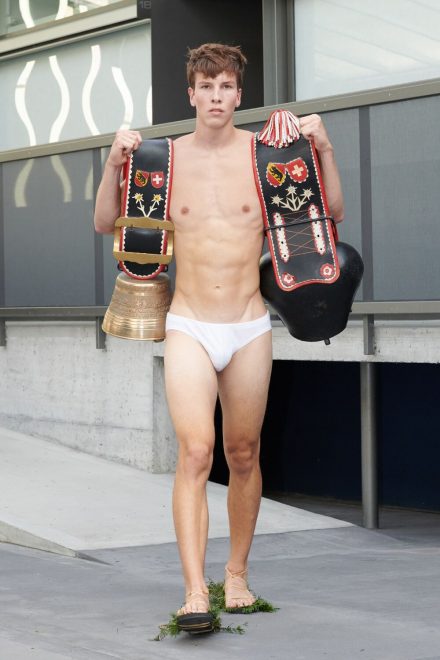
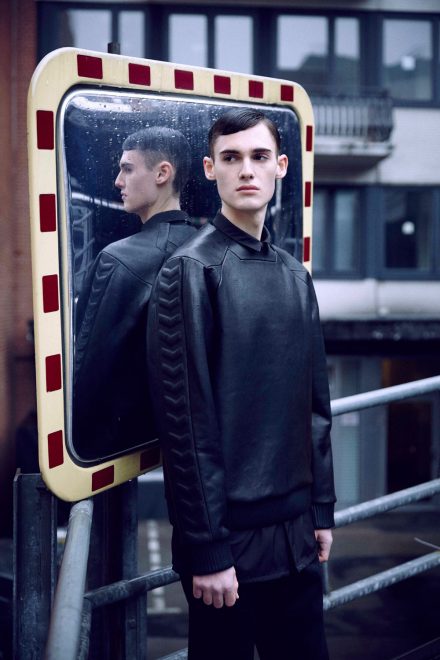
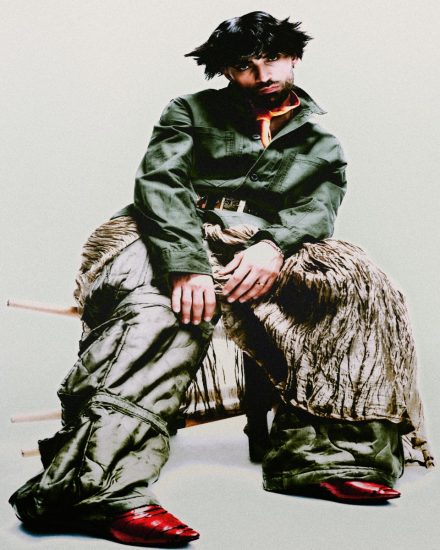
Following the Universität der Künste 2021 Fashion Show, we spoke to designer Katharina Spitz about her graduate collection, craftsmanship, and upcoming plans
A fortnight ago, Berlin’s Universität der Künste (UdK) unveiled its 2021 Fashion Graduate Show within the resplendent halls of the Konzertsäle in Charlottenburg. Entitled Schau21, the event took the form of a short film, offering a vivid glimpse into the imagination and craftsmanship of this year’s graduating designers.
Among them was Katharina Spitz, whose collection Play Harder stood out for its intellectual depth and youthful spirit. We caught up with her over a pizza to discuss her graduate collection and what’s next in store for her.
Congratulations on graduating from the UdK! What first drew you to fashion design?
Thank you! (Spitz smiles.) I see myself both as a designer and a craftswoman. My journey began in 2013, when I started an apprenticeship in dressmaking at Pio O’kan Couture in Düsseldorf. After completing my training in 2016, I joined the Dutch National Opera in Amsterdam before moving to Berlin to study Fashion Design at UdK. I graduated in October 2021 from the Institute for Experimental Textile and Fashion Design.
My practice is centred around my passion for craftsmanship and dressmaking centres. Equally important is my curiosity for sociological and theoretical research — I often begin with conceptual exploration before translating those ideas into material form and silhouette. Collaboration plays a vital role in my creative process, as do spontaneity, precision, playfulness, and sincerity.
What sets you apart from other designers?
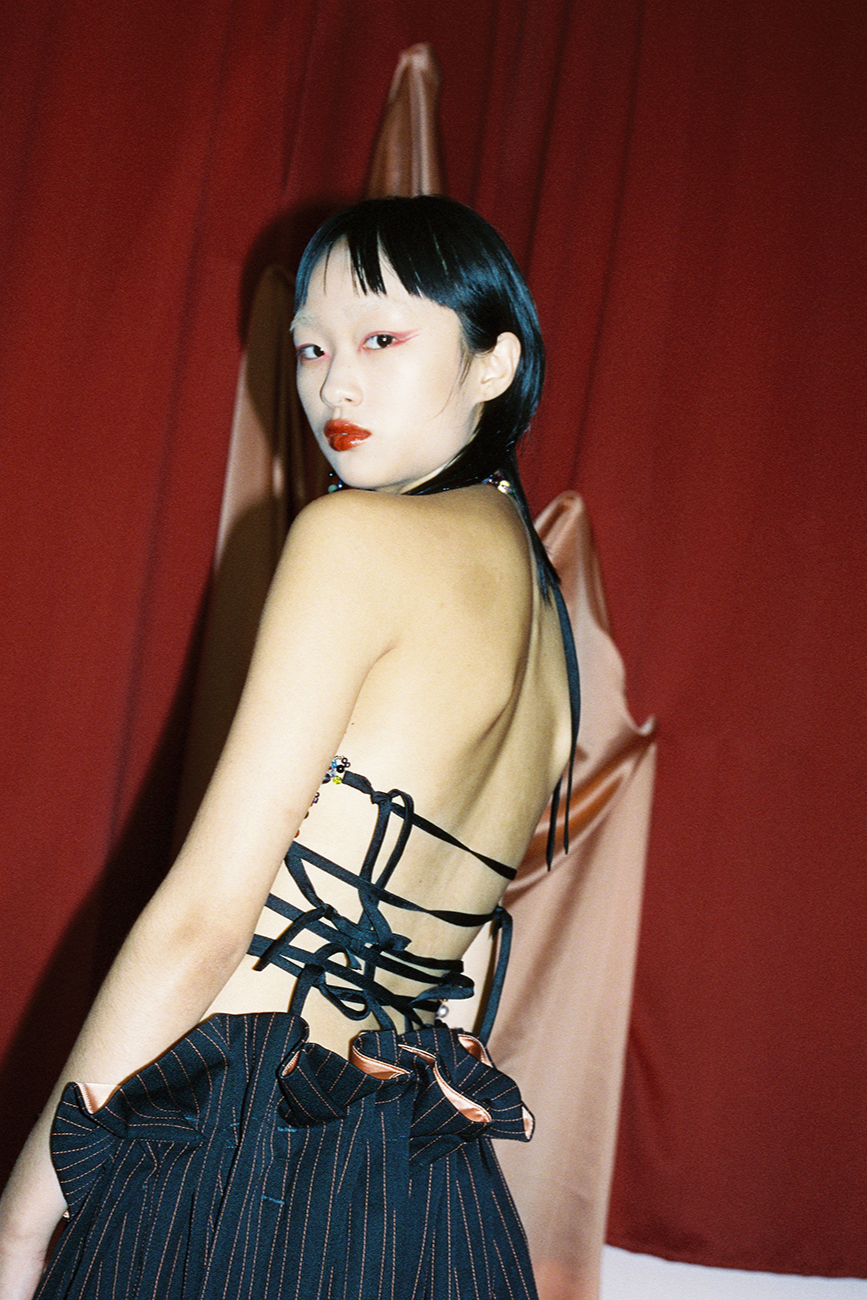
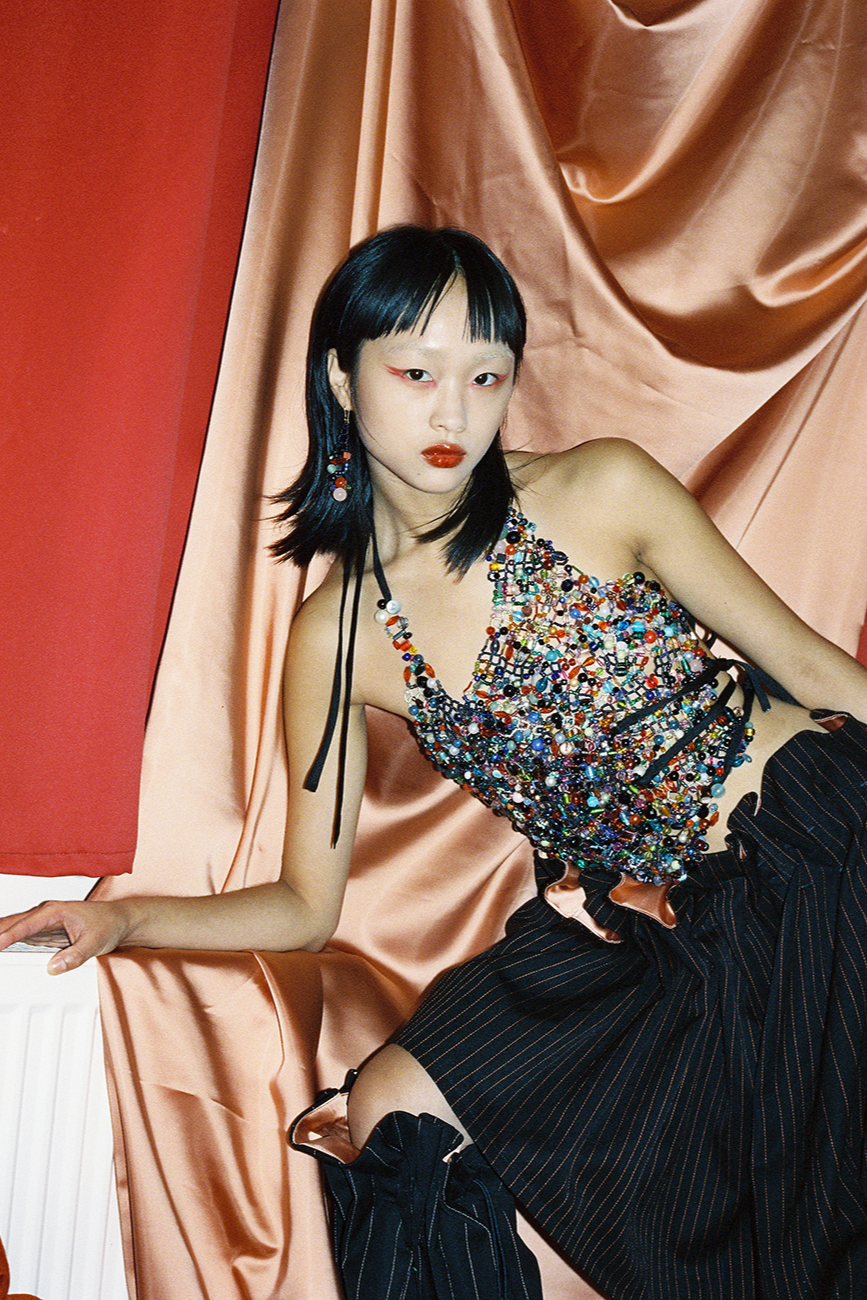
That’s always easier to say about someone else’s work! But if I had to, I’d say my designs are just the visible surface — the tip of an iceberg. Each piece is the material translation of an in-depth theoretical, personal, and tactile engagement with a subject.
I’m also pretty deliberate about the materials I use. I rarely take fabric for granted and often work with unconventional media — I’ve created garments using hair and porcelain, for instance. My background in traditional tailoring has shaped my hybrid approach to pattern-making and draping, and I hope that my love for meticulous, hands-on work is visible in the results.
What inspired you to explore the concept of play in your graduate collection, Play Harder?
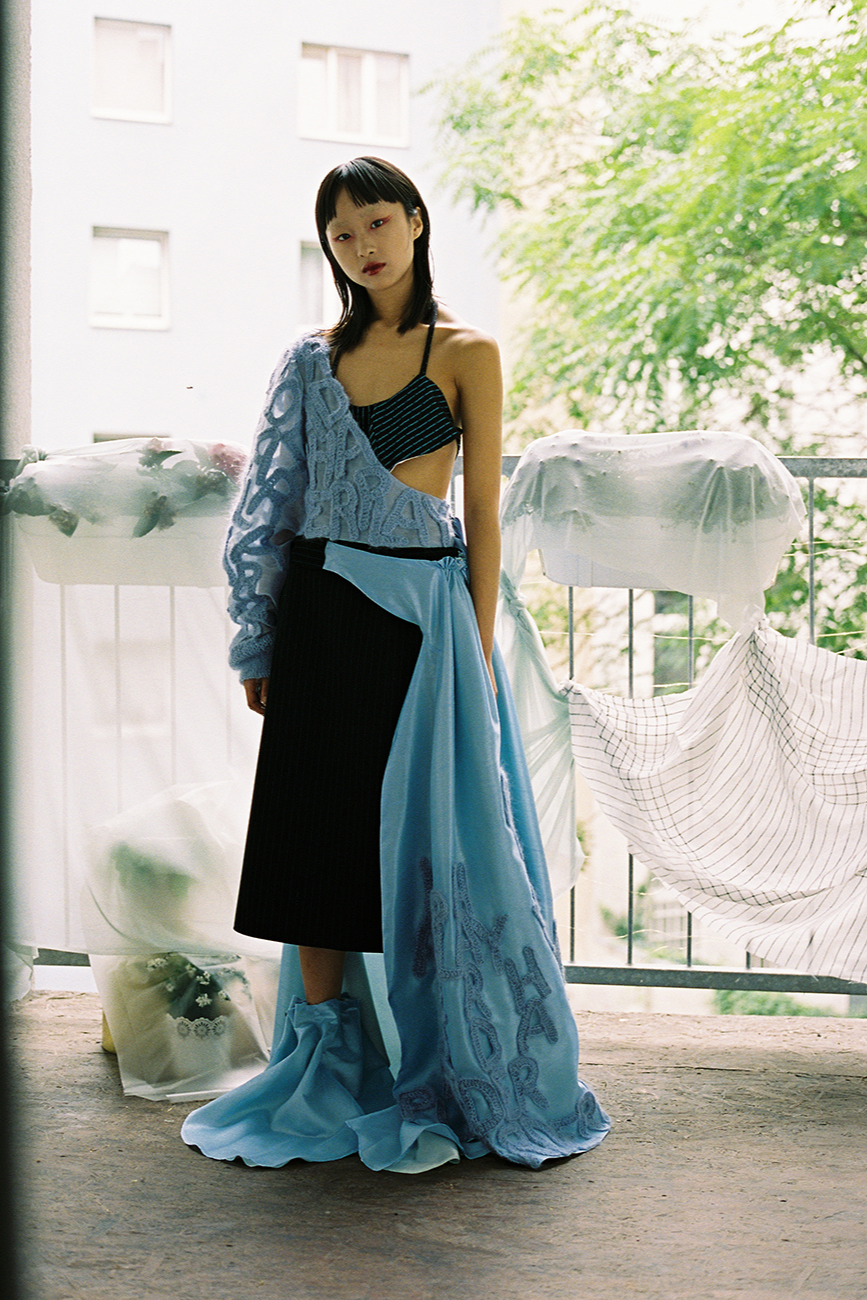
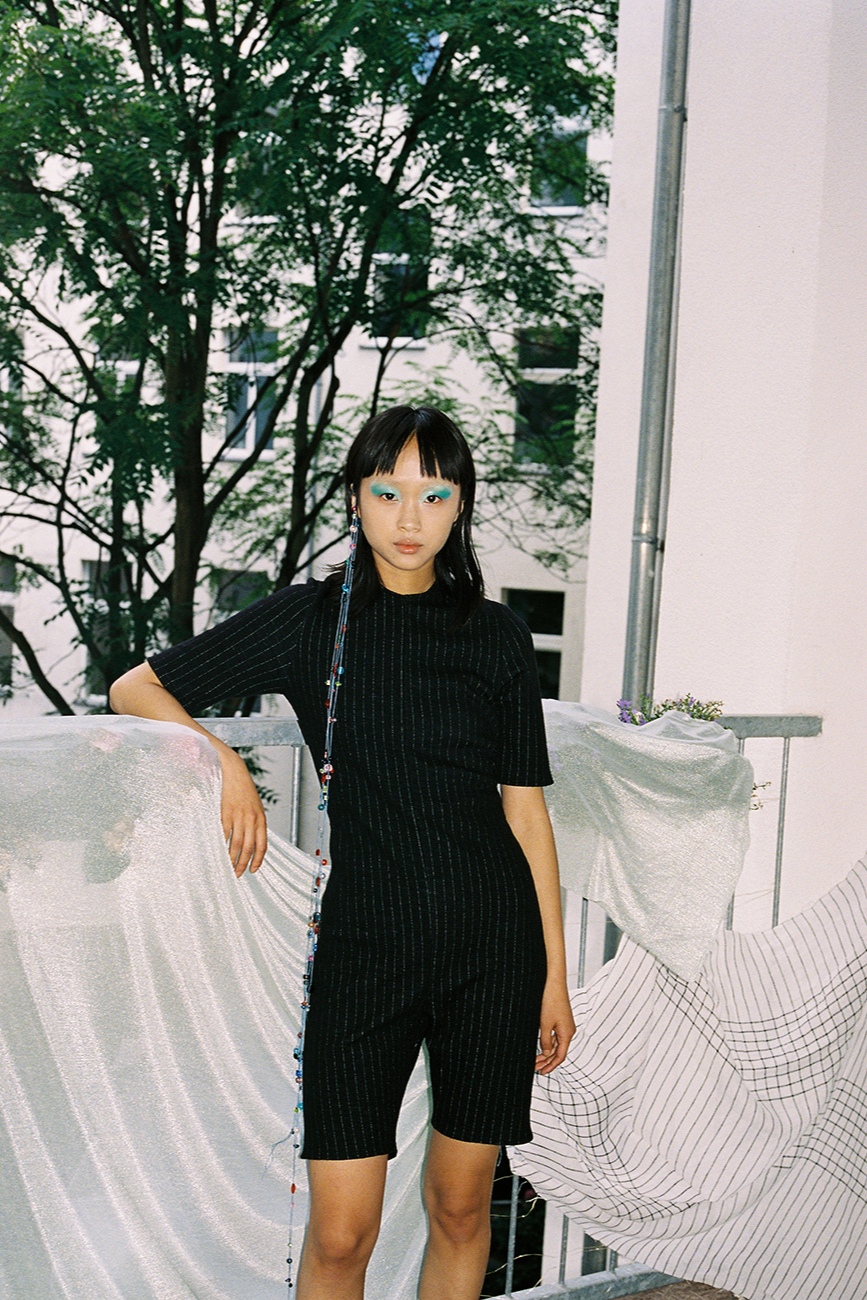
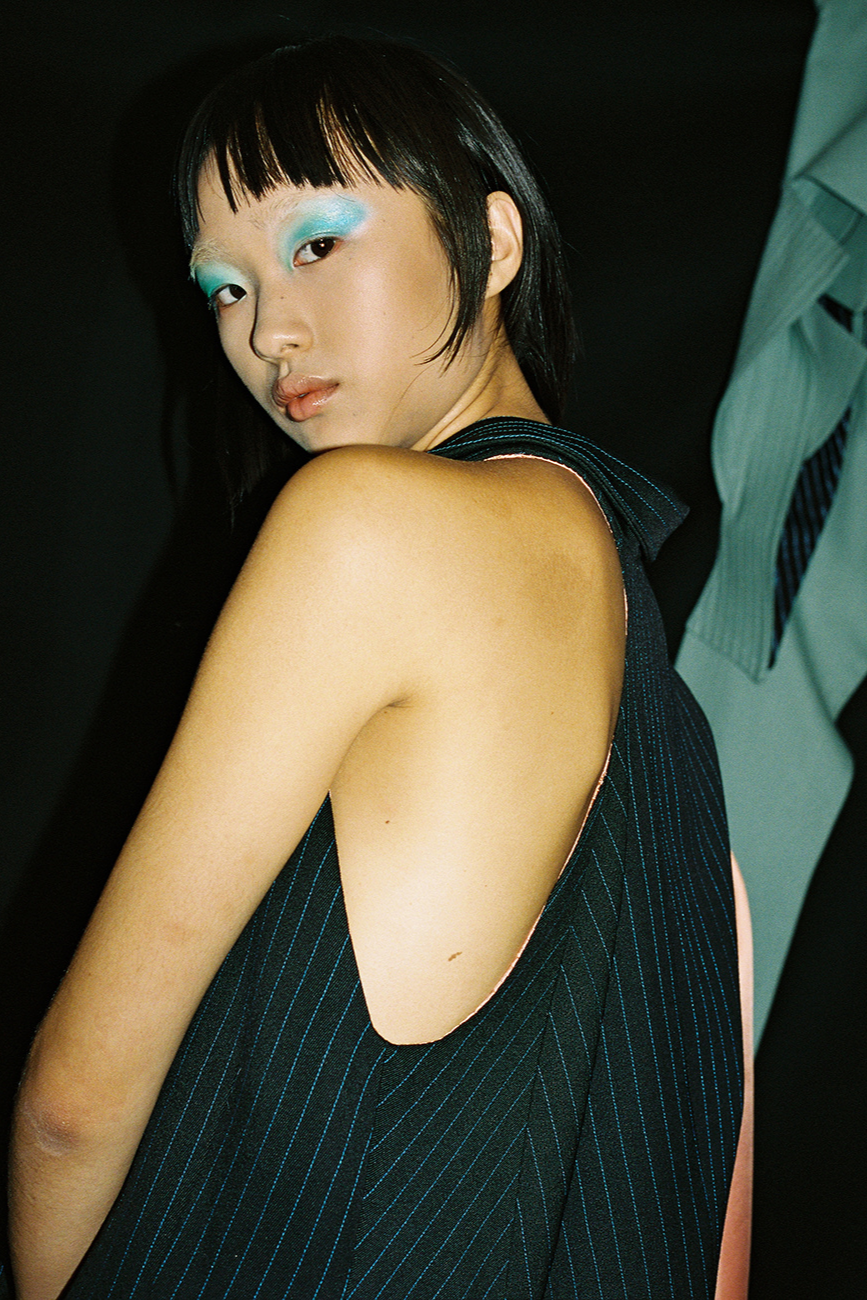
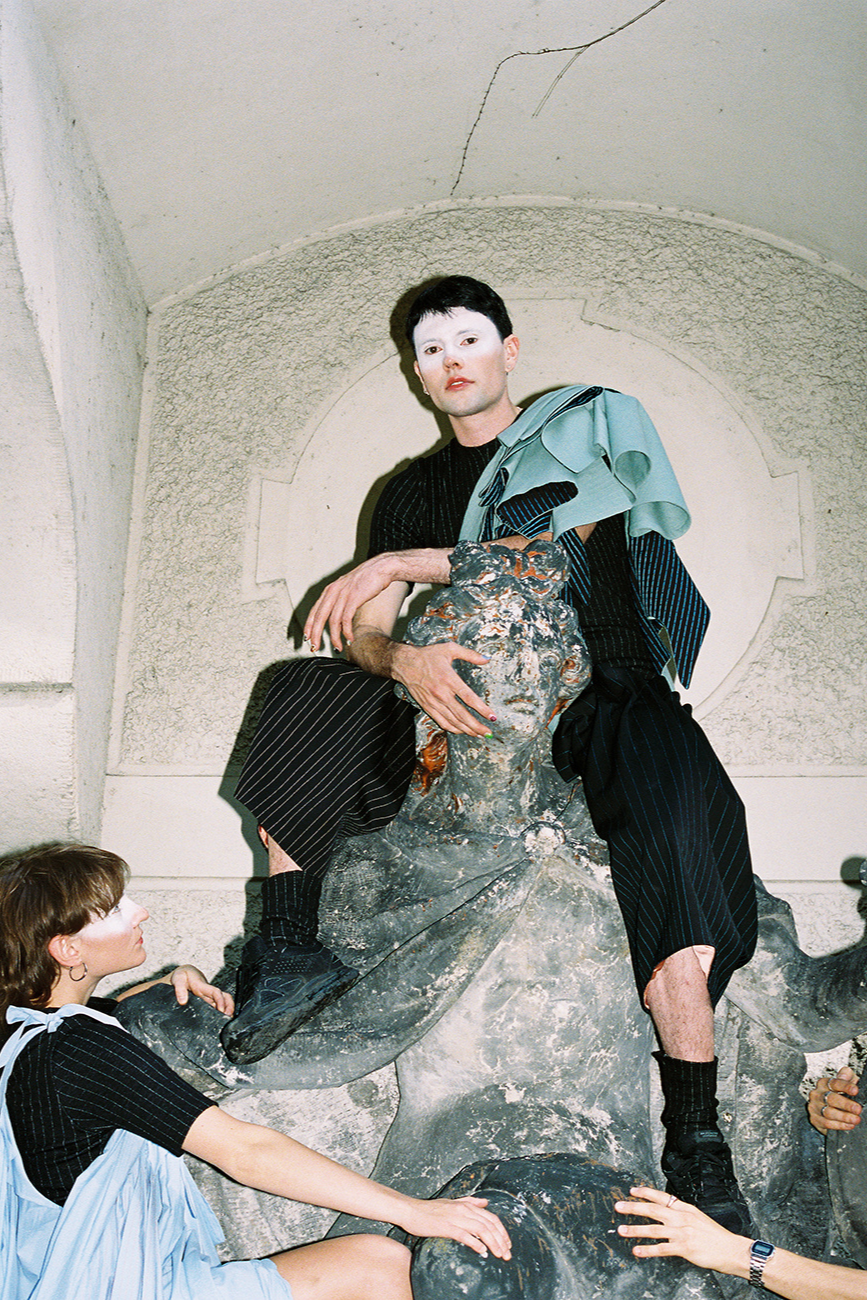
Play Harder questions how modern Western societies have allowed the boundary between work and play to blur. The title itself is both a statement and an appeal. Fashion, as a form of expressive culture, is inherently playful — yet it is now predominantly shaped by economic pressures. Through my research into the philosophy of play, I came to realise how fashion’s creative potential has been constrained by production demands, leading to a kind of alienation between people, their practices, and the objects they create.
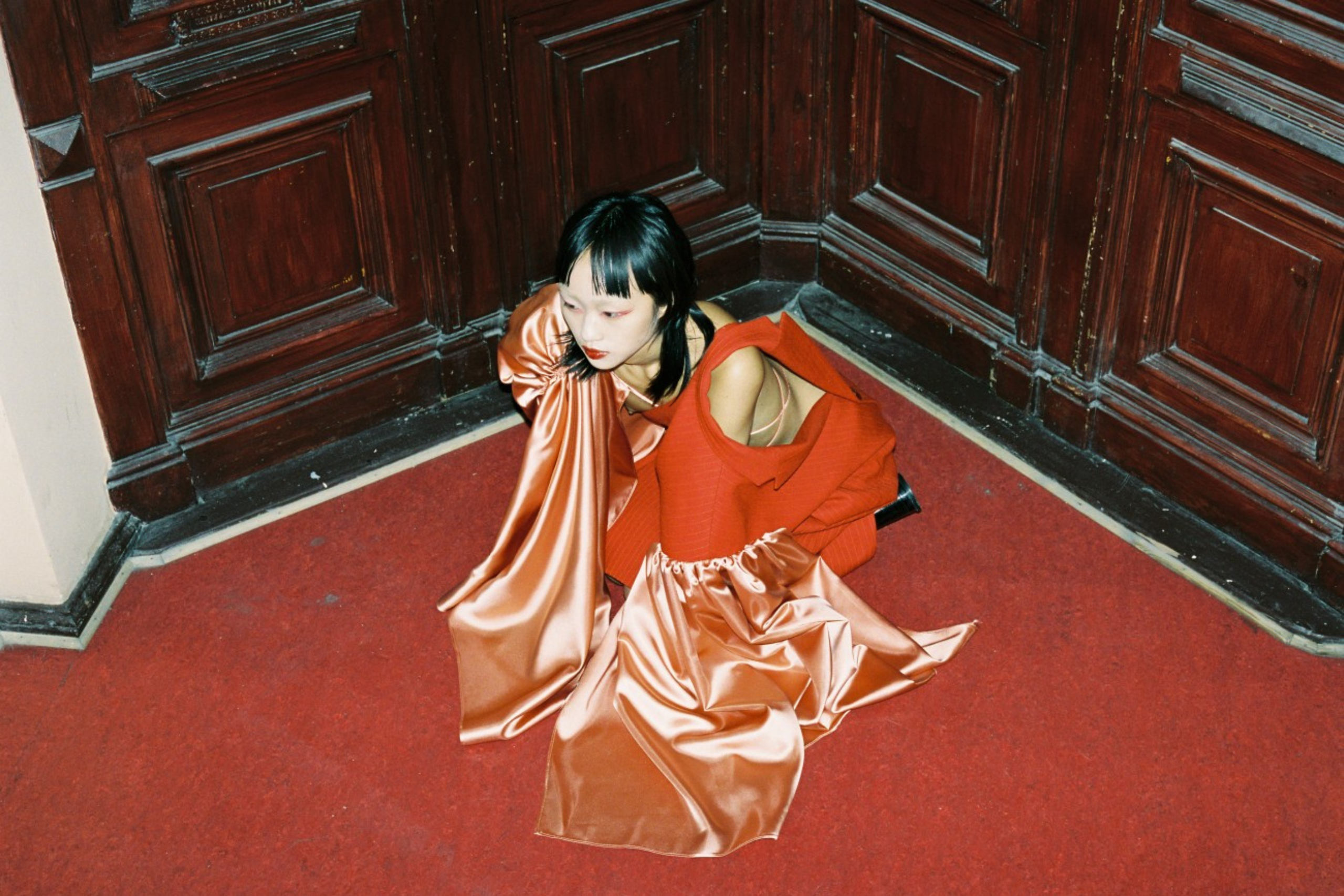
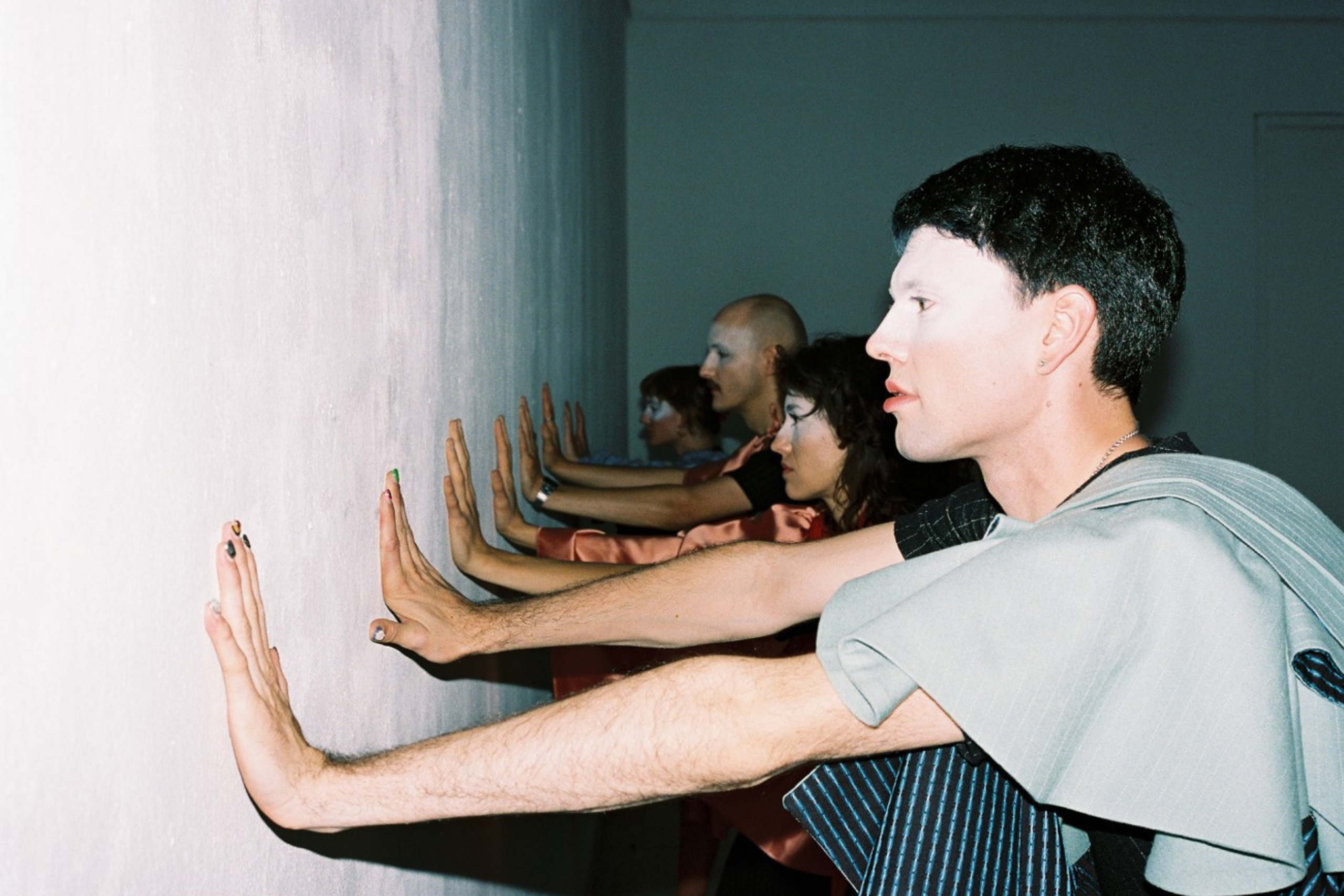
In response, I developed a design process built around ‘play interventions‘. These were experimental sessions whereby we played with one another and with garments to better understand what qualities allow clothing to invite play. The resulting pieces are ornamental, even impractical, but they serve a vital purpose: enabling expressive, communal interaction. Through them, we can continuously create and recreate shared narratives.
The photographs from the project document one of several stories that emerged through these interactions, each offering a glimpse into a living, evolving, expressive culture.
Your inspirations seem both conceptual and tactile. What drives your work most?
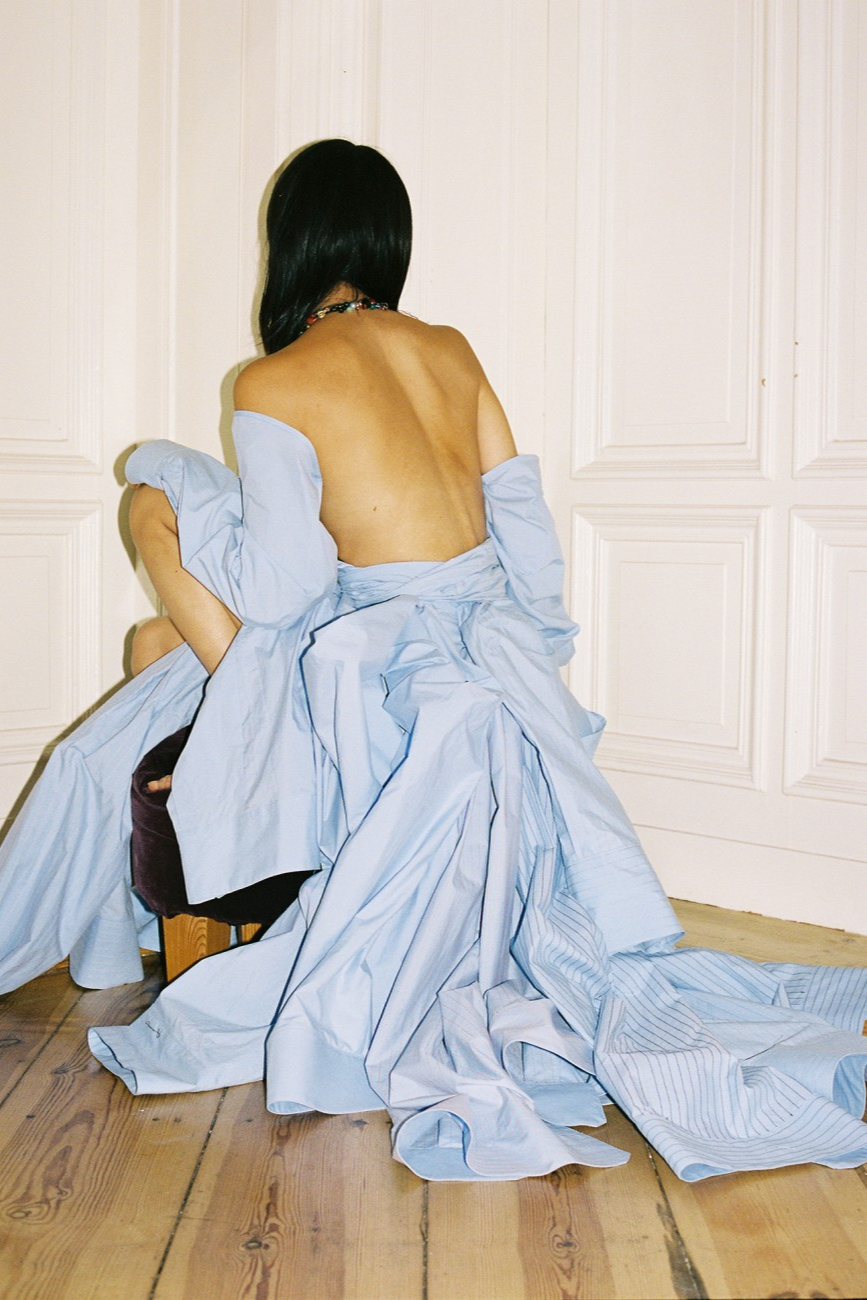
I’m deeply interested in the phenomena that shape our social networks and, ultimately, our place in space and time. My main inspirations are drawn from sociological questions, crafting traditions, and the materialities themselves. Through my designs, performances, and dressmaking, I seek new perspectives on how we inhabit a world increasingly marked by pollution, inequality, and alienation.
For example, in my graduation project Play Harder, I explored the fraught relationship between work and play in modern Western societies — and how that tension affects the way we connect and our surroundings. In an earlier collection, In the Face of Loss (2020), I examined the relationship between mortality, womanhood, and craft, inspired by a hand-embroidered tablecloth and its delicate floral patterns.
You’ve developed a beautifully conceptual practice. How do you envision your next steps after graduation?
There are indeed several projects waiting in the wings. One explores garments in relation to the act of sitting — a simple gesture, but rich in meaning. Another continues to refine my ‘playful’ design methodology as a critical tool, one that challenges the goal-oriented nature of traditional design. This process has brought me a sense of freedom, as well as a deeper connection to the people I collaborate with and the garments we create together. I believe there’s still much to uncover in how fashion can evolve in this way.
Practically speaking, I can imagine different paths. Perhaps a balance between a part-time role and my independent artistic practice — participating in competitions, seeking funding for future collections, and presenting my work in exhibitions and publications. I could also see myself joining a fashion house, ideally in a role that bridges design and craftsmanship, since for me, those two are inseparable parts of one creative process.
Credits
WORDS
Lucy Rowan
FASHION
Katharina Spitz
Photography
Lexi Sun
Styling
Johanna Braun
Hair and
Make-Up
Una Ryu
Model
Jee Hye Lee via IZAIO
MODEL MANAGEMENT