For this exclusive Œditorial, we caught up with the director and on-set stylist about their process, sources of inspiration, and storytelling through fashion
25-year-old Munich native Carolina Schmidt has long been drawn to creativity in all its forms, from composing on the piano to materialising her imagination into moving images. As the younger sister of Œ’s in-house Stylist Hanna Schmidt, we’ve had the pleasure of witnessing Carolina’s artistic talents blossom over the years. Now, we’re delighted to present an exclusive preview of her latest short film, Green Desert (2022) — an Alice in Wonderland-esque exploration of nature, humanity, and imagination.
Currently pursuing an MA in Cultural Anthropology and Environmental Humanities at LMU Munich, Green Desert (Grüne Wüste in German) formed part of Carolina’s BA graduation project in filmmaking. Set against the lush, rolling hills of the Austrian countryside, the film follows Elsa, a young woman wandering through a mysterious world where romantic visions of nature collide with mechanistic rationality.
As she moves through this landscape — encountering figures who paint, think, and work — Elsa begins to understand that, amid dualism and desire, there remains space for radical dreams and new imaginaries. Through its painterly visuals and lyrical pace, Green Desert blurs the line between documentary and reverie, inviting viewers to reflect on the human urge to possess, depict, and ultimately reconnect with nature.
We caught up with the Schmidt sisters to find out more about Carolina’s production process and sources of inspiration, and Hanna about how she selected designers to breathe life into the story.
Congratulations on the release of Green Desert! How has it been received so far?
Carolina: Thanks Lucy! As you can imagine, we’ve been pretty busy so far… In September, it was shown at the Tetova International Film Festival in North Macedonia as part of the Win Panorama Competition. Last month, it was screened at the Lima Alterna International Film Festival in Peru, which focuses on alternative, independent, and auteur cinema from all over the world. I found their programme really intriguing! For the duration of the festival, Green Desert was made available on the streaming platform Cineaparte, which is the main online library for Peruvian cinema.
Oh, and we also won Best Experimental Film at the Austrian Film Festival two weeks ago, which was really nice. Apart from that, it has also been selected for the 16th Fünf Seen Film Festival in Germany, the 11th Alexandre Trauner Film Festival in Hungary, and the 14th Sarajevo Omladinski Film Festival in Bosnia and Herzegovina. There will also be some non-competitive film screenings. So far, we’ve had a really great reception and lots of support, which we are all so grateful for! (Carolina grins.)
Circling back to where it all began, when do you start making this film?
Carolina: In total, I worked on this film for one year. The start was quite challenging — sitting at my desk at home, sketching and writing ideas, not knowing if they would make sense to anyone. I suppose that was the beginning of it all; it just started with a sketchbook and some doubts…
The more I stuck to these ideas and trusted my intuition, the more others began following me, and that was when I started to get excited about the project. I am lucky to have worked with such a great team, who worked hard to make this unusual film happen, and I’d recommend them to anyone. It was wonderful having Georg Papadelis as DoP on board; we soon developed a mutual vision for the film.
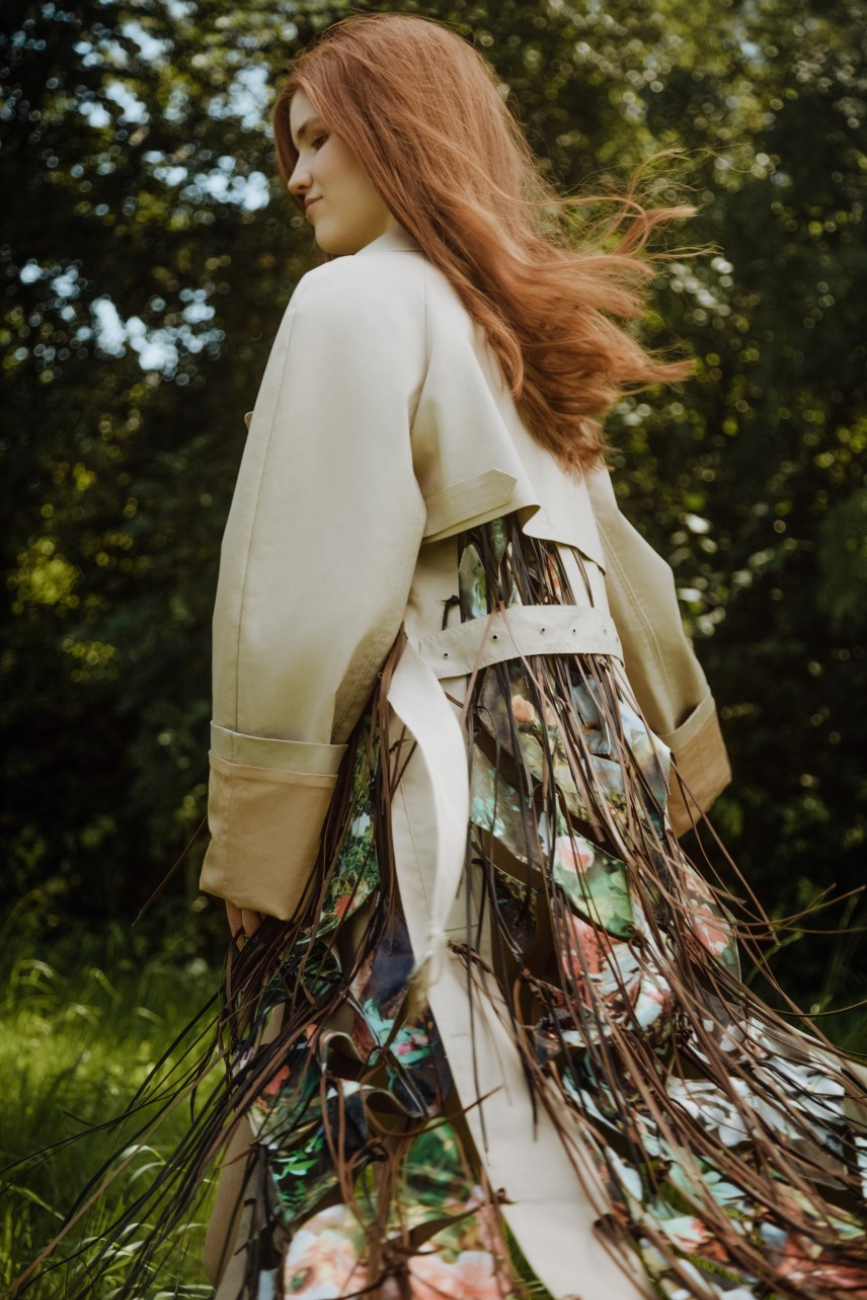
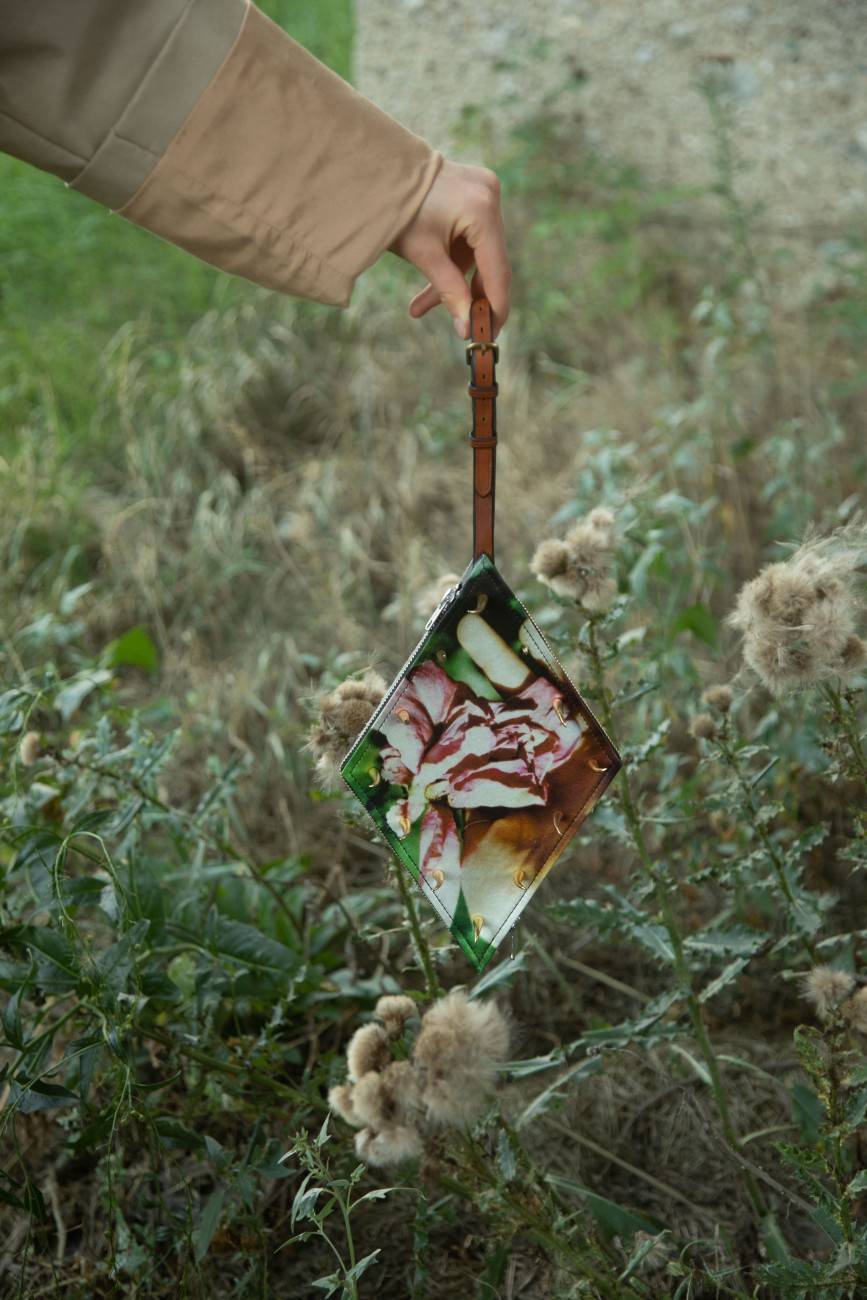
LEFT/ABOVE
Trench coat – Julia Ballardt
RIGHT/BELOW
Bag – Julia Ballardt
Where did you draw your inspiration from most?
Carolina: The films by Béla Tarr, Andrei Tarkovsky, Ingmar Bergman, Tsai Ming-Liang, Abbas Kiarostami, Chantal Akerman, and more are very personal to me; they inspired and encouraged me to express myself in a movie like Green Desert, asking big questions slowly and playfully.
I am particularly interested in the magic of everyday life – the mundane, the seemingly normal, the routines, and the small things. They reflect the myths we tell ourselves about the world, life, and ‘nature’ – questioning them can be powerful. Green Desert is never complete without the viewer; the audience is a fundamental part of this film.
Selecting a cast to embody the ‘magic of everyday life’ can be more challenging than it sounds. Could you walk us through your casting process?
Carolina: As I was wandering through the landscapes of the film, I knew I wanted people in it who had a relationship with each location. For example, there is a scene where we see a landscape painter next to a bridge. I had hung hand-written casting calls at that bridge, and one day, I was contacted by an Iranian painter called Hiwa Naqshi, who said he was interested. He happened to see the casting call whilst passing by the bridge.
Oh, and it’s important to add that this bridge is located in a very remote area, so it was pure luck we found each other! I think this approach to casting people is really special. I love doing things this way, but it does require a lot of time (Carolina laughs).
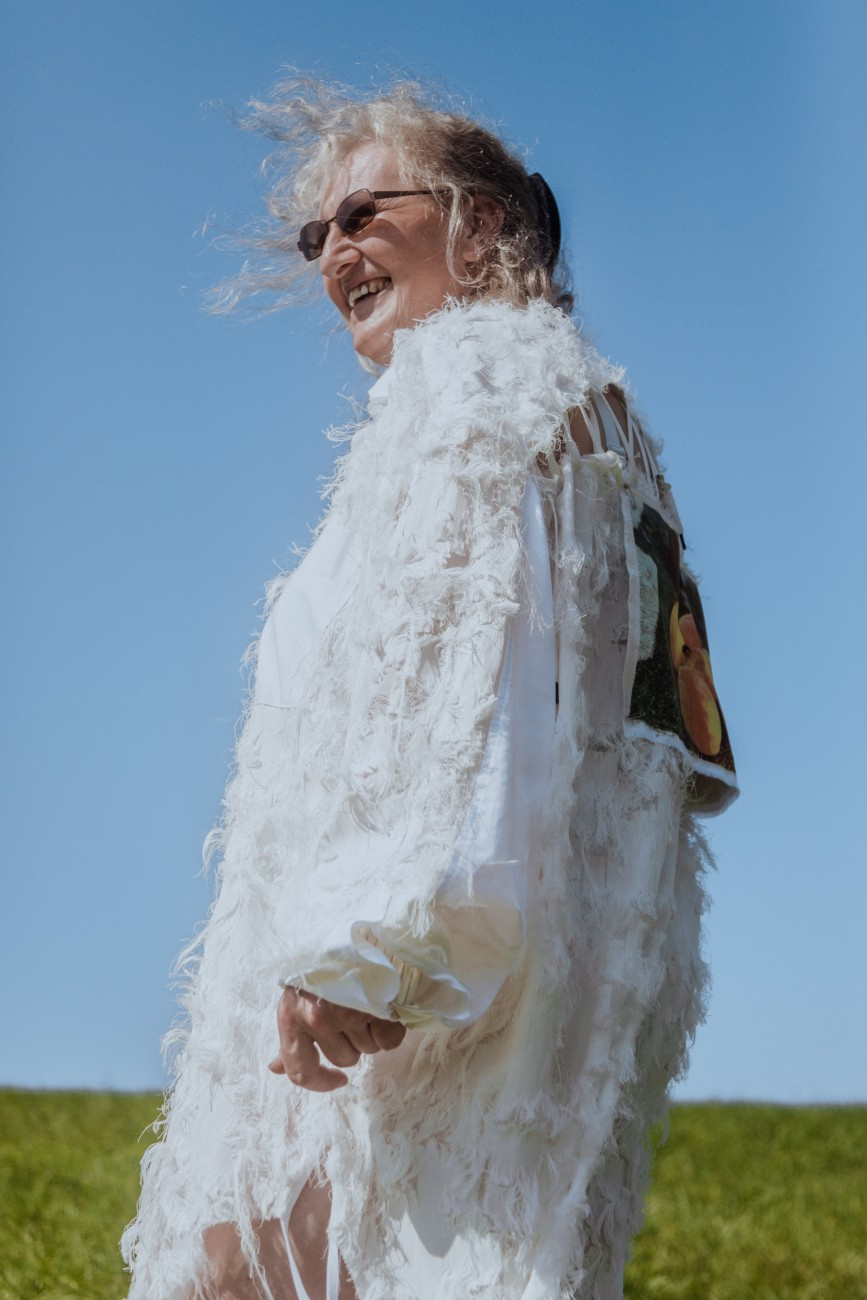
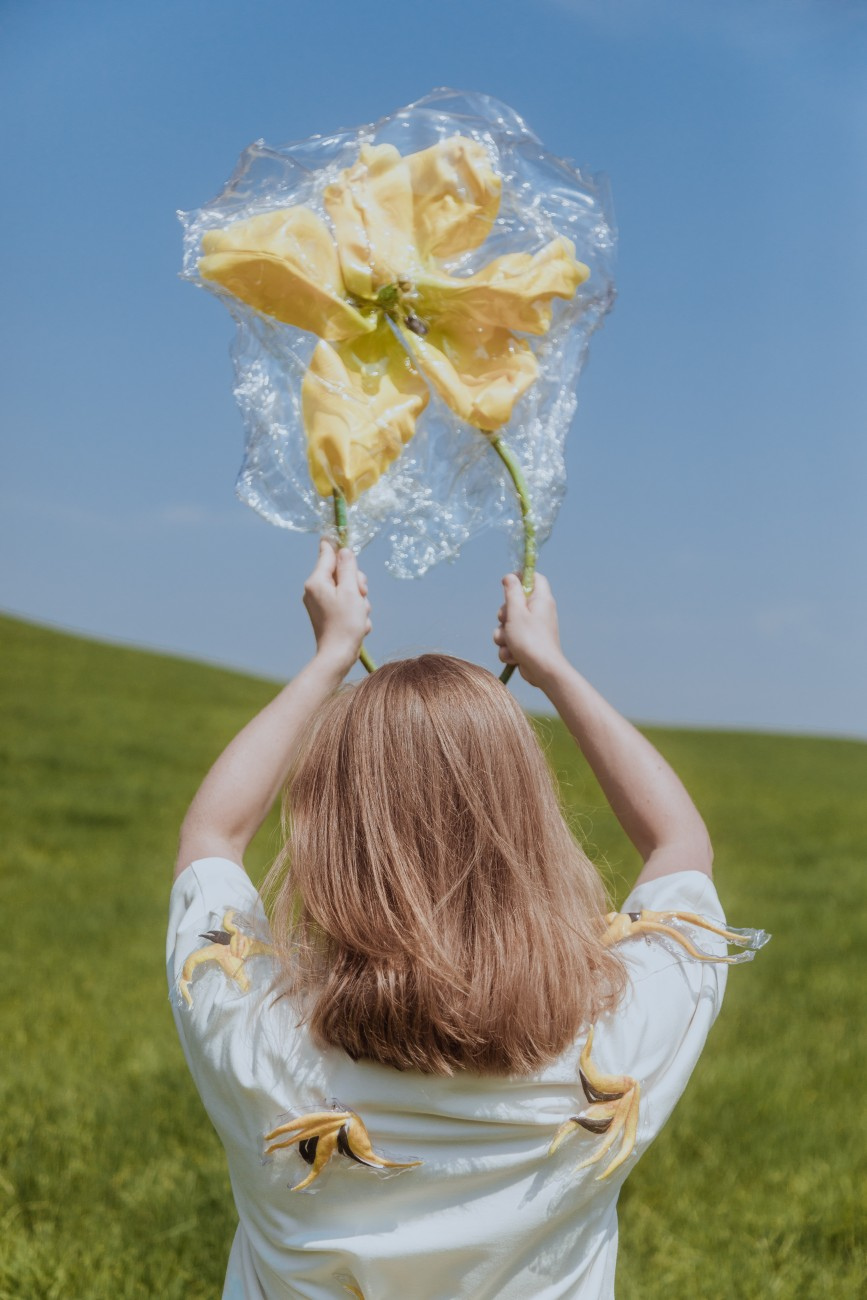
ABOVE
Jacket and Top – Larissa Falk
The landscape is so dreamy! Where was it shot, and what was your attachment to this specific location?
Carolina: At a way-too-young age, I watched Gus Van Sant’s Gerry (2002), and that film has stuck with me ever since. I loved how the locations played such a significant role in the dramaturgy of the film, and it inspired me a lot, although the landscapes of the US and Argentina look somewhat different from those on the outskirts of Salzburg. I was mainly guided by a certain feeling that Van Sant’s film evoked.
Mountains didn’t fit the aesthetic or the concept of the film, so it was hard finding the right spots near Salzburg. However, I discovered some very unique places, and I wouldn’t have wanted to shoot my film anywhere else. I felt a strong attachment to these locations; I spent hours there just observing them and the people who frequented them.
One of your many talents is pianism – in fact, the music in this film is actually yours. What came first, the visual or audio content?
Carolina: I composed the music after filming. It’s almost as if the images made the music — I just kept replaying the scenes over and over while improvising on the piano. Then I would step away from it, and a week later, I would improvise again. I repeated this process, and over time, a pattern emerged — some themes kept returning, and it all came together naturally. Then I moved to Ableton and experimented further based on these compositions.
That being said, music also influenced the images too. While I was writing the film, I listened to a lot of music, especially Meredith Monk. Sometimes ideas came while creating my own music, and other times through listening to others.
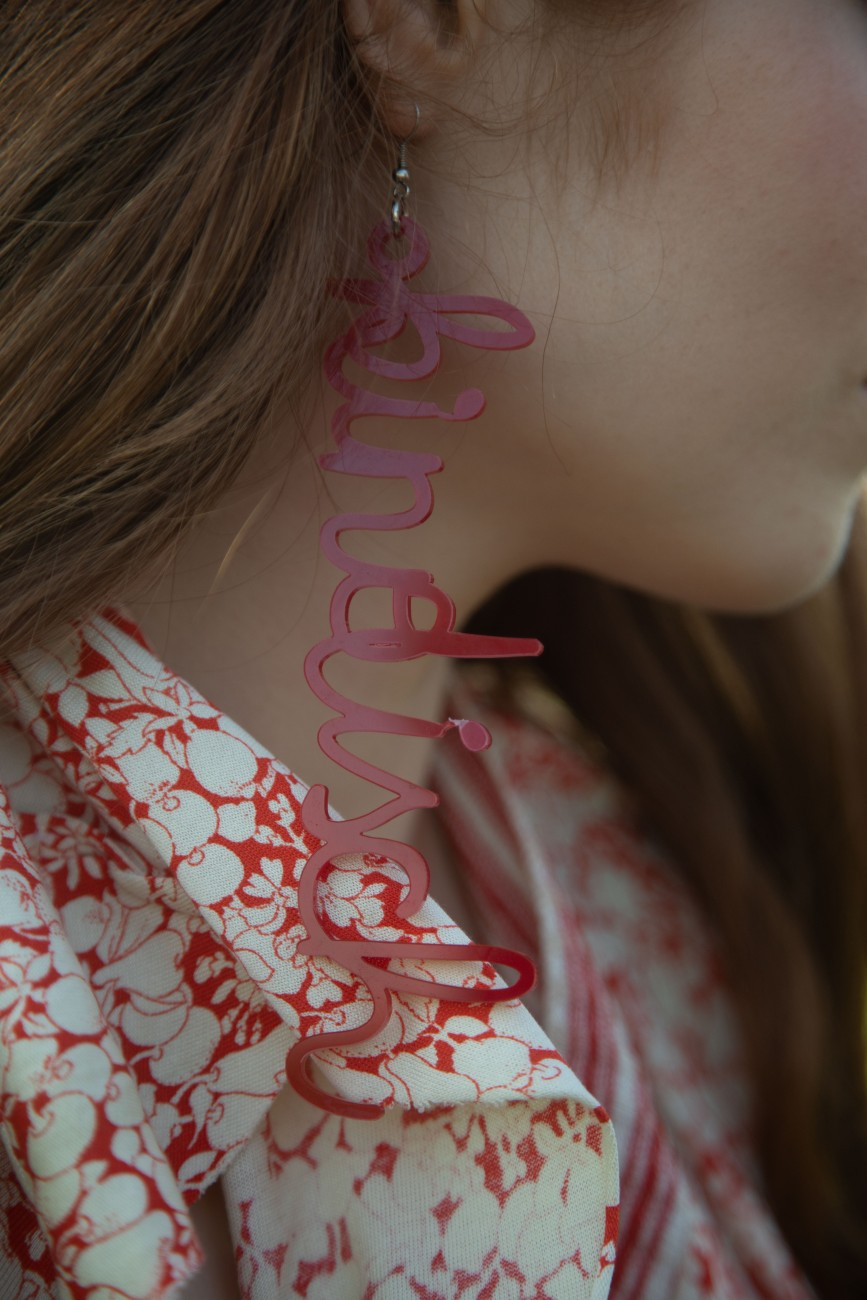
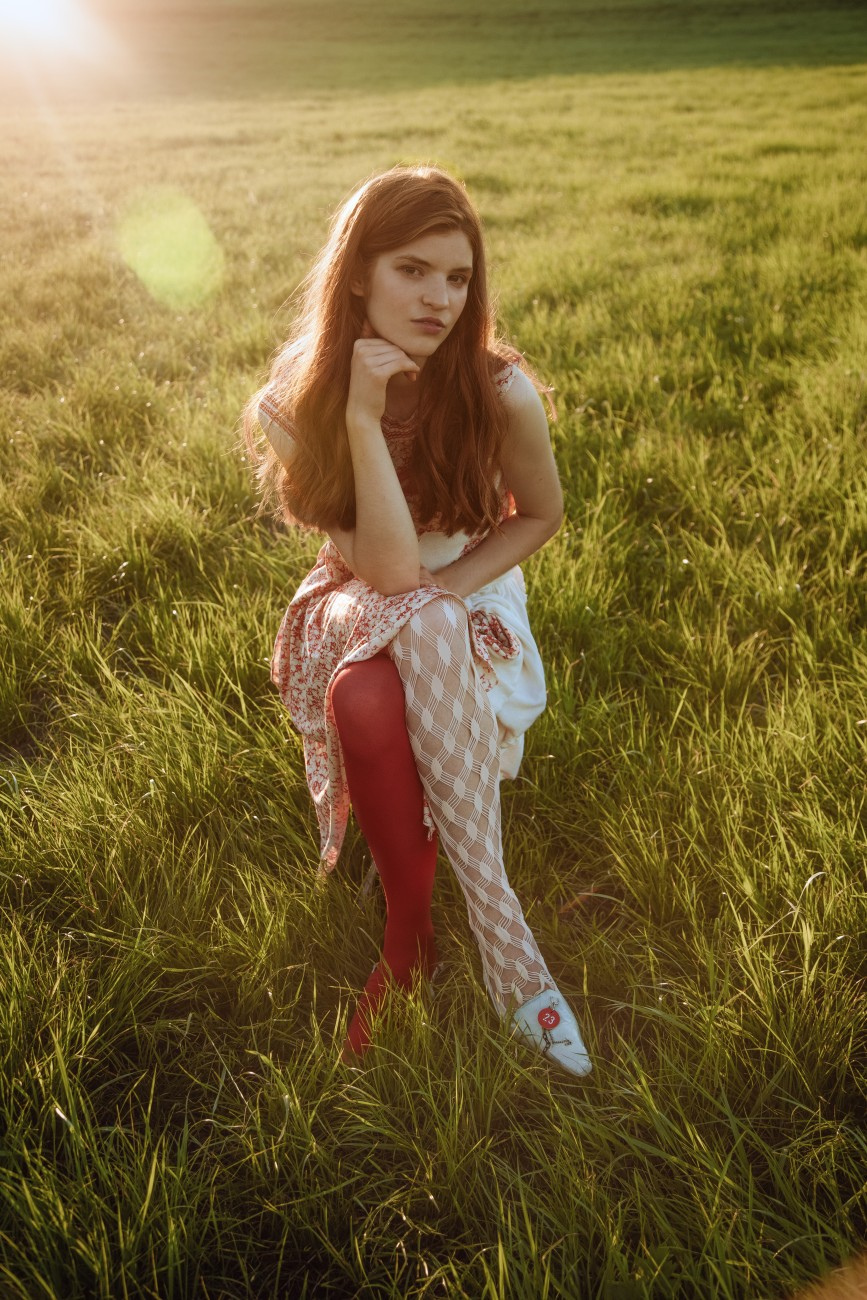
LEFT/TOP
Earings – Elisabeth von der Tannen
Dress – Céline van de Loo
RIGHT/BELOW
Stockings and shoes – Jasmin Erb
Dress – Céline van de Loo
Hanna, you’ve worked with us as a fashion stylist and editor for a few years now. In turn, you’ve become acquainted with many Berlin-based designers along the way. How did you go about selecting designers for this film?
Hanna: Except for Julia Ballardt, who is based in Antwerp, and Larissa Falk from Austria, Celine van de Loo and Jasmin Erb are from Berlin, that’s correct. I wanted to bring a sensual, poetic touch to the costumes and looked at what students from the major academies were creating at the time that could fit the story. I enjoy collaborating with fresh, young design talents, as it is often what they are producing now that will be ubiquitous in a year, which also resonates with the platform Œ offers.
Identity is the core theme of the film. How have you used clothing to help us understand the protagonist’s identity?
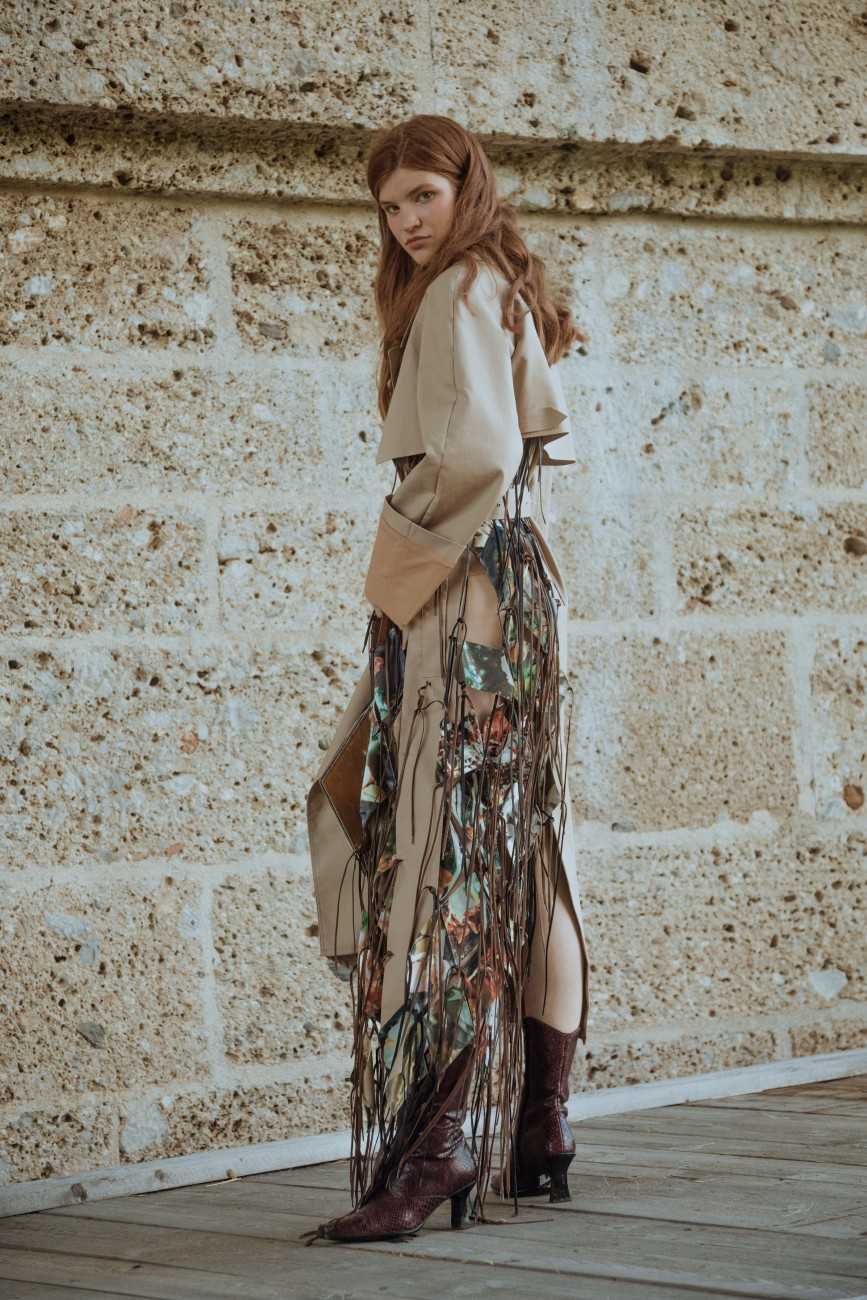
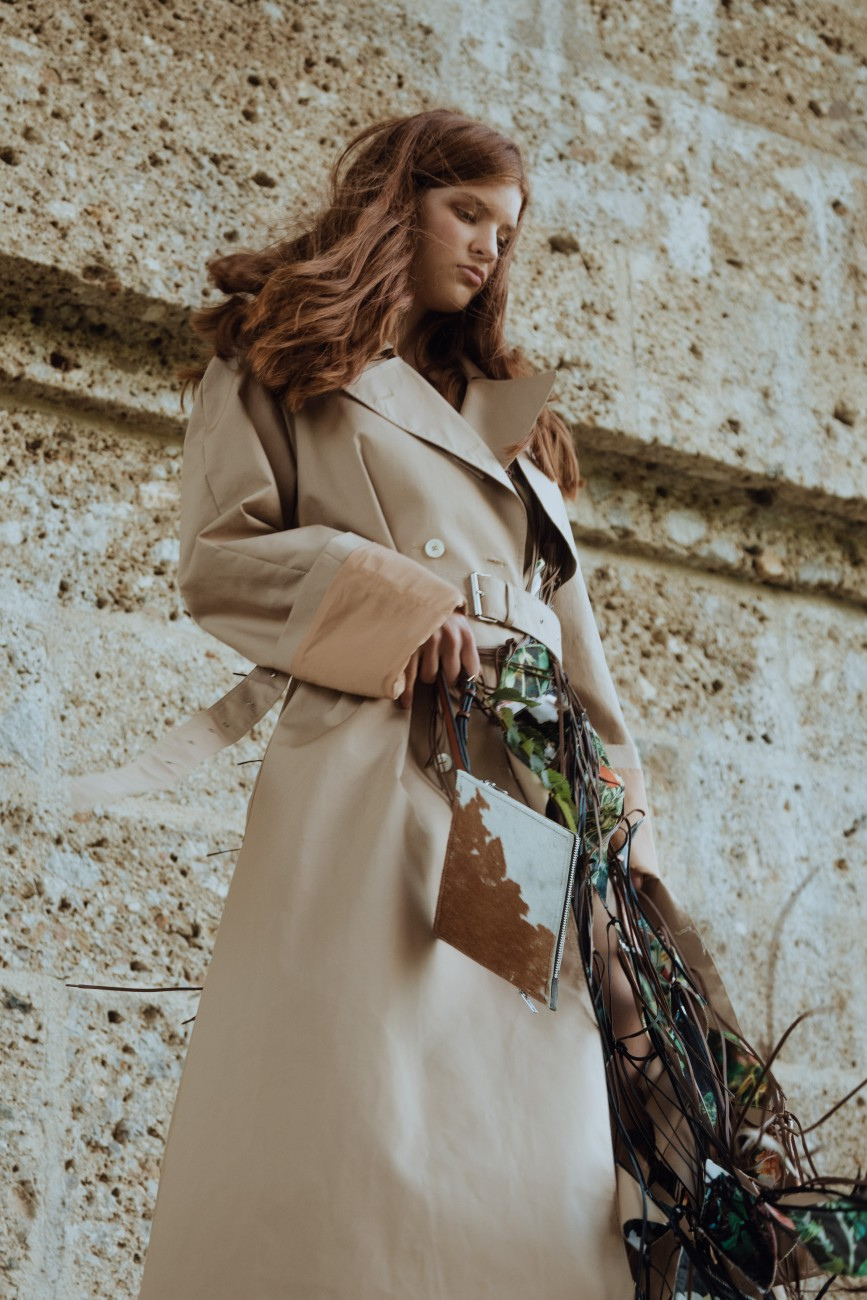
Hanna: She is on a journey of self-discovery through bizarre, symbolic fields of uncertainty, transition, and ambiguity. I contrasted this playful, Alice in Wonderland-esque dress with a more mature trench, though it retains some whimsical elements through its flowing patchwork details.
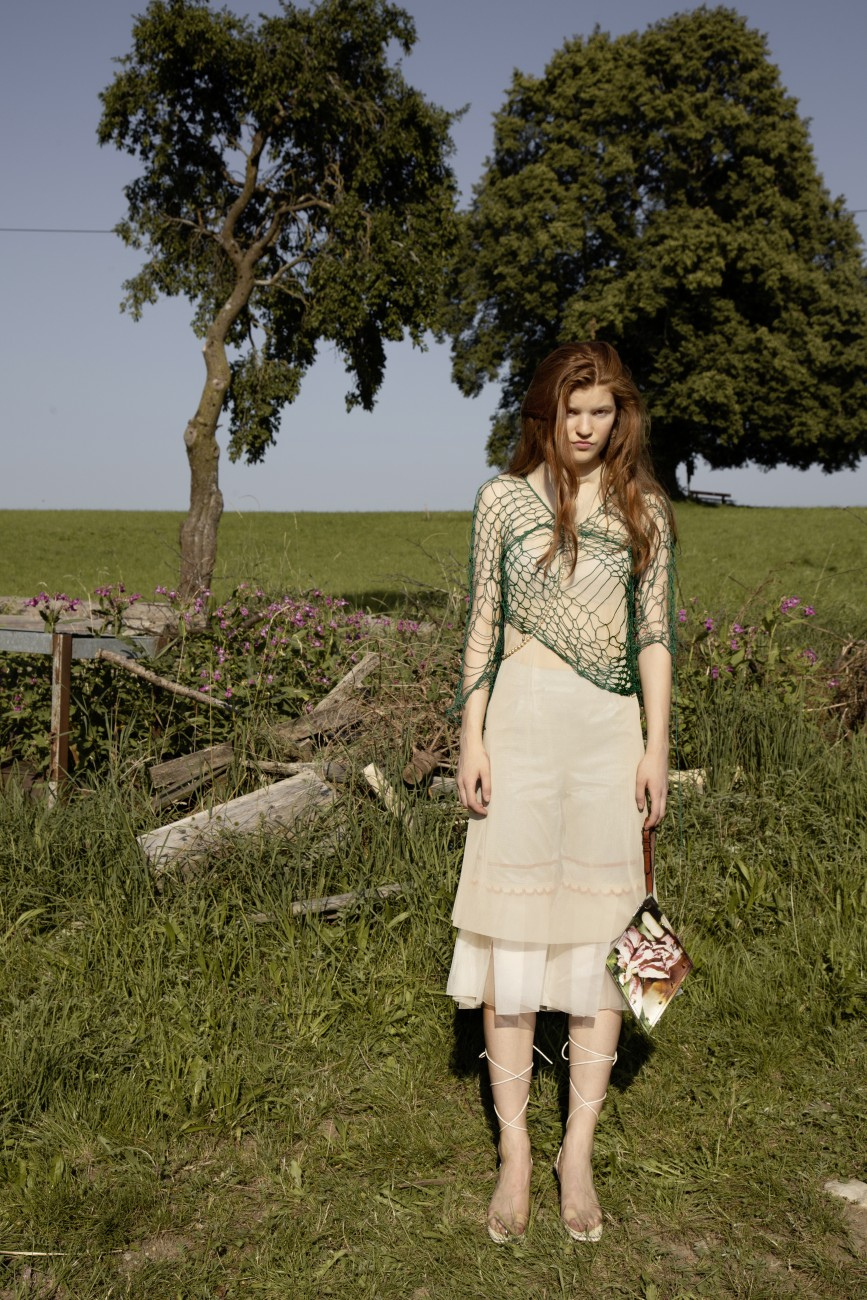
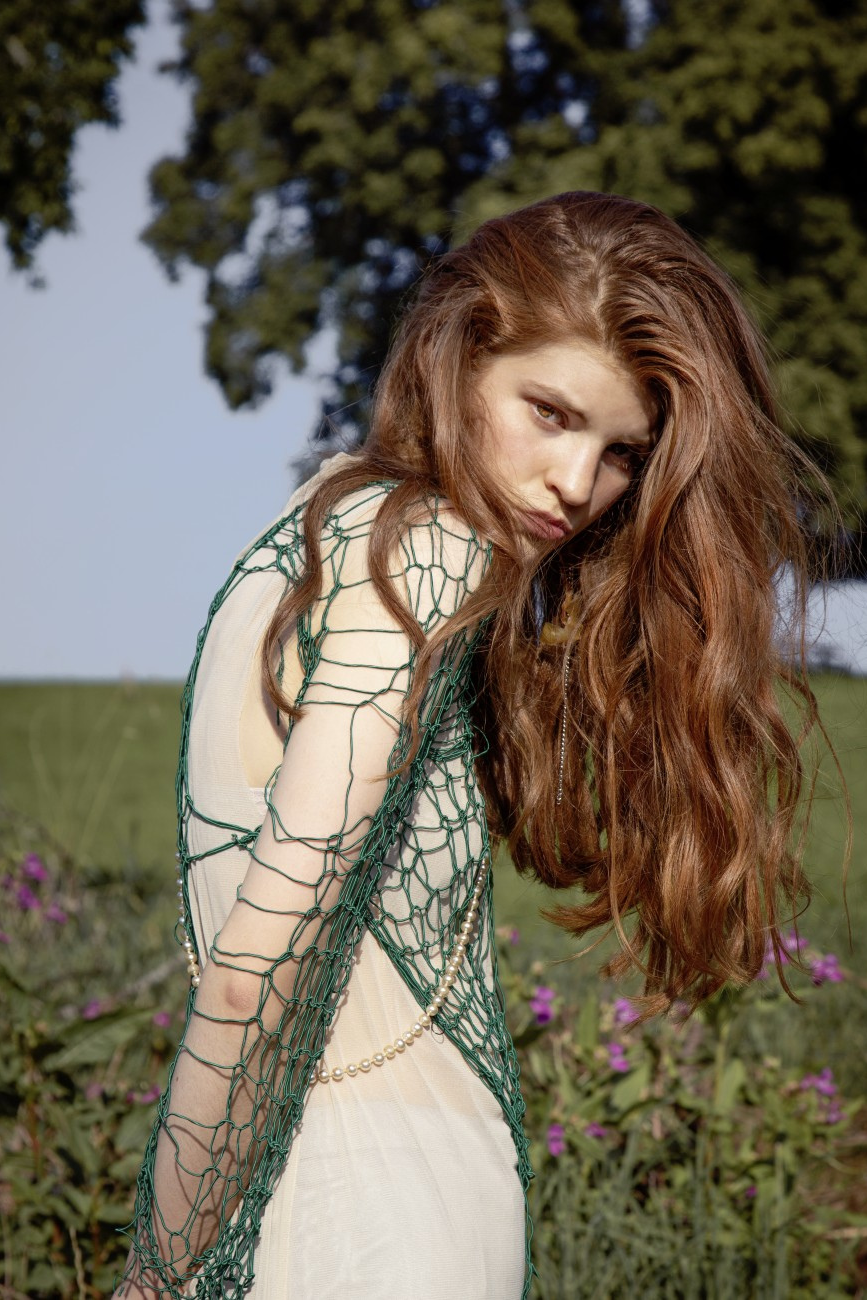
ABOVE
Dress – Esther Helin Bienroth
Shoes – Julia Ballardt
Carolina, how does the outcome compare to what you’d initially envisioned?
Carolina: Some things changed, but I’m glad they did! (Schmidt grins.) Hurdles can be a great thing when shooting a film. They force you to think on your feet and find new ideas. Sometimes, the outcome is even more interesting than what you initially planned.
Although this wasn’t the first film you’ve directed or produced, were there any other lessons you learned this time round?
Carolina: It’s not my first film, no. But it was my first where I really took some artistic risks and didn’t know whether it would work. Whatever social or institutional context you find yourself in, you’re likely always going to be confronted with expectations and ideals of how a film should be made. I think what I’ve learned is to value your own ideas, try them out — the result might not be perfect, but it will be honest.
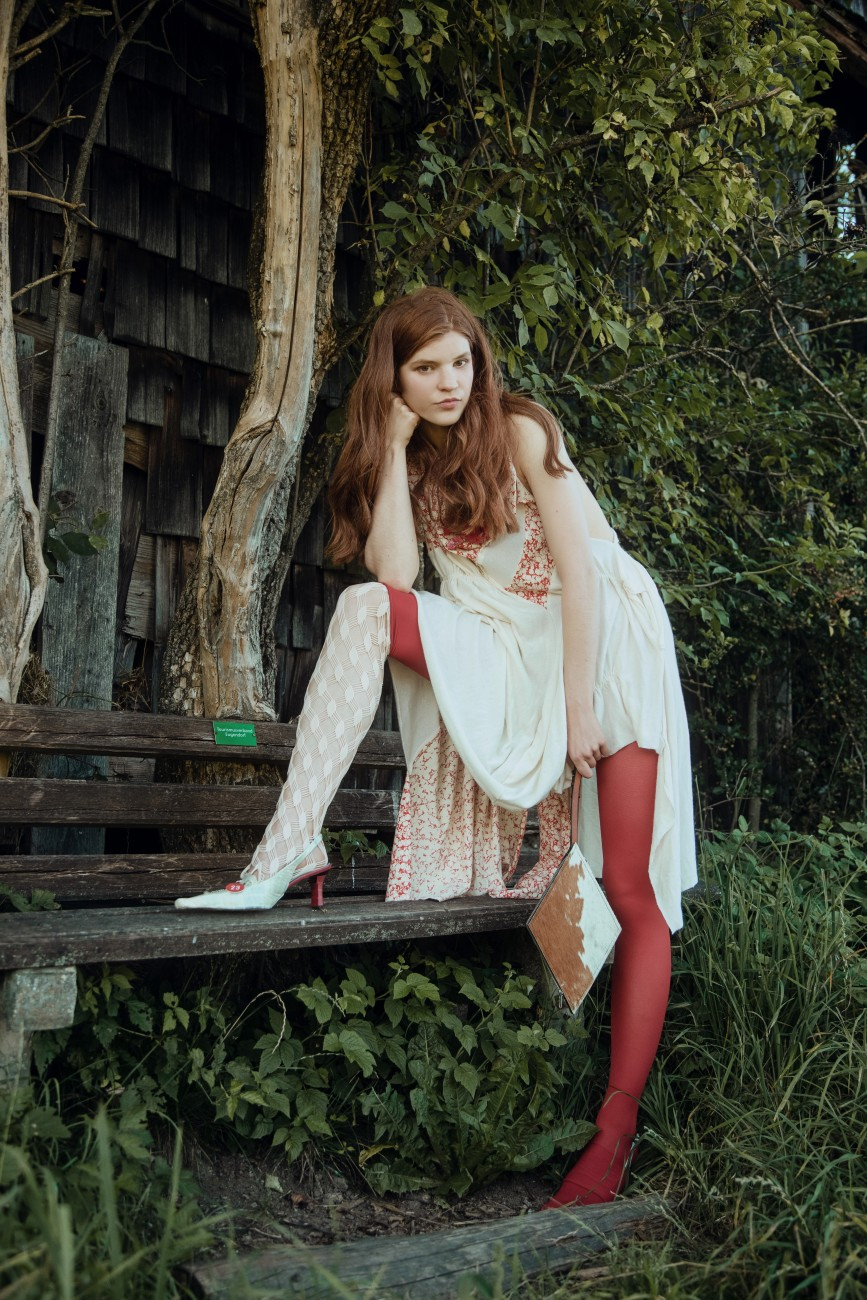
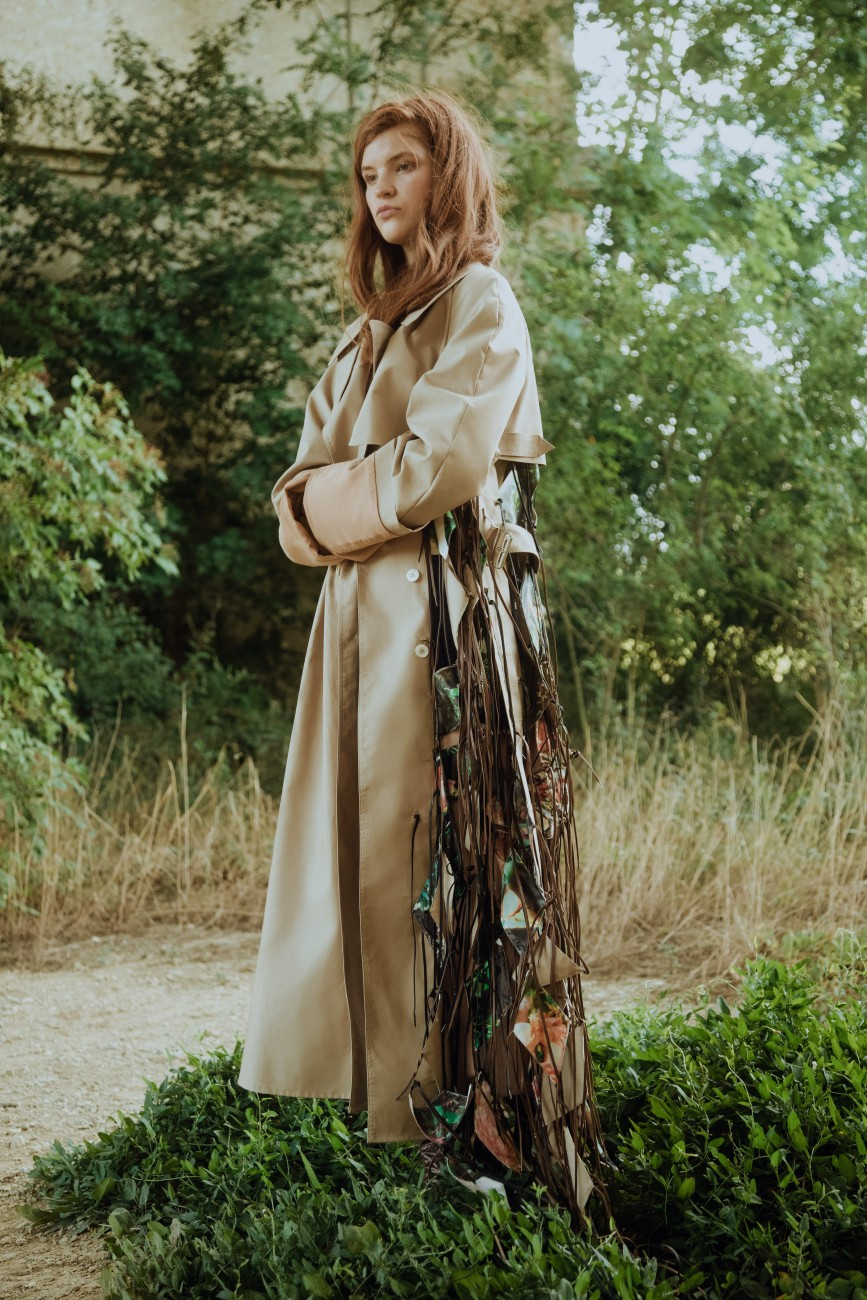
LEFT
Dress – Céline van de Loo
Bag – Julia Ballardt
Stockings and shoes – Jasmin Erb
RIGHT/BELOW
Trench coat – Julia Ballardt
Now that you’ve wrapped up working on Green Desert, do you have any other exciting projects pencilled into your schedule?
Carolina: Since I am half German, half Peruvian, as part of my Master’s degree I am planning a short documentary in Lima, Peru, in 2022, which will also incorporate some of the surreal and slow elements that Green Desert embodies. I’ve also just returned from Tbilisi, Georgia, where I attended a university short course. I met many inspiring artists and filmmakers, and I learned a great deal about Georgian film history, which will undoubtedly influence my future work.
For those interested in watching the full film, where can they find it?
Carolina: At present, the film is being screened at festivals, and people can stay updated about current showings through the updates on my website. Once the festival season concludes, the film will be made available online via Mubi, and a few other streaming platforms.
BELOW
Trench coat and bag – Julia Ballardt
Boots – Stylist’s own
Credits
WORDS
Lucy Rowan
Director, Screenplay and Production
Carolina Schmidt
Photography
Anna Hadaier and
Julia Kressirer
1st Camera
Assistant
Thomas Brunner
2nd Camera
Assistant
Anna Hadaier
Gaffer
Christoph Platzer and
Ahmed Issa
Set-Design
Julia Kressirer and
Magdalena Umkehrer
Styling
Hanna Schmidt
Make-up
Xenia Stütz-Pribik
Hair Stylist
Sebastian Schönefeld
Production
Assistants
Sarah Friedl and David Graudenz
Catering
Theresa Klotz
Unit Manager
Julia Kressirer and
Simone Kaltenbrunner
VFX Artist
Eugenia Goffre
Music
Carolina Schmidt
Sound
Post-production
Florian Schaubmeier
cast
Elsa Böhm (MIRRRS Models), Katharina Unger, Hiwa Naqshi, Margit Bischlager, Thomas Könnecke, Christian Bergler, Magdalena Umkehrer, Winfried Kurzeder, Andrea Behrens, Antonia Behrens, Julia Plank, Anna Stadler, Arthur Fuchs, Rolf Kassalicky, and Tyler and Julien Tikeli
stilt artists
ZEBRA Stelzentheater
supported by
University of Applied Sciences, Salzburg