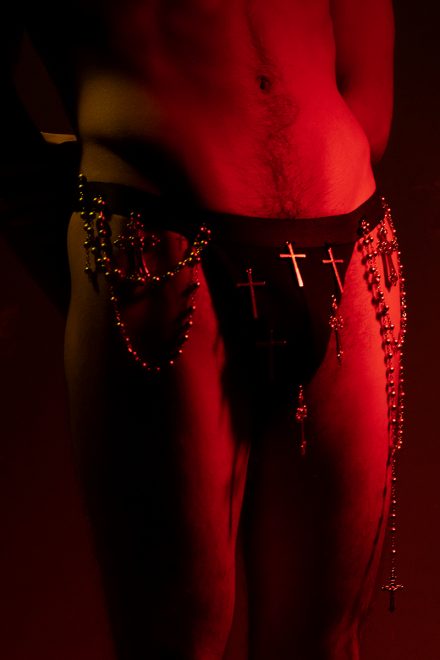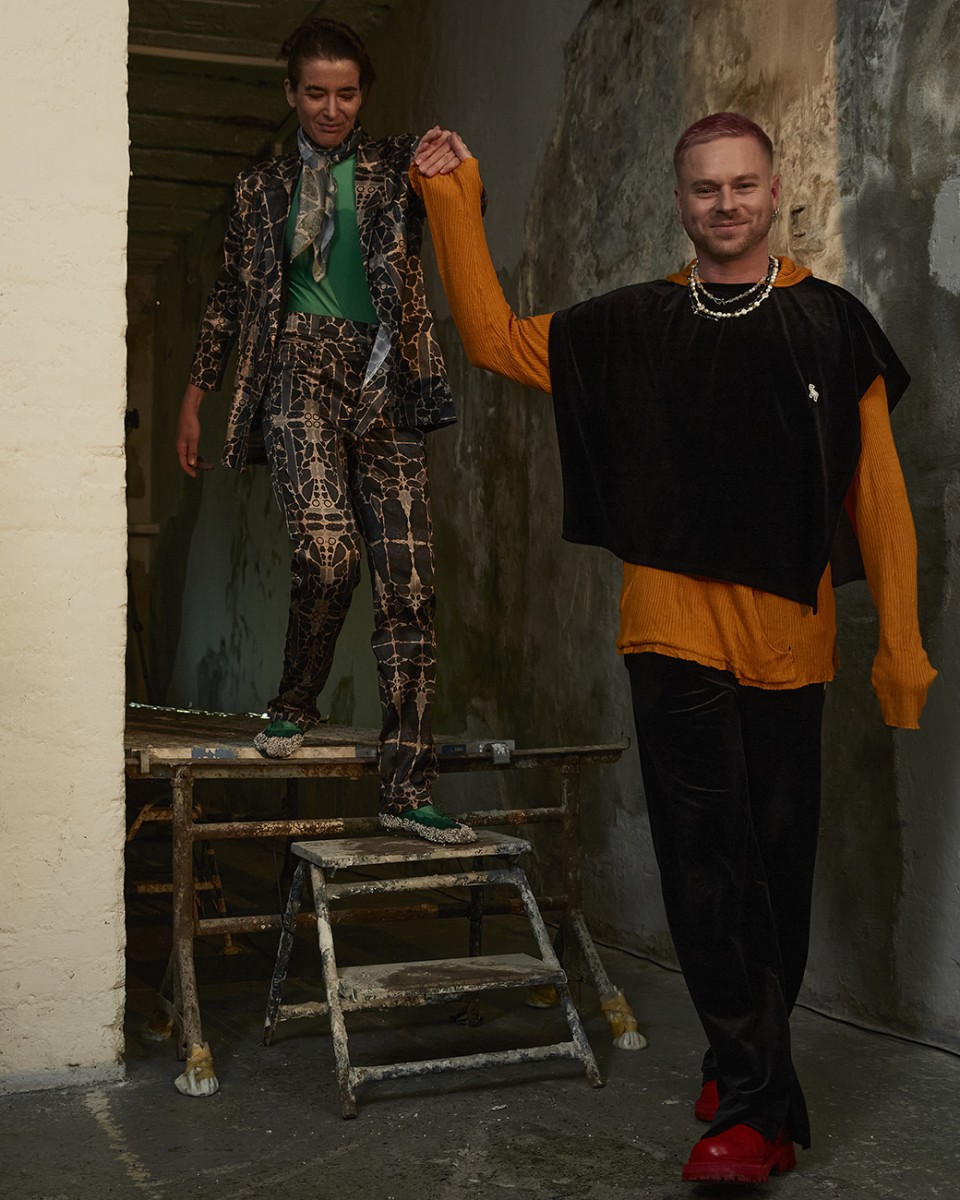
Following their first collaborative collection show in Zurich, we caught up with the artist and designer about fusing their creative practices and sourcing models from Grindr
Over the past 12 years, Swiss designer Julian Zigerli has carved out a lasting presence in the global fashion community. Initially focused on his eponymous brand’s first shops in Tokyo, Milan, New York, and Hong Kong, he returned to his homeland in 2018, dedicating much of his time to running his flagship store in Zurich.
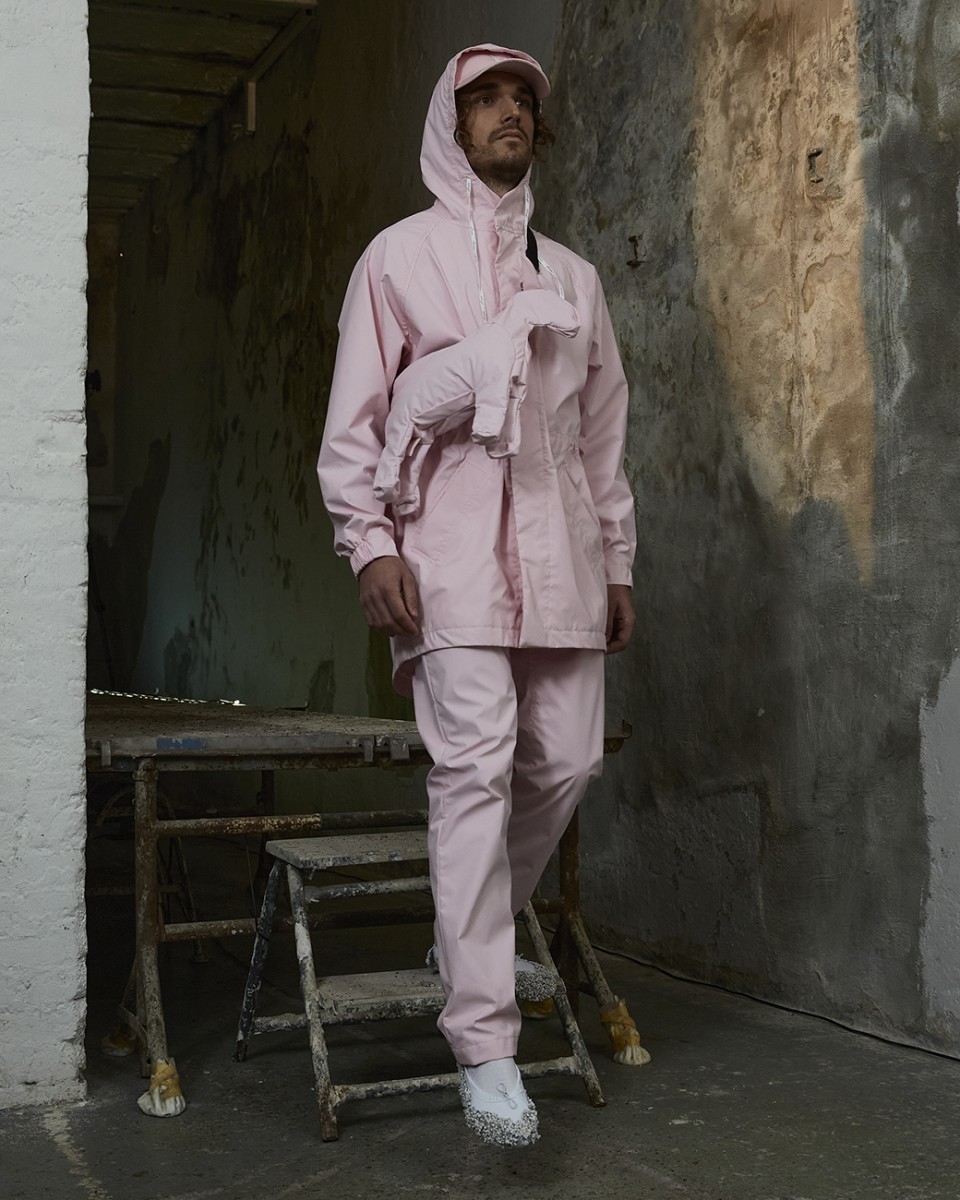
Whether lecturing the next generation of designers at Berlin’s Universität der Künste or crafting new collections for his label, Zigerli is always up to something exciting. His latest project, Rock, Paper, Scissorli, continues his tradition of playful naming and style, comprising 51 items drip-fed to the public through five drops throughout 2023 — the second time Zigerli has experimented with this format.
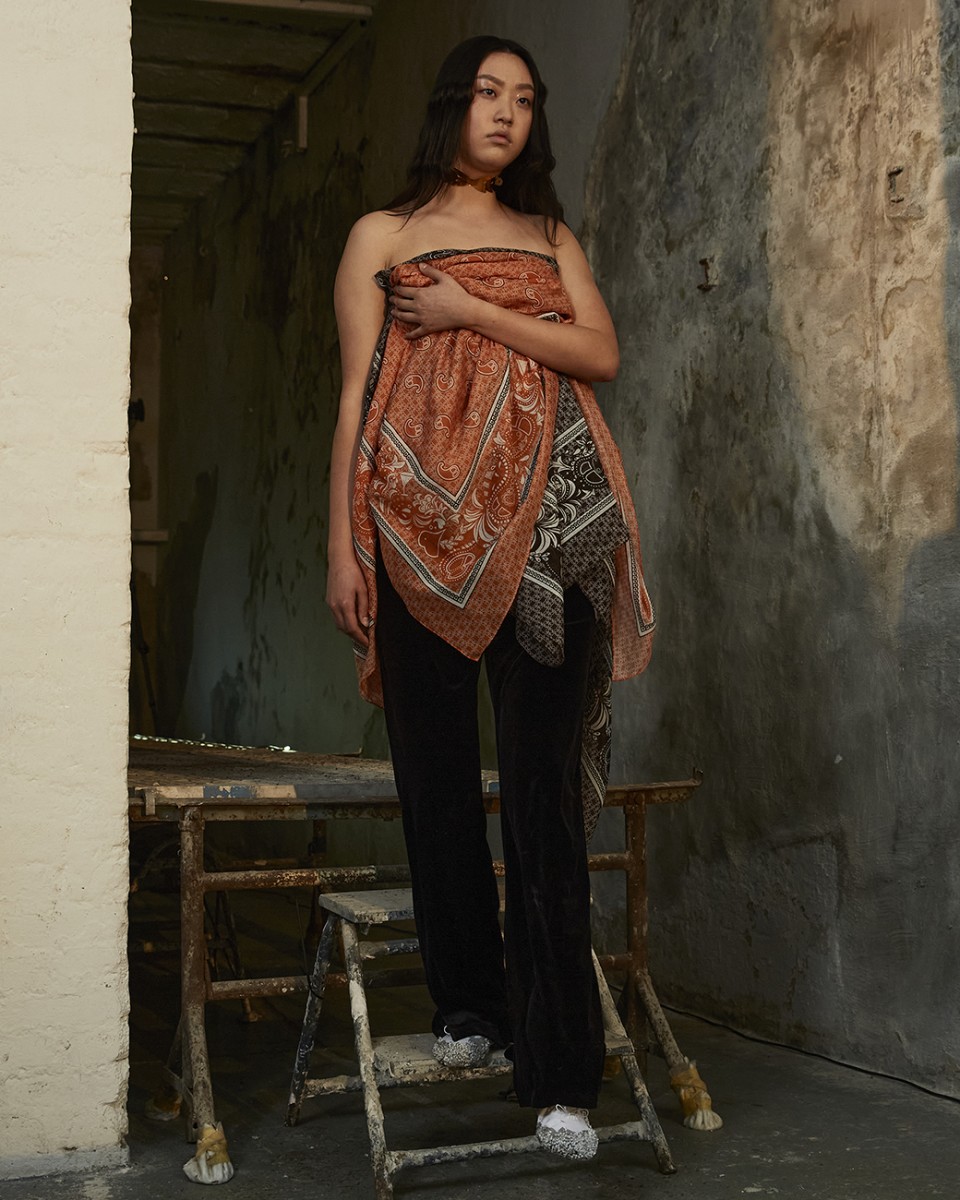
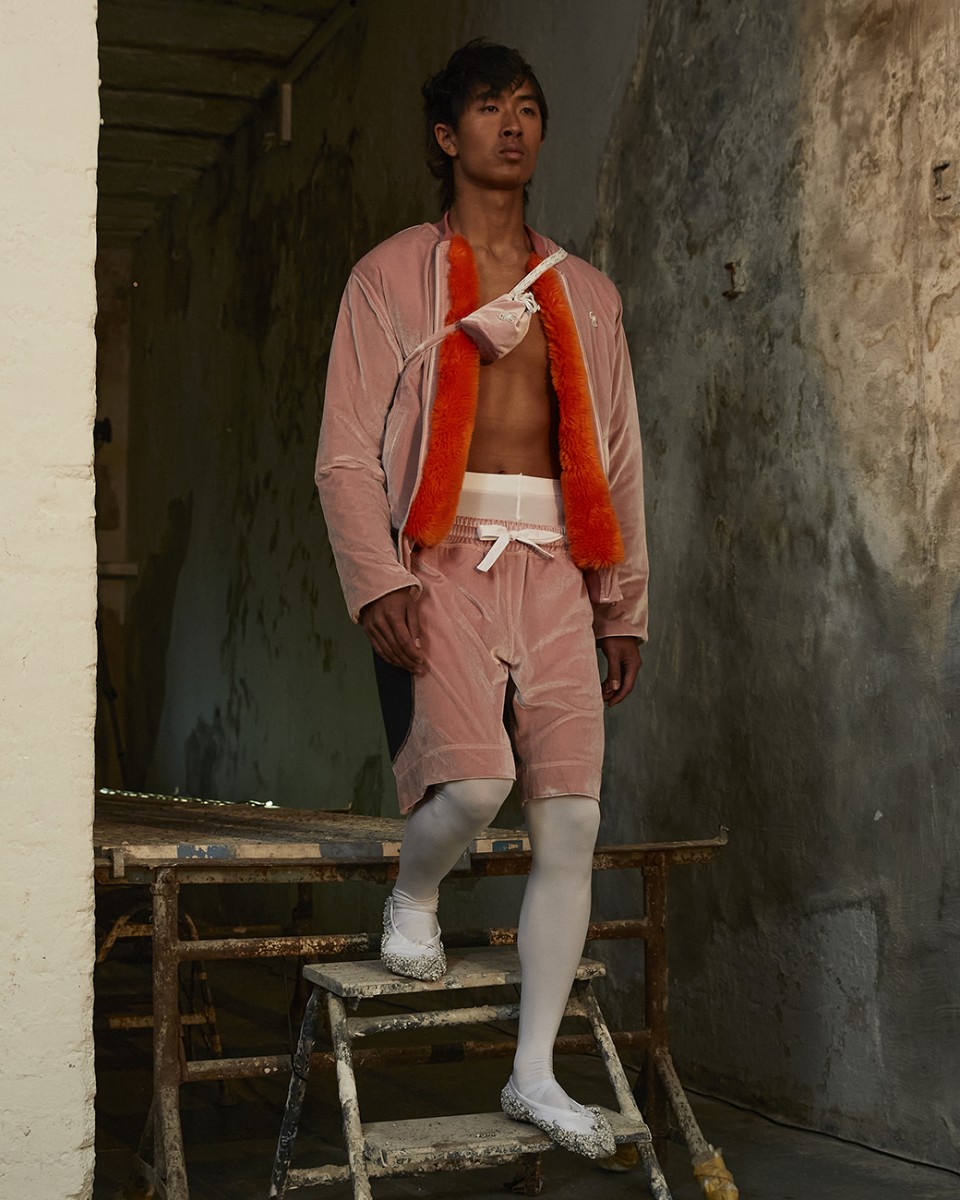
To mark the release of all items, he teamed up with Zurich-based artist Katja Schenker to host a not-so-traditional catwalk show at VC7 Openspace on 15 April. Known for her work across live performance, drawing, sculpture, and installation, Schenker explores the sensual and ephemeral qualities of natural materials — their weight, permeability, and perishability.
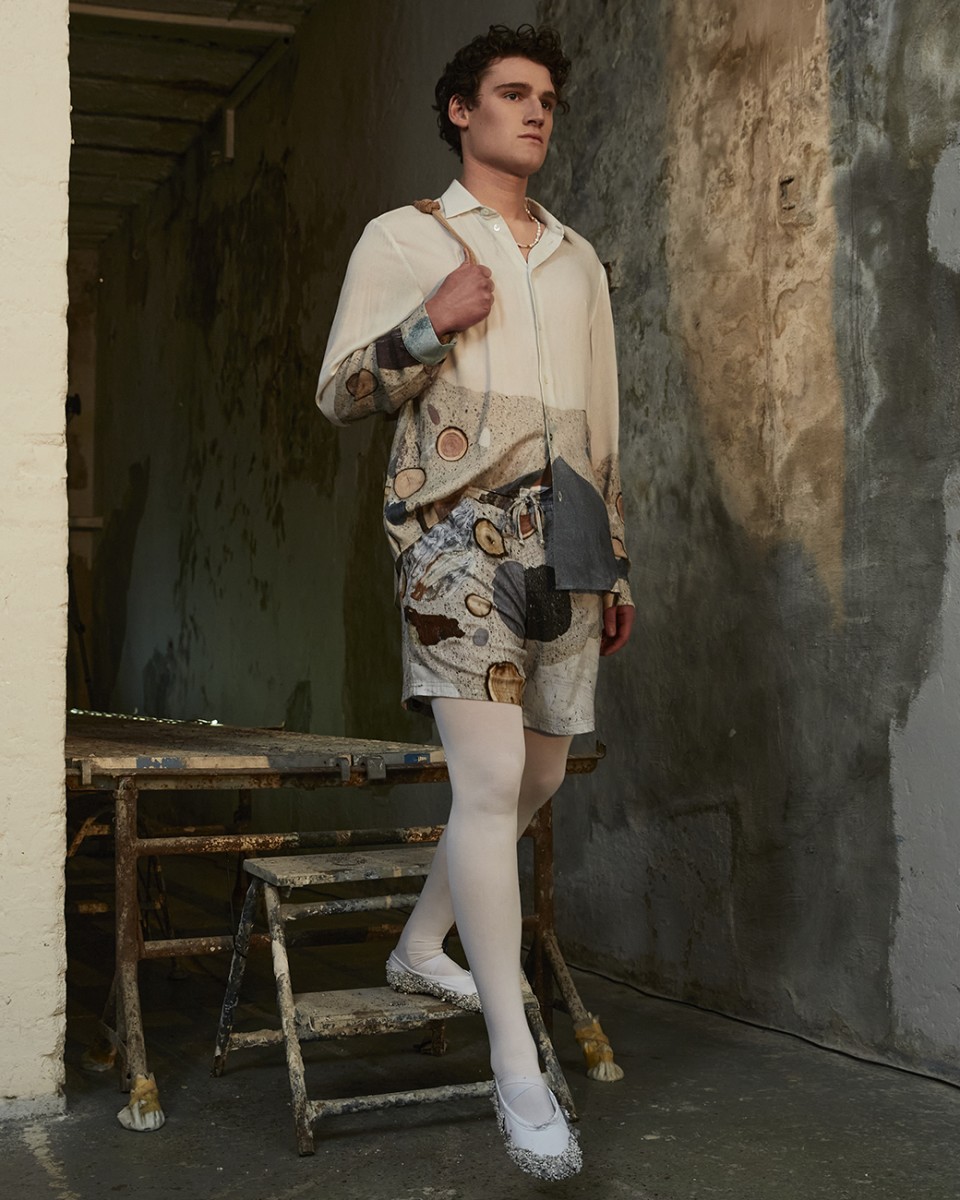
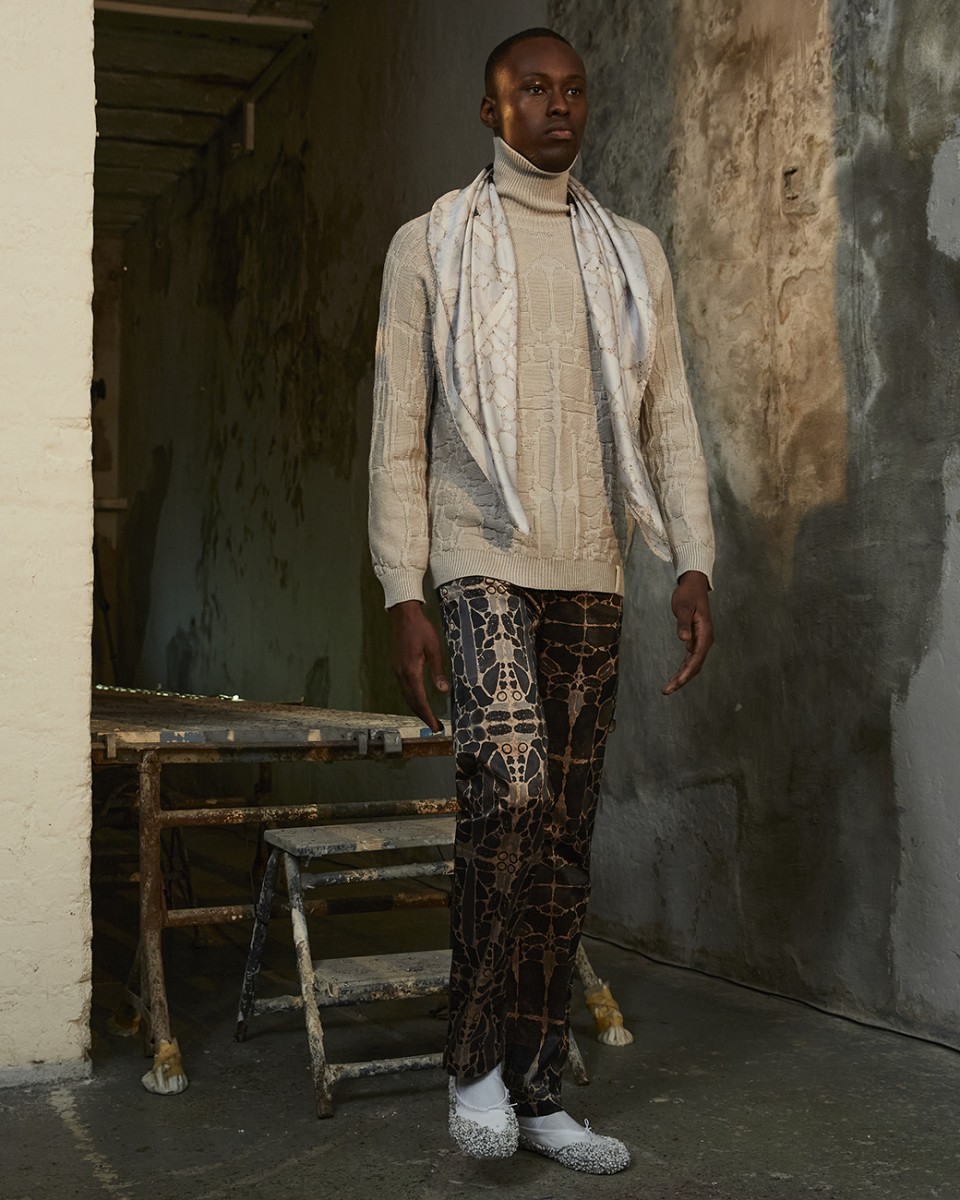
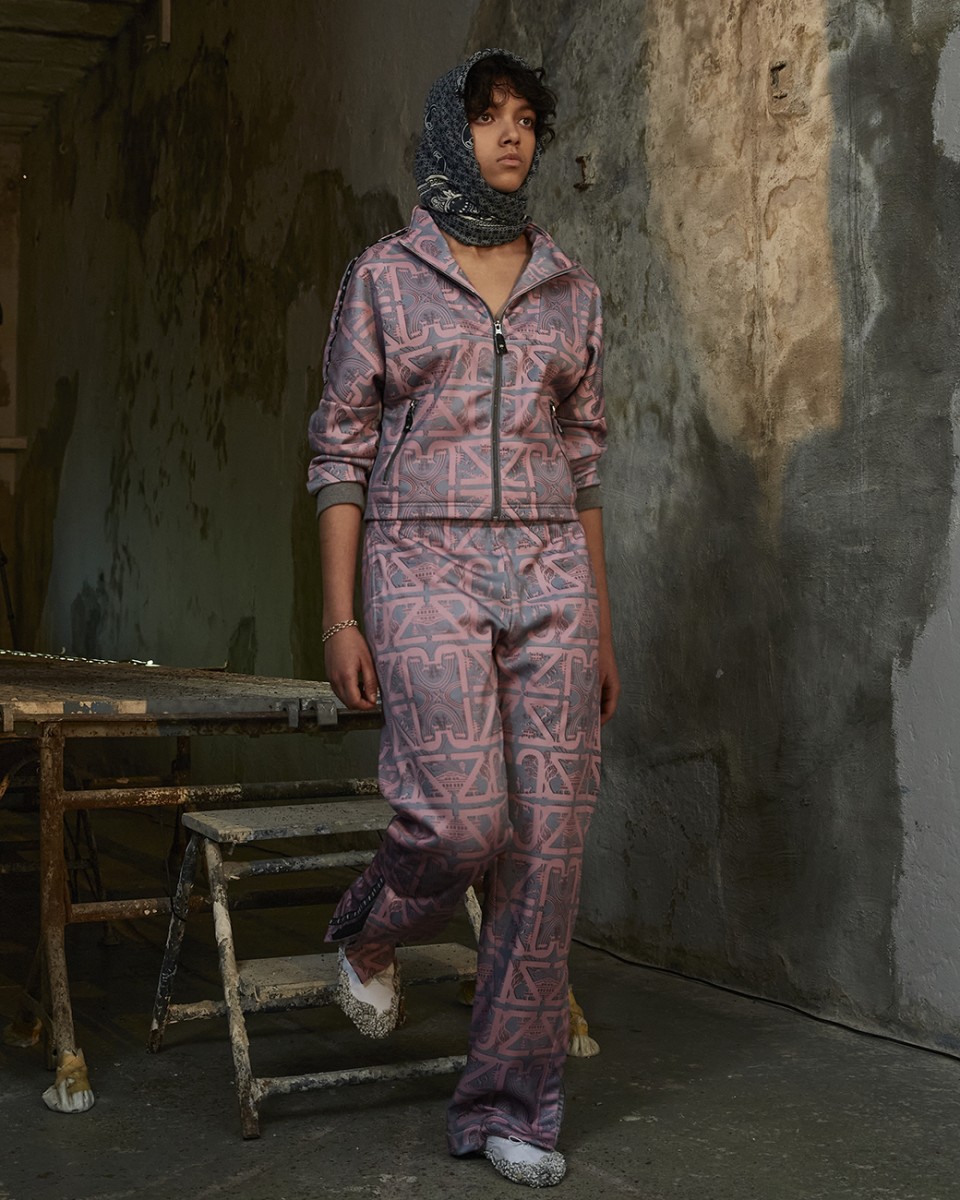
Beyond curating a live performance, the pair co-created stone and wood print garments, grounding the collection in tactile artistry. Fervent in blurring the lines between fashion and art, they will also present an exhibition and screening of the show at the same venue from 25 May to 3 June.
Eager to learn more about their first collaborative project and Zigerli’s unique approach to sourcing models, we caught up with them after the show.
Julian, your brand has gone through several evolutions over the last 12 years – you started out with as a menswear only brand more focused on the international market, and now you’ve even cater to kids! What has been driving the continuous adjustments, and developments?
Zigerli: The first shops were all very much ‘abroad’, there was nothing in Switzerland, not even Europe. At some point, Switzerland came closer and closer. We only opened our flagship store, and started doing shows in Zurich in 2018. I suppose this shifted as I got older, and my priorities changed. I wanted to come home to give something back to the Swiss fashion community.
Starting as a menswear-only brand, we realised from day one that it wasn’t just menswear, it’s for the people. From the beginning, we had a lot of female customers because they appreciated the sporty shapes of the garments and the easy ways to wear the garments. So this was a natural evolution. We also don’t necessarily call it unisex. I feel like that’s not the case. Instead, just come to the shop and pick a piece you like, try it on and if it fits, it fits!
As for the kids, ever since my family got a bit bigger and my brother had two kids, I needed some gifts for them (Zigerli laughs). So we started with little accessories like caps and we’ve been building this up, we even did a family sweater. The sweater with the cows was originally for grown-ups, and it was such a success. Then I thought: ‘This is the cutest thing for kids!’ So we added it. It’s only about four pieces for kids so you couldn’t call it a ‘kids line’. But it shows how flexible we are. We can just adapt to any situation.
I remember back in the days everyone kept asking me: ‘So for whom do you design for?’ It was always hard to answer because when I’m in the shop, I sell to everyone. It doesn’t really matter what age or gender you are. I think we proved that with the show. Age and gender just evaporate!
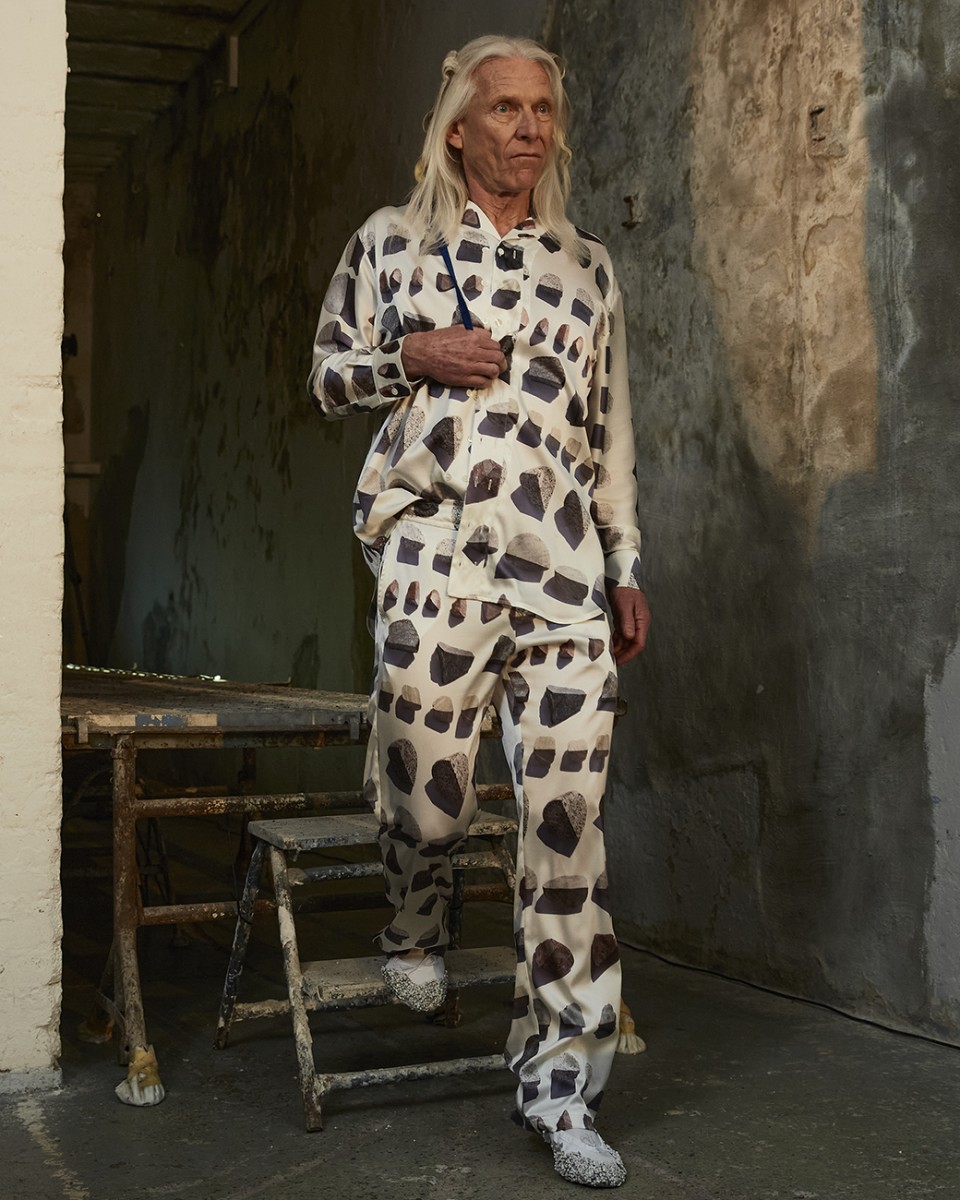
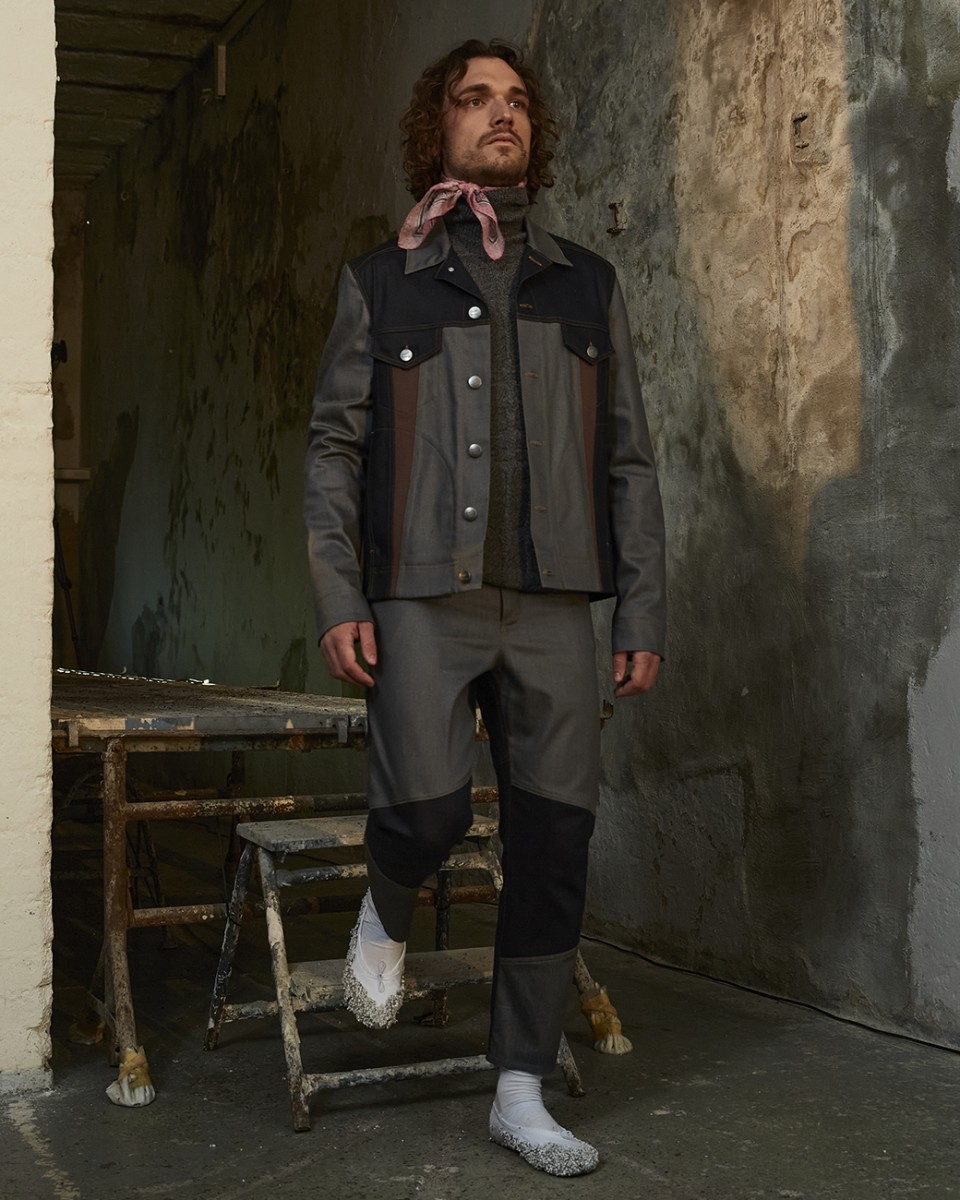
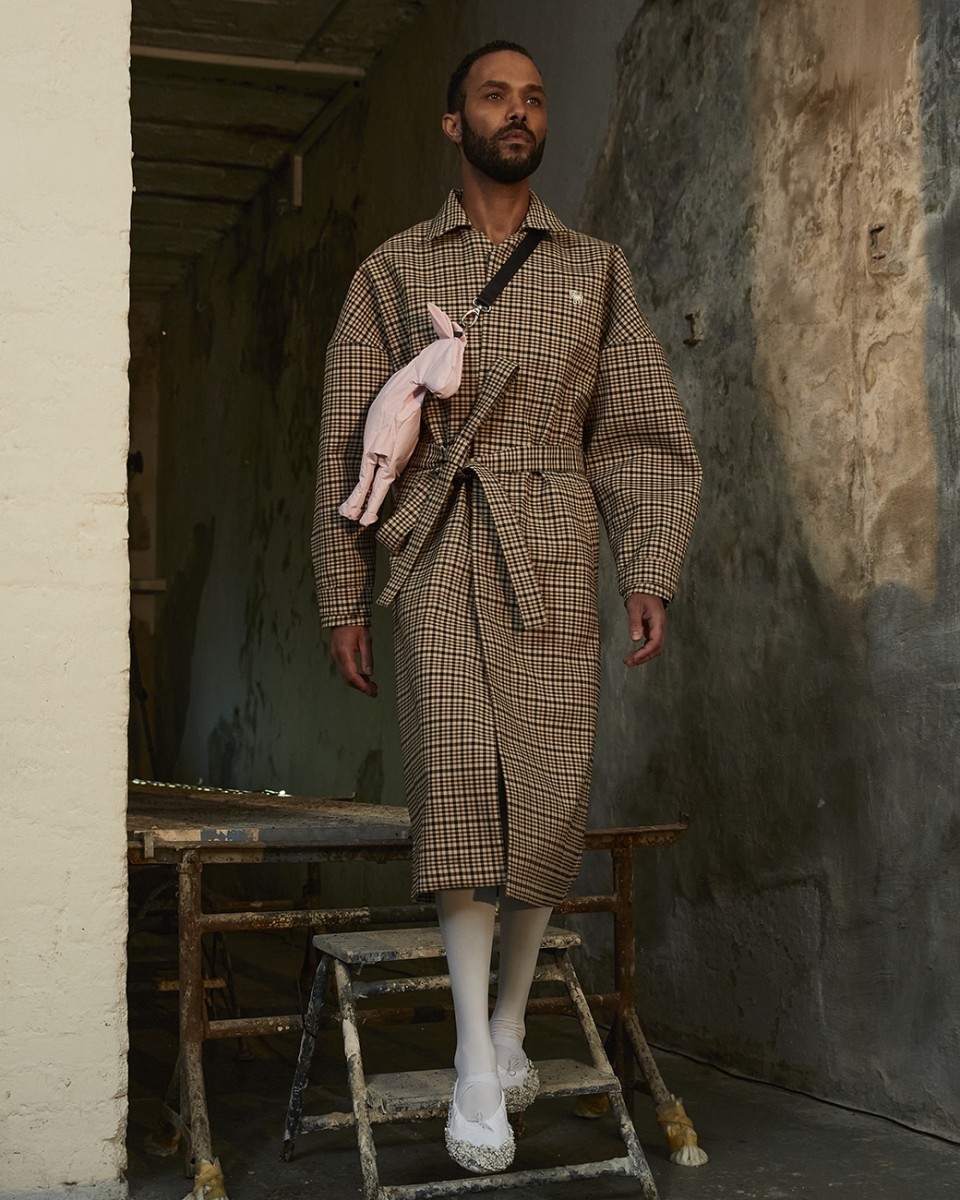
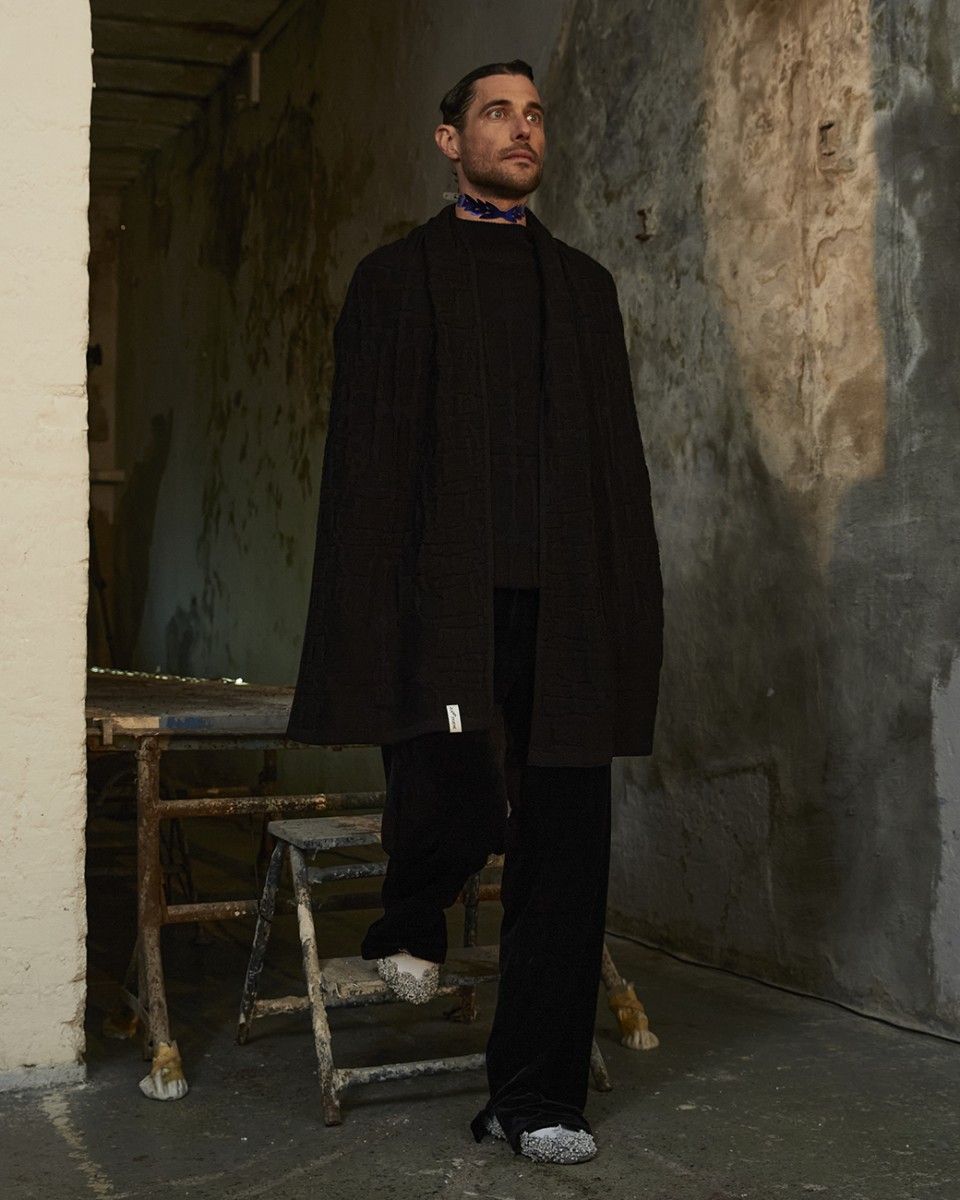
Congratulations on your recent Rock, Paper, Scissorli show! On the topic of inclusion, it was really heartwarming to see your colleagues, friends, family, and even people you met through ‘interesting encounters’ model this collection, in a more intimate setting… What led you to break away from traditional high fashion style catwalk shows?
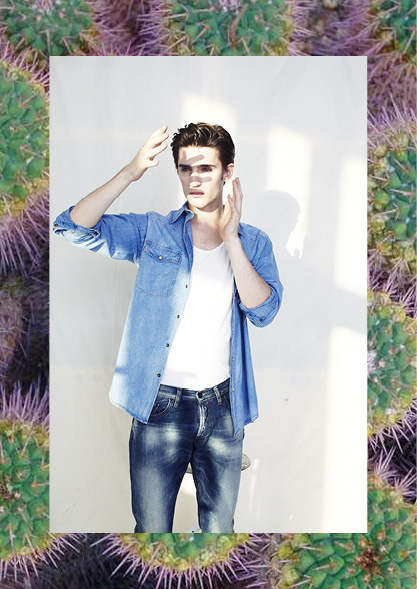
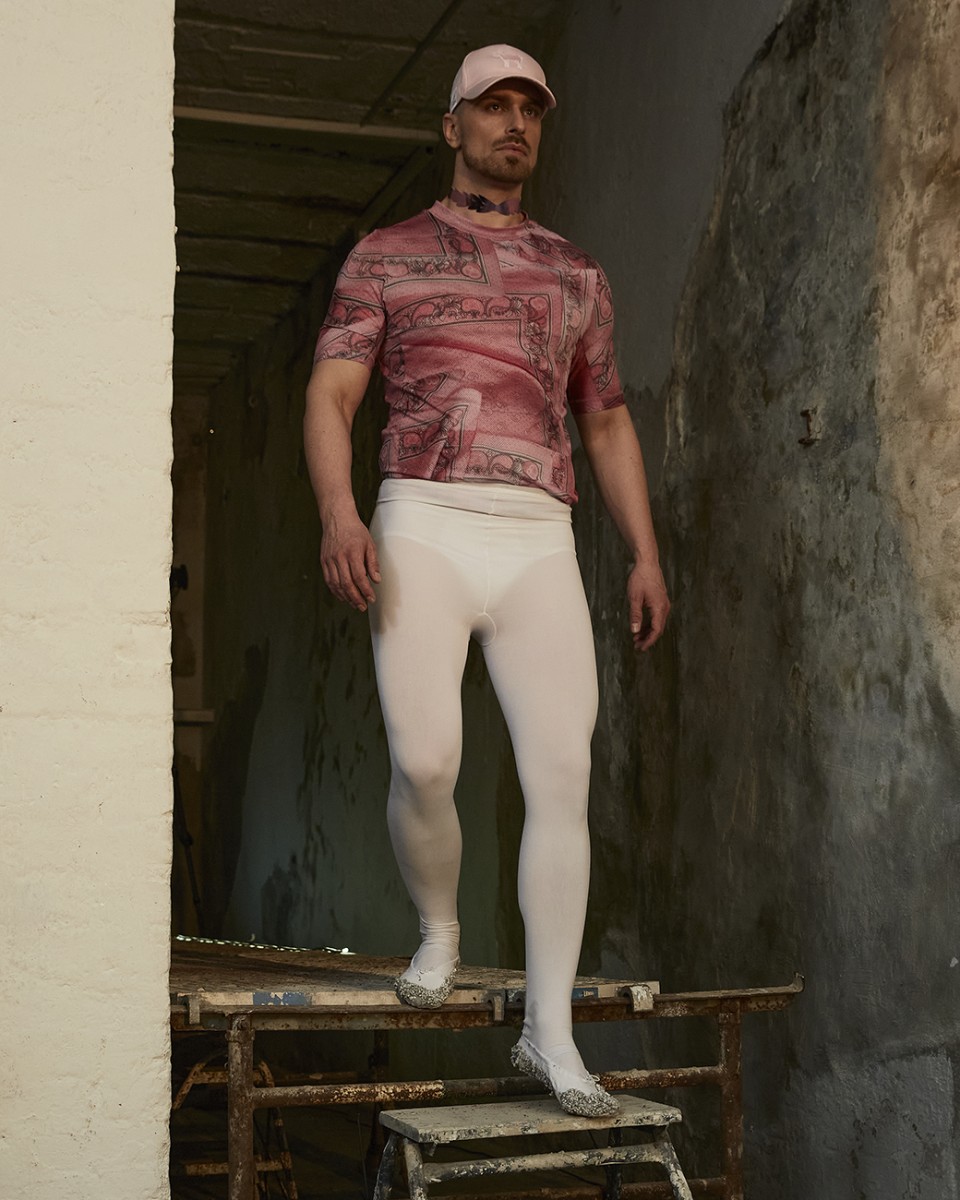
Zigerli: I always love to cast my own models. I’ve had so many campaign shoots with people, who I met at the store. I was like: ‘Hey! You’re not leaving before I take a picture of you!’ I ask people I meet to come do campaign work for me. 3 months ago, when I started to think about how we were gonna present the collection, I saw a friend of mine in a coffee place and he is this older, really tall and beautiful guy with grey hair. That’s when I thought: ‘Oh, maybe we should make this a focus?’ Like less agency-focused people.
So I collected all the faces throughout the months. In the studio, we made this wall with people who could potentially model for us and in the process, a lot of friends ended up there. I even went to Grindr and scouted two guys. I asked myself, ‘Where do you find sexy daddies? I think that’s place isn’t it?’… (Zigerli laughs.)
I mean, it’s not that easy, it’s a bit awkward. When I reached out to my brother because I needed his kids for the show, I suggested that he also walks in it, he’s a tall and handsome guy. So yeah, it just kind of came together like this. When I look at the group picture, it makes me so happy to see all these faces.
Katja, for the show you curated a live performance. Could you describe for those who weren’t present what that performance consisted of?
Schenker: You say ‘curated’, but I was also the performer! (Schenker laughs.) That’s what I always do because some things can only be decided on the spot, I can’t prepare everything. That was also the case with the piece, Julian, his team and I prepared this concrete dress. We looked at how it has to be from the fabric coming from my studio and I worked on this net structure. It’s just a fishing net you can find at any sports fishing shop. The dress was already finished so we had to cut it in a way that it could be flat when I poured the concrete in a layer of half a centimetre onto it.
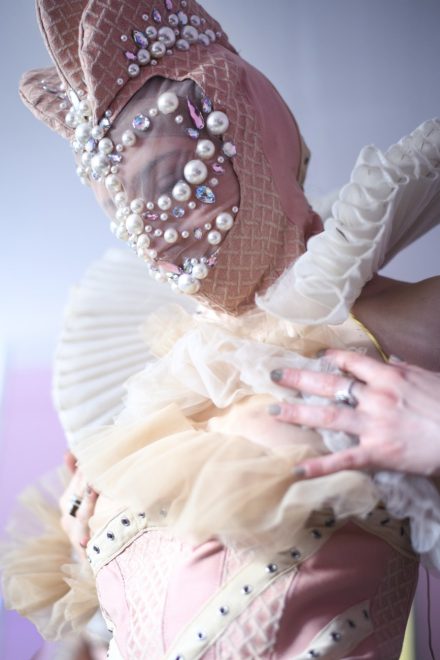
At first, it was like armour with hard concrete edges, and then once I got onto the catwalk, the surface started to crack, and I made these cracks audible for the public to make clear the performance was starting. The dress changed immediately from something very rigid to something soft and smooth, a textile piece. With every movement, the dress changed. In the end, we had this dress with lots of holes and a snake-like structure (see below right).
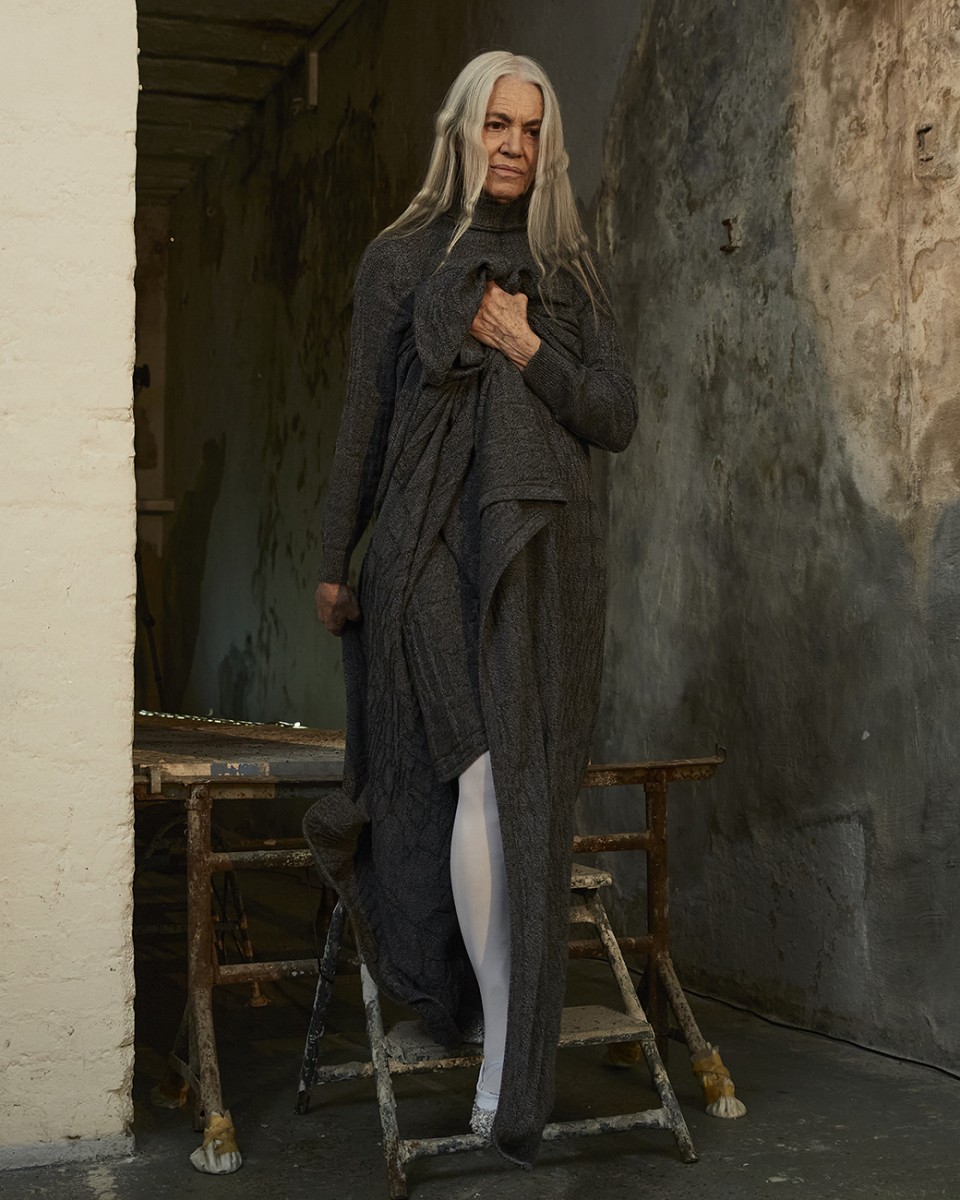
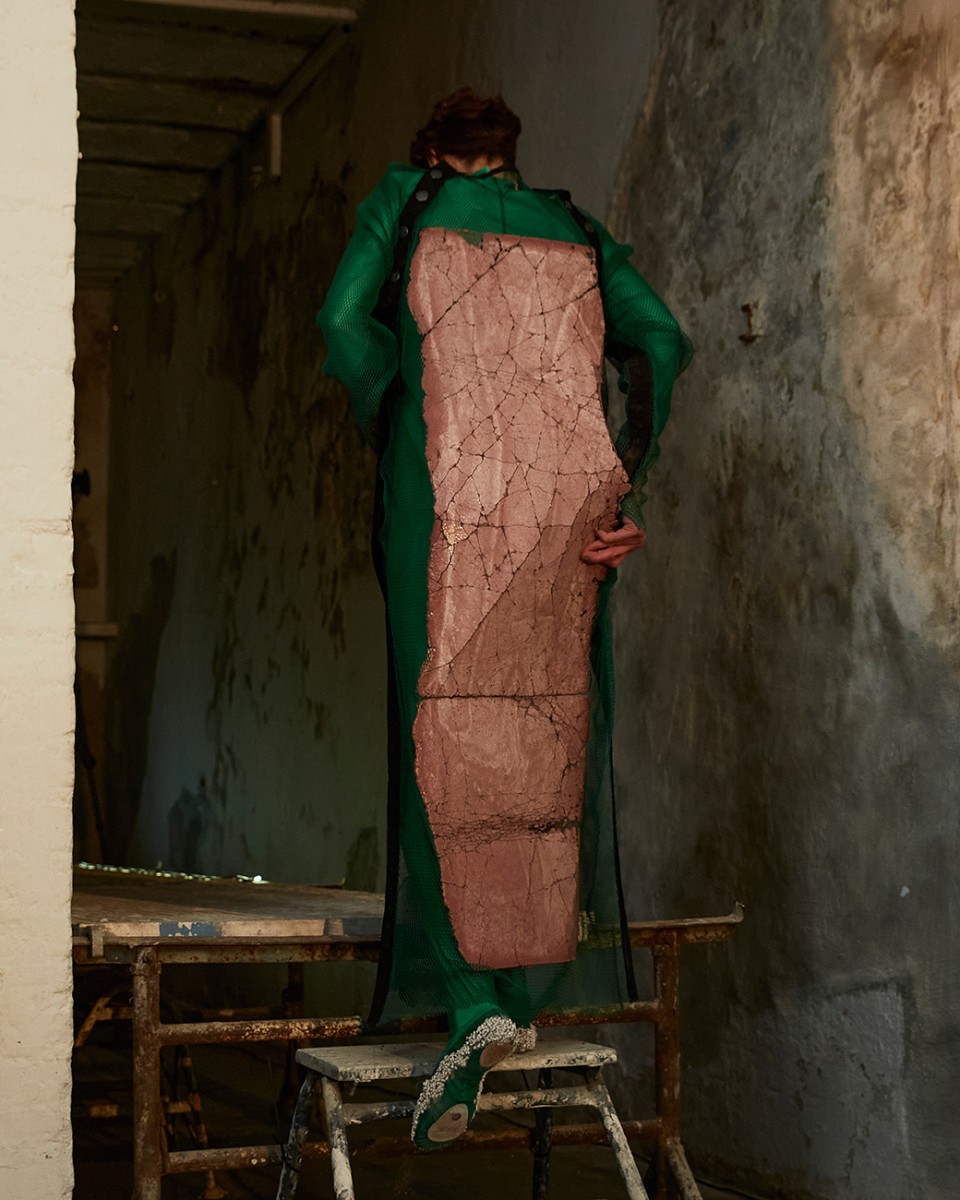
You mentioned this snake-like structure of the dress (see image above right). Your artworks typically aim to heighten the experience and perception of one’s corporeality concerning the bodies of the audience and that of the artist. How did you become interested in the body and skin in your artistic practice?
Schenker: I have always said this is a very long relationship and interest. because in the end, the body is this thing you have and will always have. I want to use it, take it and feel connected with it. Through the body, we connect with other people but also with material and non-material.
So for me, the body has always been the starting point of all of my artworks. I see the body as a space, and now I am working more with this idea of space – the body as and within a space. I am sensitive to the body and its relation to materials and how they feel. Our skin is the closest material we can feel and connect with.
Where did this idea to fuse your practices come from?
Zigerli: I think I first saw her monolith in the FHNW Campus in Muttenz, it’s a university for architecture and social work – it’s quite a new house. I was working there with my students and Katia made this huge monolith piece in the middle of the hall. I saw this piece and I was, like, blown away. I just wanted to touch it, to hug it. I think I even wanted to become it (Zigerli and Schenker laugh). That’s when I started to follow her work and we started to connect on Instagram.
We never met, but we chatted a bit, and at some point, the Kunsthaus in Zurich made a new shop and asked me if we could create a product for the new shop. I was like, ‘Yeah, of course, but if I do this, it needs to be with an artist.’ I wanted to have the context of this museum and the first person who came to mind was Katja. I thought, ‘Maybe now is the time we can start to work together. Let’s do this!’
So we made this silk scarf, (Zigerli points to Schenker), she’s wearing one right now. And, just like that, this was the beginning. The flow was so easy. We understood each other very well and the product was really beautiful. So I was like, ‘OK, this is to start like this is not enough. We need more.’ Immediately, the scarf went into the collection plan, and that’s where it started.
Whilst fashion and art have a very natural overlap, there are also inherent differences in your practices. Did you encounter any points of contention in the design process?
Zigerli: I think one of the biggest differences is that we create something more commercial for the client to buy right away from the shop. We also create something for the body and not for the wall or the room, or like it’s for a human body. It was interesting for us to create this mesh dress for a performance, thinking we were not intending to sell this. But it somehow all came together. She needed us to create this dress, and we needed her for it to become what it was. It had to be this catwalk situation because it was this middle line of fashion, art and performance.
At first, we planned to have the show and also an exhibition space at the same time. And it was all just too much so we decided to narrow it down. Let’s put everything on the runway. Let’s make it fashion and art in one. And I think this worked well. When the models came out wearing the garments, we also had the artwork walking with the models. You know, there were some art pieces on the catwalk as well.
Schenker: I would say I’m really happy with this result with mixing up the artwork and the clothes, which are kind of artworks in themselves. For me, it’s always important to destroy these barriers and to open up my work to different fields like architecture or here. Fashion was the first time for me, but very inspiring and as Julian described with the collaboration of the performance dress, it was really a mix of art and fashion.
Julian, you’ve worked at the Fashion Design Institute of the HGK/FHNW in Basel and you even work as a Fashion Design Professor at the UdK in Berlin. What is it about teaching fashion that you enjoy the most?
Zigerli: It’s like a mirror. Everywhere I teach, I learn a lot from them as well, from their creative processes and mindsets. I’m still teaching at the UdK for another year because I have this guest professorship there. I try to do projects with them and bring in more industry-focused teachings.
With my brand, we are less traditional, we don’t create on a seasonal basis with just two collections so I started to change the whole concept of this with my teaching. I also try to teach them to think at their own pace and in their own way- like how they want to present their collection. Like all the parts that made my brand unique, I try to hand these ideas over to them, and hopefully, this inspires their ideas too.
What’s your best piece of advice for young and independent designers looking to make a name for themselves?
Zigerli: I have the best tip: ‘Marry rich!’ (Zigerli laughs.) Unfortunately, you need a lot of money, and if like most of us, you don’t, be prepared to fight for it! You have to be strong about it. You have to be focused on yourself and the work you do. And most importantly, you really need to believe in and trust yourself because you need to be patient.
Katja, looking towards the future, can we expect any upcoming exhibitions from you?
Schenker: I had a residency in London for half a year in Whitechapel, which I loved. During it, I started a new drawing series related to the body. It started with body prints combined with linear drawings. This series is now exhibited in the Galerie Mitterrand in Paris until 6 May so I would recommend having a look at the show if anyone is in Paris.
Also, the artworks in the show were like a build-up for a little exhibition we’re going to have at VC7 Openspace in Zurich from 25 May to 3 June. The vernissage is on 24 May. I’m very happy that we can continue with this show. Our video of the show will also be available so we can relive the live performance.
How are you feeling about the upcoming exhibition Julian?
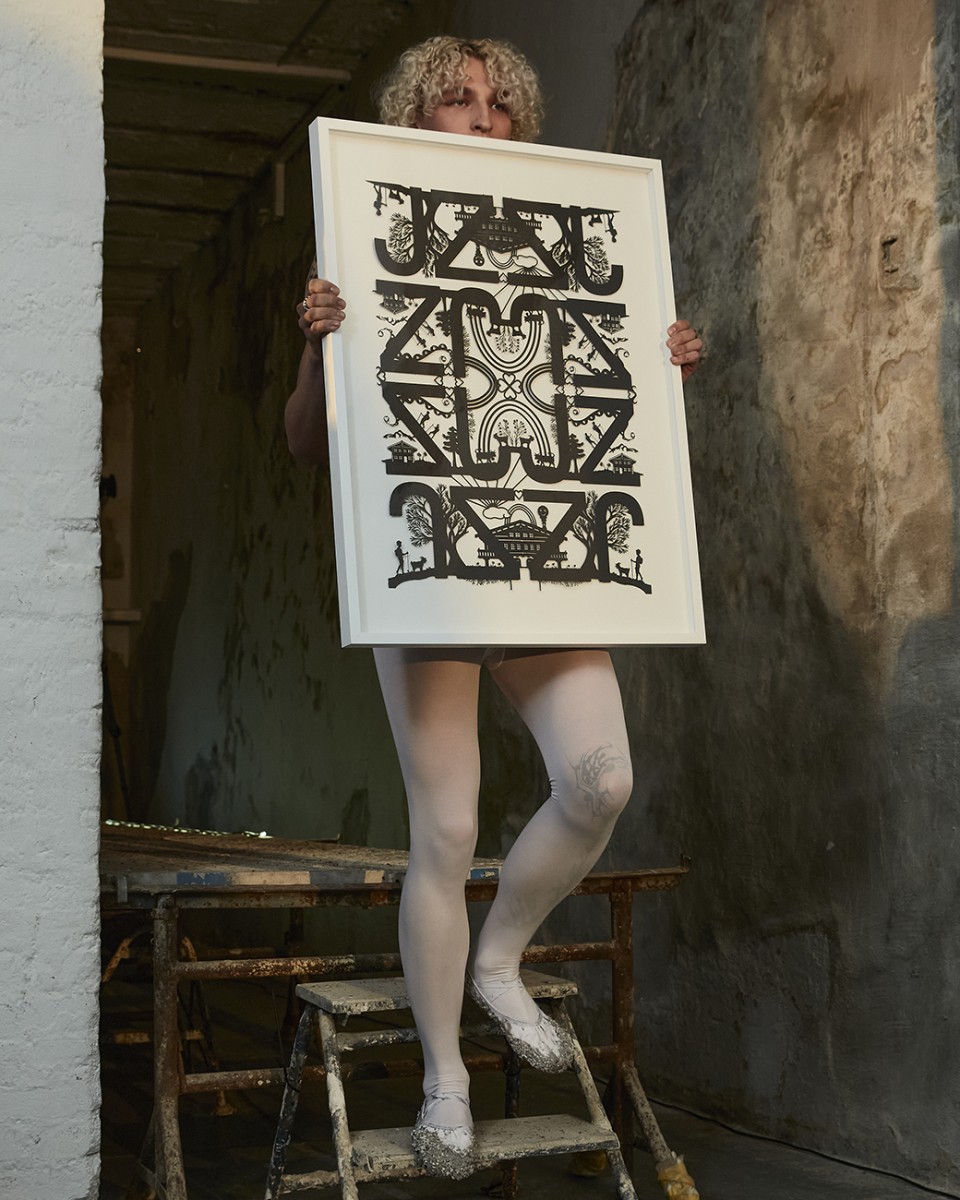
Zigerli: This is the first artwork I’ve ever made. All of the paper cuttings used to create the prints ended up making these beautiful pieces and we thought they were too nice to throw away, so we put them together in a frame and thought, ‘Ok, cool, you could hang this on your wall!’
The same for the silk pieces. They’re not scarves but something you can hang on your wall. It will be interesting to have the same pieces in different scenery. Obviously, we cross the boundaries of art and fashion for our catwalk show, but I also want to break away from this traditional idea of an exhibition. I want to create an open interactive space for the public to come in and experience the artwork and clothing.