With just three days until Syndrom’s Tbilisi flagship store opening, we speak to founder Tekla Gurgenidze about the label’s upcoming collection and runway debut at Mercedes-Benz Fashion Week
In Tbilisi, where cavernous Soviet bunkers and derelict buildings give way to techno clubs and fleeting moments of collective release, Tekla Gurgenidze has been refining a visual language of her own. Embedded in the underground scene, Syndrom is a clothing, beauty and jewellery label that utilises fashion to articulate marginalised voices and document the reality of creating in a space rattled by censorship and political unrest.
Since 2015, the Georgian designer has alchemised Tbilisi’s “dark pulse” into several collections and visual essays — repositioning garments as artefacts within a wider cultural narrative. Gurgenidze’s affinity for storytelling dates back to childhood. While sketching was not her forte, she recalls hours spent “costume-writing” — filling her notebooks with outfit ideas and detailed observations — a ritual that still grounds her practice today.
Syndrom’s latest chapter serves as a testament to this instinct. Encompassing a full collection and complementary visual series, Poiesis (2026) traces metamorphosis — how moments of vulnerability, tension and fortitude quietly reshape identity and inner states. At Berlin Fashion Week AW26, Gurgenidze joined forces with Georgian DJ and producer Wesley Wise to tease part of the project through an immersive presentation — comprising a clothing pop-up, live music, poetry readings and a film screening.
On 7 May, all 30 gender-neutral looks and complementary jewellery pieces will be unveiled during the label’s runway debut at Mercedes-Benz Fashion Week Tbilisi. Ready-to-wear items can be purchased online the same day, and in person from Syndrom’s concept store, opening in the Georgian capital this Sunday.
Ahead of launch, we sit down with founder Gurgenidze to discuss her narrative-driven practice, the concept behind the new collection, and Georgia’s nascent fashion landscape.
Looking back on your trajectory to becoming an independent fashion designer — which core memories or sources of inspiration stand out?
Throughout school, I performed well academically, but I had no concrete plans. I was even considering studying literature or a technical subject at university. Then, six months before my final exams, I made a conscious decision to pursue a career in fashion — largely shaped by my experiences growing up in Tbilisi. Exploring industrial sites and underground venues — and mixing with musicians, painters, photographers and performers who transformed everyday objects into art — taught me that clothing is a powerful tool for both storytelling and survival.
During my first year at the Tbilisi State Academy of Arts, I realised my fashion programme was less hands-on than I had expected. So alongside my studies, I began working as a tailor’s assistant at a local atelier, which is how I learnt to sew. After several years of working in the creative sector — gaining experience in garment construction, small-scale production and collaborative artistic projects — I relocated to Italy to complete my MA in Ethical Fashion Design at the University of Florence. When I returned home, I felt ready to establish myself as an independent designer and founded Syndrom.
Casting your mind back to 2015, what were you hoping to achieve when you founded Syndrom?
I wanted to create durable, gender-neutral pieces that combine simplicity and functionality — for local subcultural communities and international clients seeking story-driven garments. The label’s name is a deliberate statement — like a medical ‘syndrome’, identifying a cluster of related symptoms shaped by a distinct cultural moment, with a particular focus on women’s lived experiences.
Storytelling through location has been central to Syndrom’s mission from the beginning — Tbilisi’s ‘dark pulse’ is part of our DNA. The city’s underground scene is a high-energy mix of industrial ruins and techno culture — a network of clubs, artist-run spaces and informal collaborations where fashion, performance and music bleed into one another. I wanted to build a label that mirrors that honest, raw aesthetic — using fashion to give the creative community a voice and document our reality.
Our visual essays are integral to that storytelling process. In 2016, we shot our first film based on a text by Georgian writer Luka Kharlamenko. This is just one of many examples of how film, performance and text have allowed us to add movement, atmosphere and a sense of ‘immortality’ to each collection, revealing how garments behave and interact with a moving body.
Fittingly, our first studio was in the Old Film Studio building on Agmashenebeli Avenue — a former state cinematic unit under the early Soviet administration in Georgia — where many community members had recording studios and workspaces. What began as a solo project gradually grew into a small, collaborative atelier as presentations and product lines expanded.
The label has grown considerably — expanding into jewellery, beauty, and now opening its first concept store on 3 May. How have you ensured your work remains rooted in your founding principles and local community?
Our work has always been guided by experimentation, sustainability, craft, visual honesty and freedom of expression. From the start, we refused to be limited by conventional fashion categories — operating across gender-neutral and unisex clothing — to represent our local subcultural communities. Initially, I avoided traditional schedules in favour of theme-driven releases and made-to-order pieces. However, over the last three years, we’ve begun presenting more systematically through seasonal collections.
Everything we do is driven by a desire to stay rooted in local craft and storytelling. The move into beauty developed naturally from a desire to create a full sensory extension of the brand’s narratives — with fragrance and make-up products accentuating each collection and its accompanying visual work. Production and finishing are carried out locally in our Tbilisi studio, and all materials are handpicked with sustainability in mind.
Where we choose to host our formal presentations also reflects this principle. Over the last decade, I’ve designed a plethora of collections and showcased them locally to honour the musicians, artists, poets, independent craftspeople, experimental venues and club collectives that inspire me daily — from Mirror, Darkly SS26 at the techno kingdom Khidi Club, to Delirium SS25 at the Evangelical Baptist Church of Georgia
The opening of our flagship Tbilisi store (2 Giorgi Akhvlediani Street) is another expression of this commitment. Housed in a former church, we will honour the site’s layered history — tracing faith, violence and survival — rather than reclaiming or redefining what was lost. The project grew out of research into erased urban spaces, alongside collaborations with local historians and heritage specialists to preserve the memory embedded in the walls.
Next Thursday, Syndrom unveils its latest chapter, Poiesis, at Mercedes-Benz Fashion Week Tbilisi — could you walk us through the collection’s concept and its accompanying visual series?
Poiesis is our latest chapter, reflecting on processes of change and the intimate birth of ideas. Borrowed from the ancient Greek term for ‘making’ or ‘bringing forth’, the title speaks to transformation — the powerful, generative act deeply connected to women’s creativity and how we make sense of our reality. The project unfolds through a visual series that captures the quiet intensity of the collection.
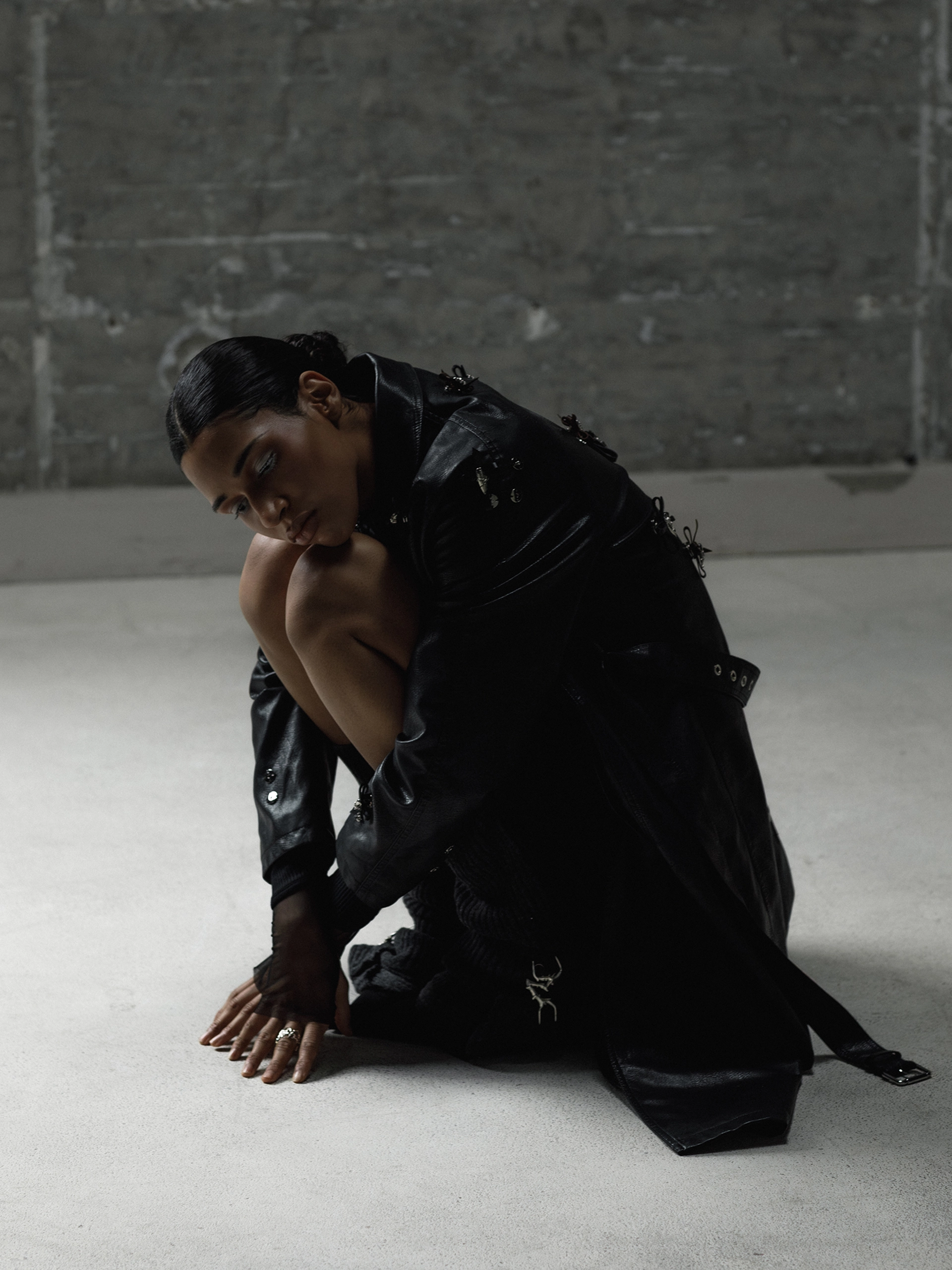
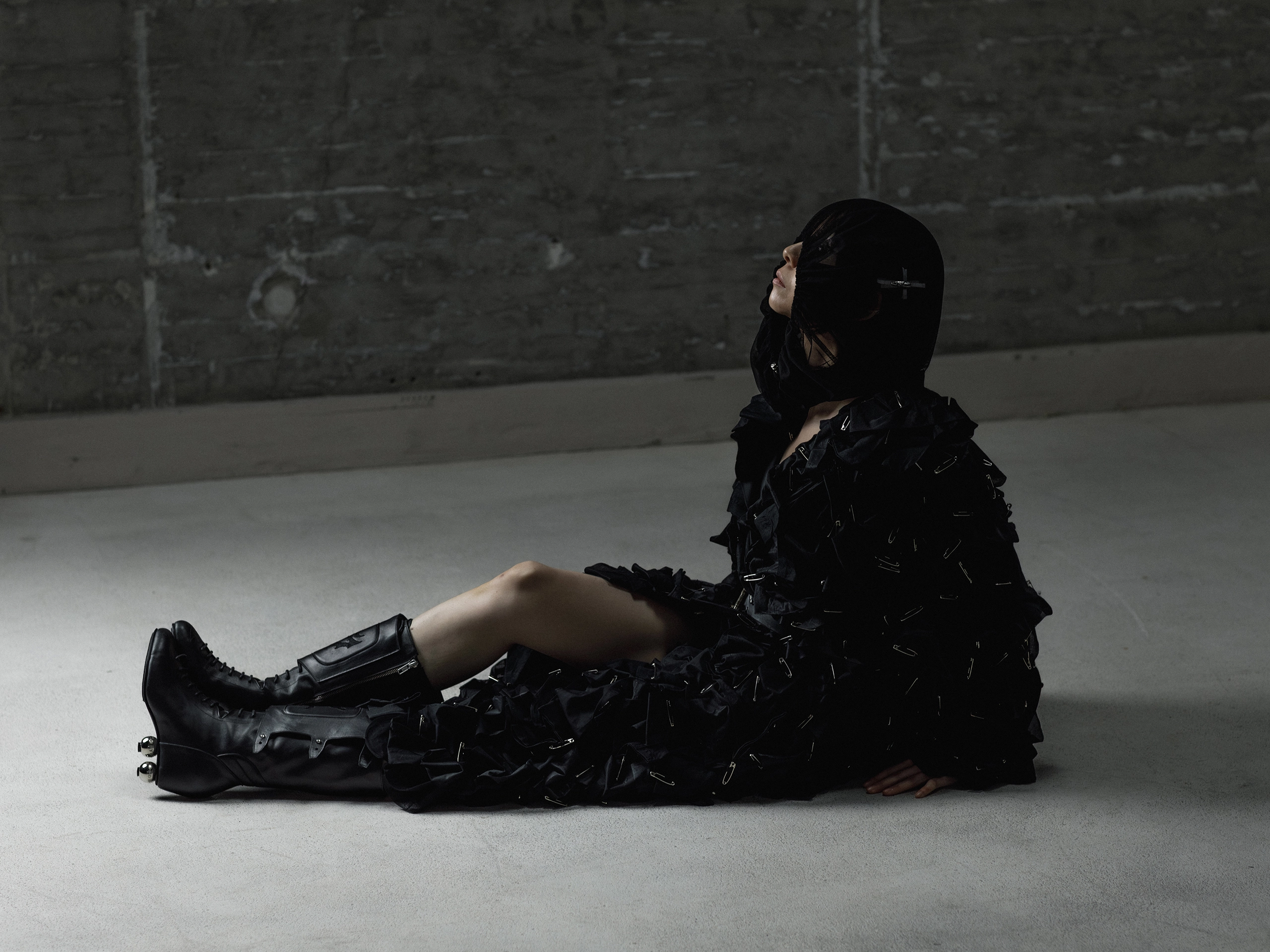
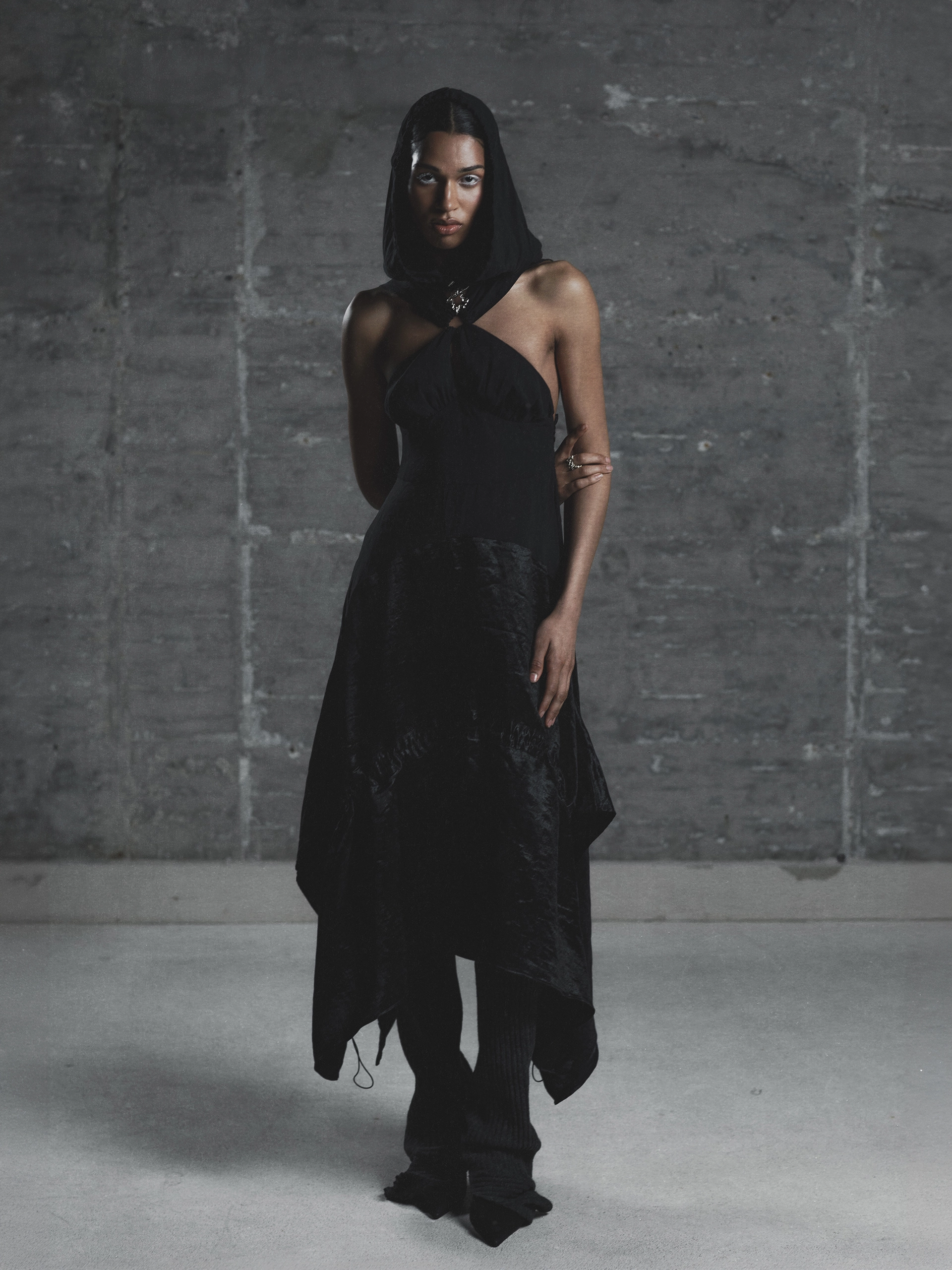
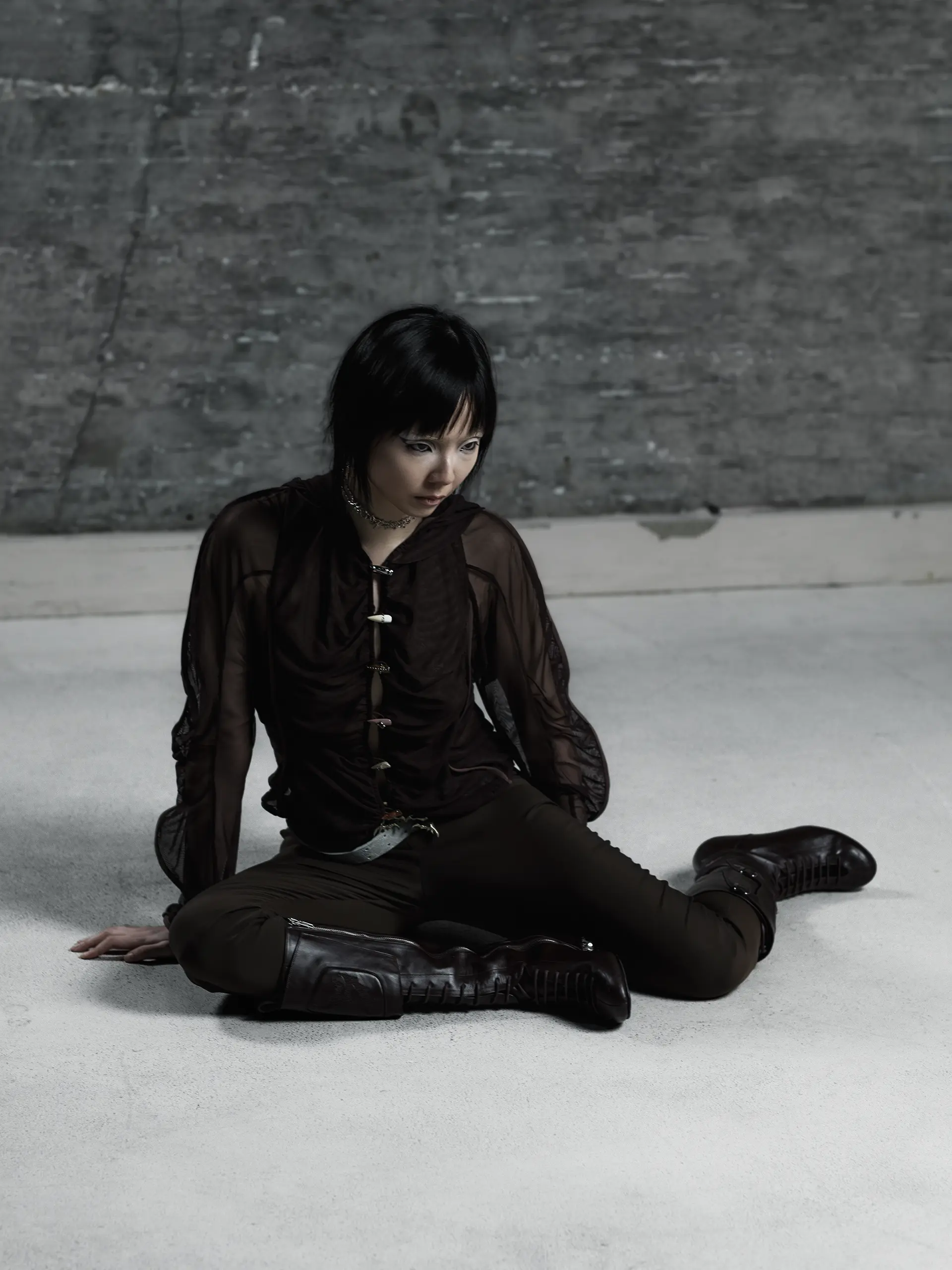
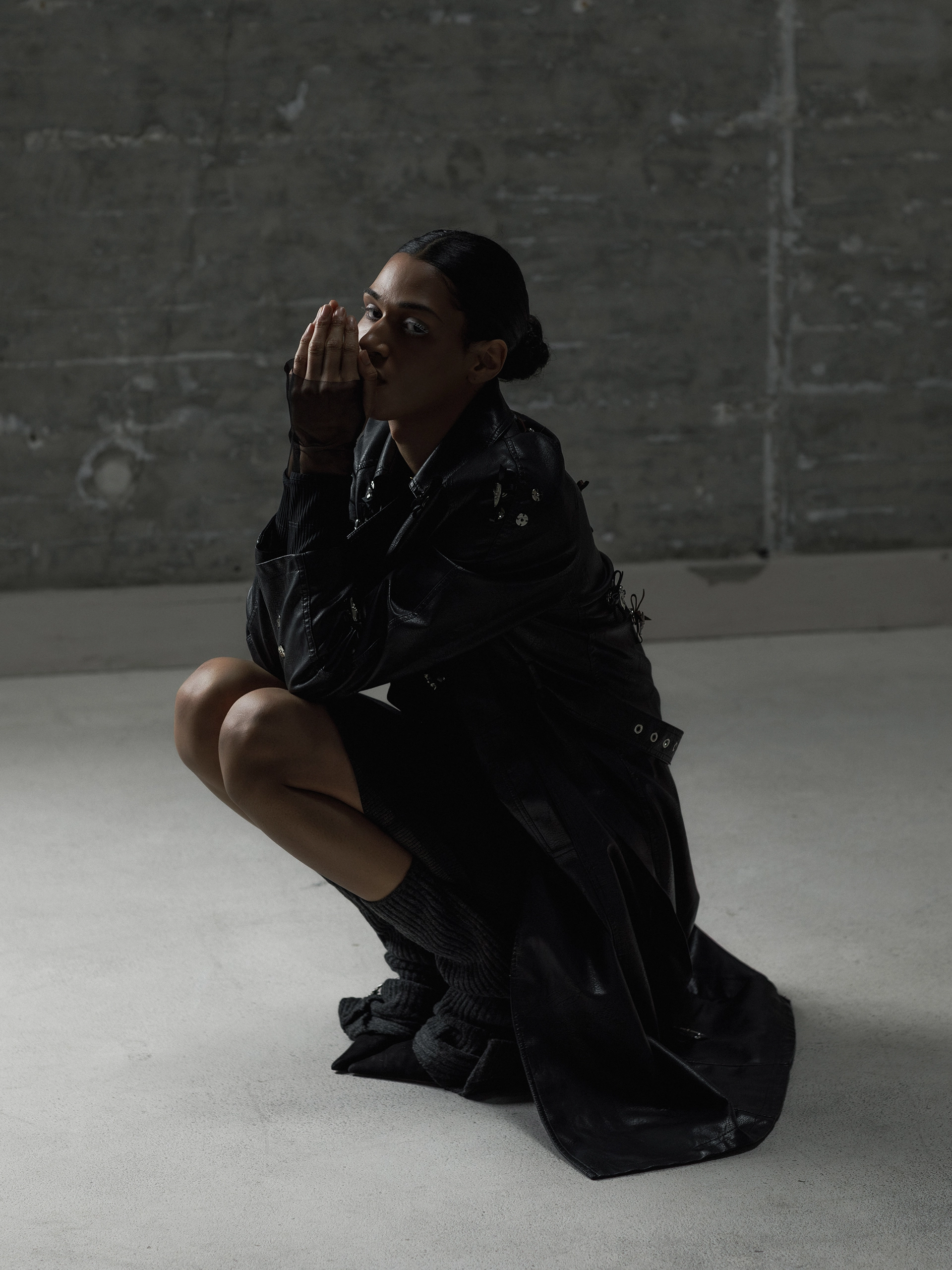
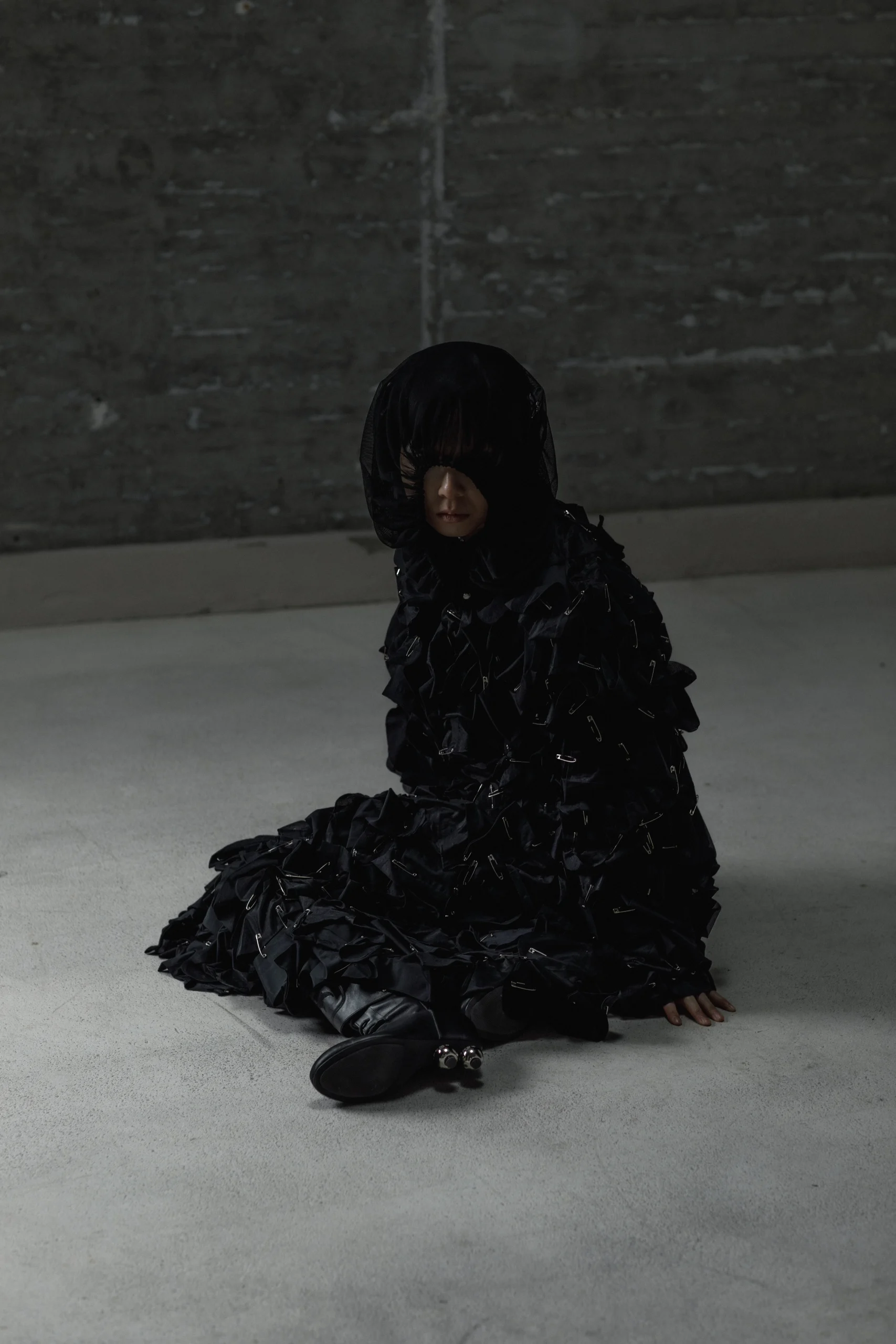
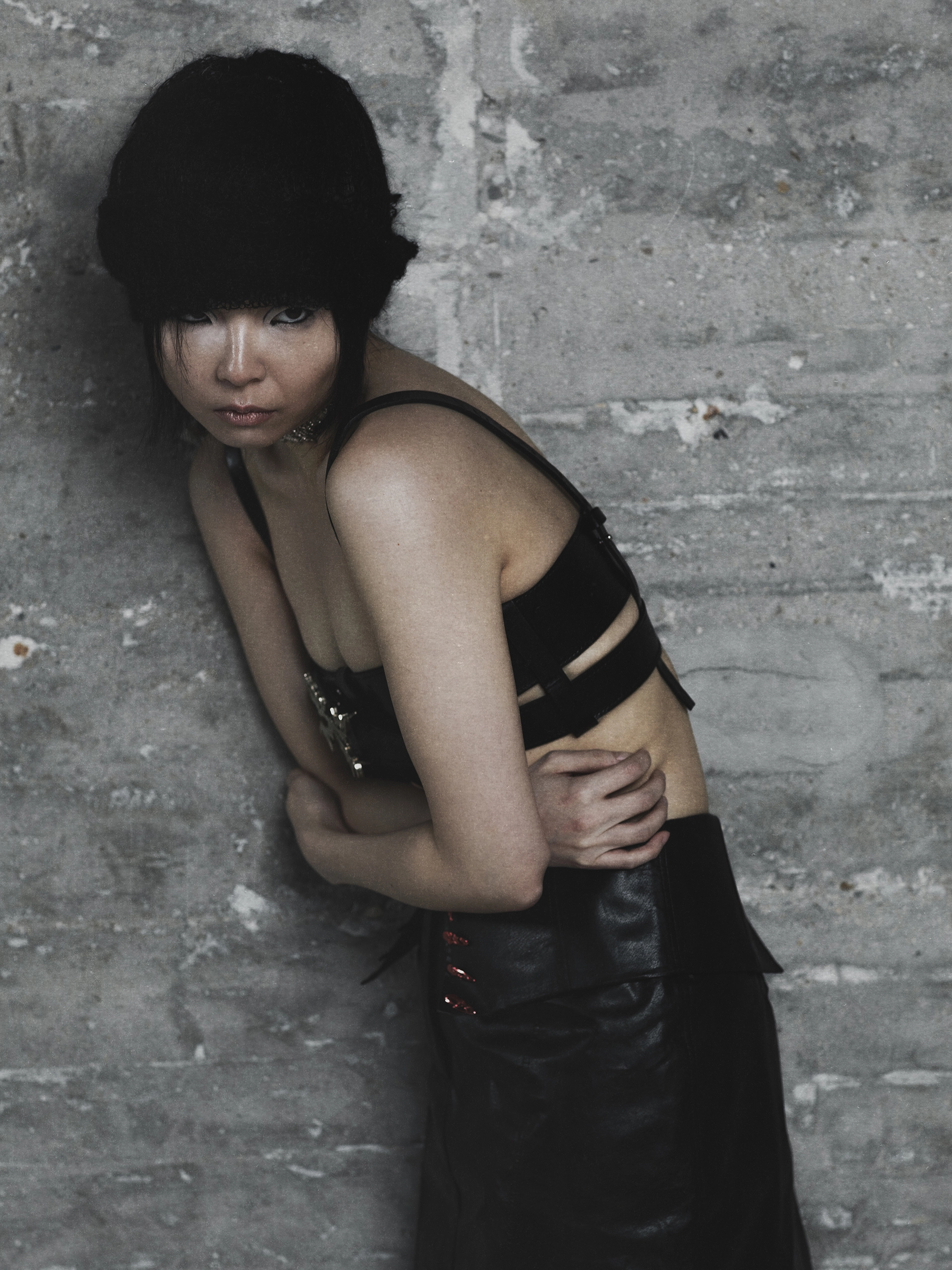
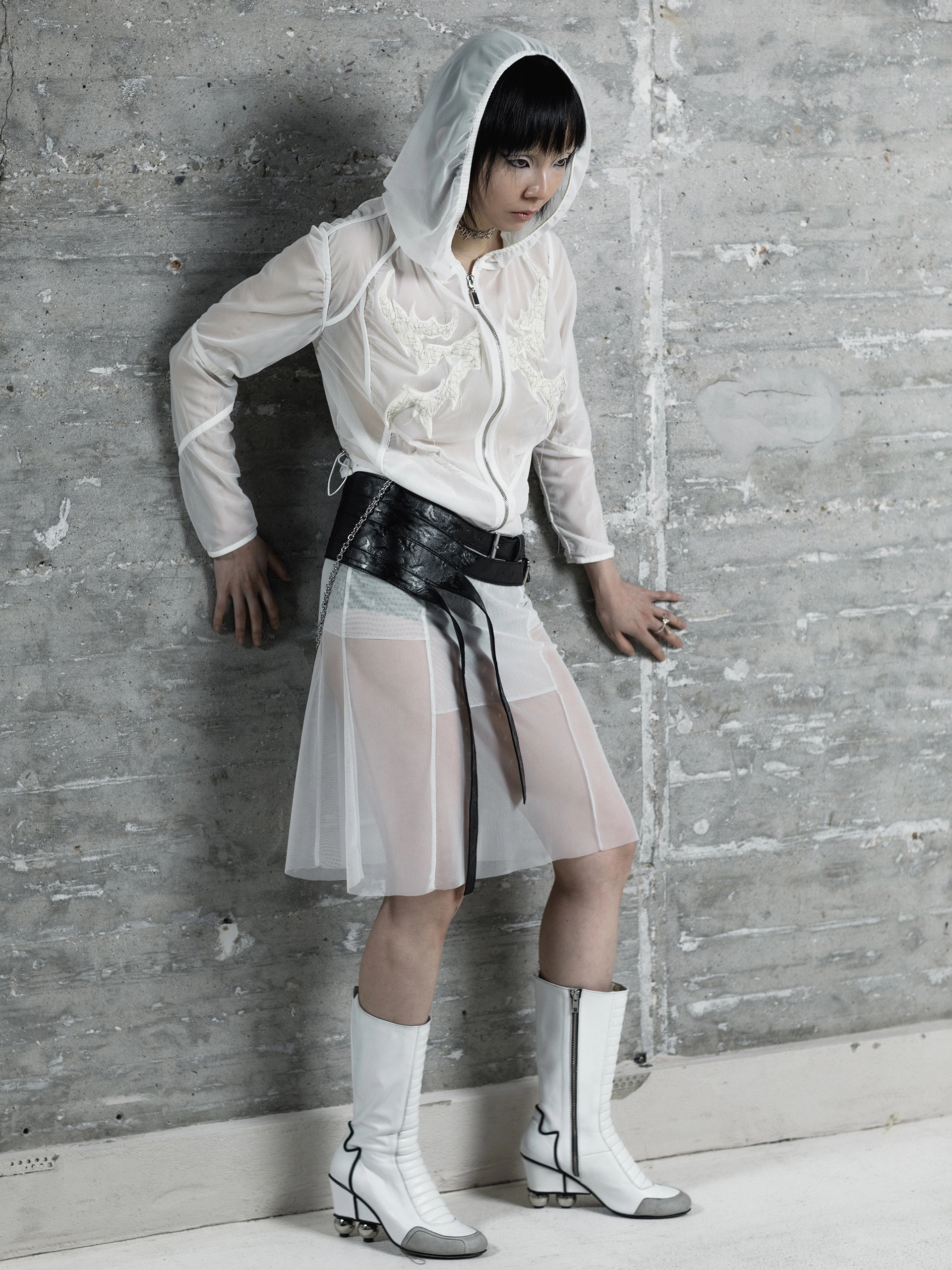
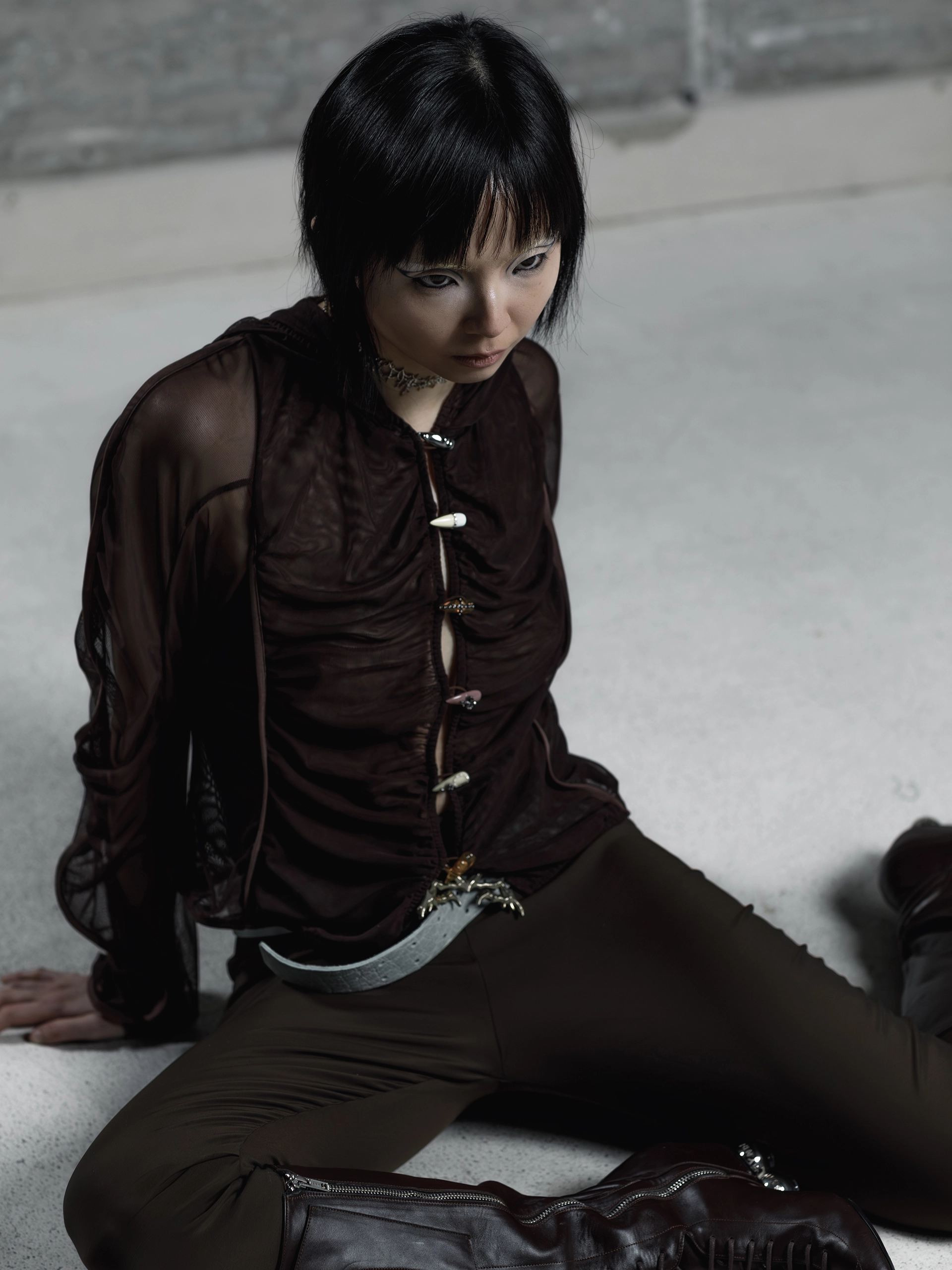
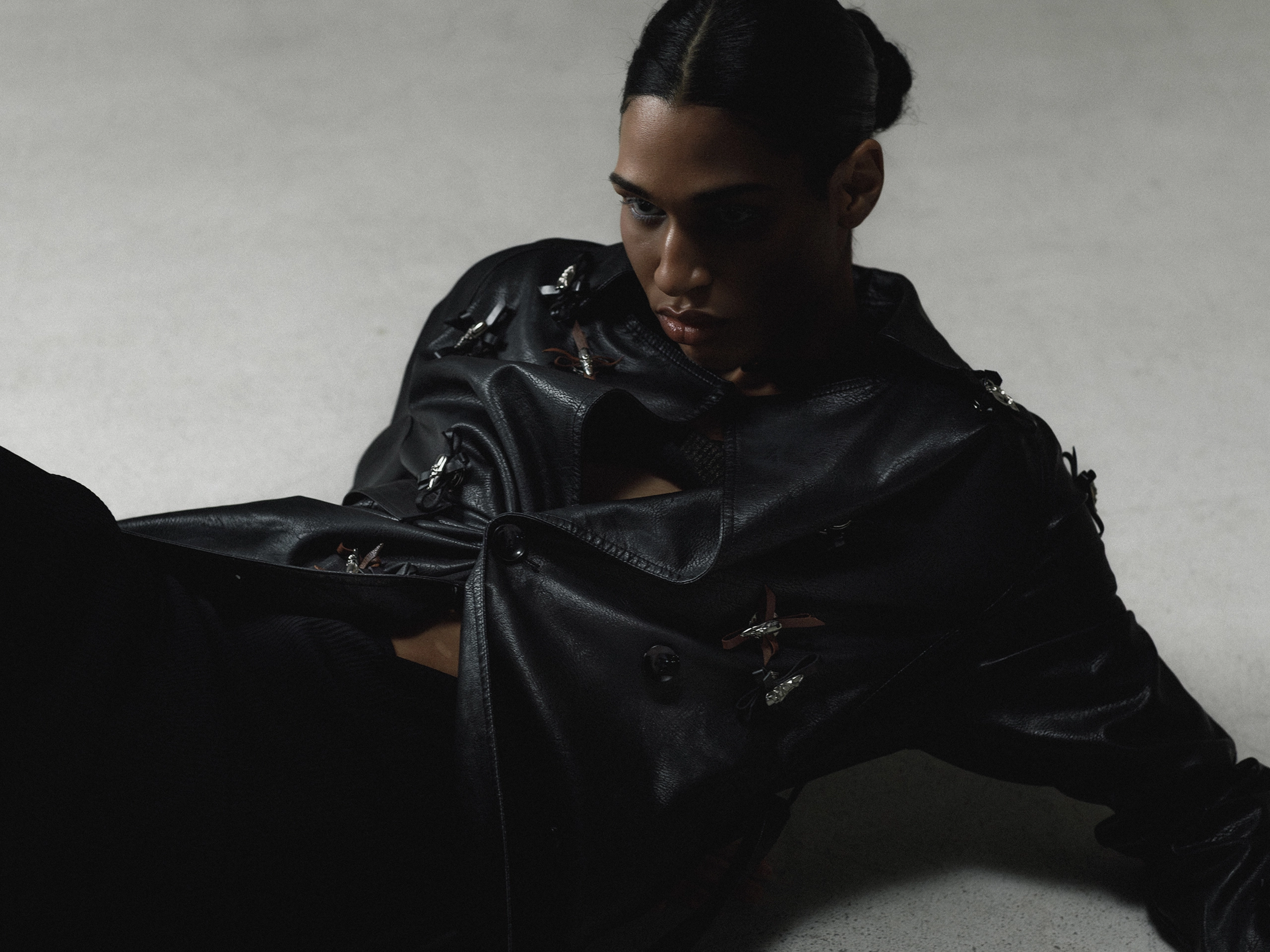
Within Syndrom’s universe, garments carry the imprint of inner transformation and function almost like emotional armour — structured silhouettes meet fragile elements, creating a dialogue between protection and exposure. Instead of presenting this emergent state as a moment of ‘brokenness’, we celebrate the emotional truth and endurance required to move through it.
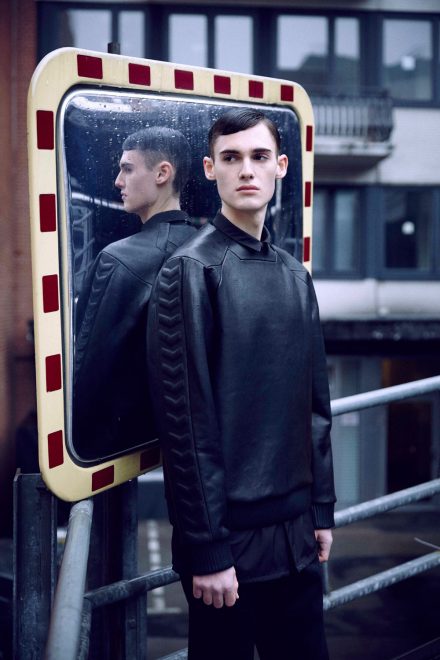
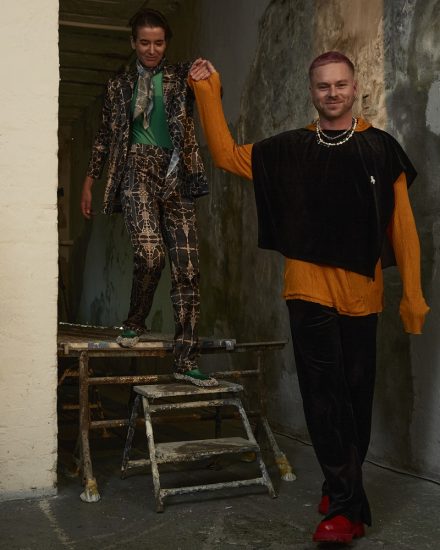
Shot by Berlin-based photographer Rianon Vran, this editorial introduces new pieces alongside our permanent, iconic pin coat — made from safety pins and women’s stockings — featuring mixed-texture layering, experimental surface treatments and hand-finished tailoring. As always, all fabrics were sourced locally, and the jewellery was crafted in our Tbilisi atelier.
Although we previewed some pieces at our Berlin Fashion Week pop-up in January, the official collection launch is on 7 May. Ready-to-wear items will be available from our concept store and online. For anyone interested in custom-made pieces, requests can be made digitally.
In January, Syndrom made its Berlin Fashion Week debut, revealing part of the Poiesis project through an immersive pop-up. Can you tell us more about how the event came together?
On 30 January, we were invited to present an immersive pop-up in Prenzlauer Berg as part of the Berlin Fashion Week AW26 side schedule, showcasing a selection of finished pieces that closely mirror those featured in this editorial. For the event, we teamed up with a good friend of mine from Tbilisi, David Iashvili — an electronic DJ and producer known by his alias Wesley Wise — who performed a live set alongside poetry readings and a screening of our latest film, Poiesis (2025).
Constituting part of the collection’s visual series, the film captures the evolution of form — how something can exist in one state and, through the poietic, generative process, emerge as something entirely different. It’s a short piece, so the idea was to play it on repeat throughout the presentation to breathe life into the clothing and the wider concept.
Our video production process is always collaborative — as the director, I choose videographers whose sensibilities align with the project, develop a brief rooted in the collection’s themes, and then we shoot together on location or in a studio, focusing on mood, texture and performance. In this case, I worked closely with two Georgian creatives — videographer Alexander Iakobashvili and musician Tete Noise.
We were fortunate to be met with a really engaged audience on the day — the feedback reflected the emotional intensity of the experience, particularly the live music and poetic elements. Debuting at Berlin Fashion Week was a major milestone for us, and we look forward to returning when the right opportunity arises.
It’s not every day you encounter a poetry recital at a fashion pop-up. How did the idea to invite spoken word into the presentation emerge — and which works did you choose to perform?
The decision to include poetry was not purely decorative — it was intentional and integral to the collection’s concept. I wanted to show that art is not merely about beauty or suffering, but the complex emotional realities of life. To express this, I performed two poems: Gas Flower, which I wrote myself, and an extract from Sometimes You Get Used to a Person by Georgian poet Lia Sturua. These works emphasised patience, metamorphosis, endurance and emergence — themes central to Poiesis and its portrayal of the modern woman. They speak to the small, often invisible battles of existence and the layered forms of survival that give rise to new creative power.
This was actually one of the first formal presentations where we experimented with this format, making poetry a core component. The reception was warm and attentive — many members of the audience commented on how the readings added an intimate, human layer to the visual and sonic elements. Considering how well everything landed and how the audience responded, I’m looking forward to exploring this format further in our future presentations.
In the face of artistic censorship and political instability, what are your hopes for the future of Georgia’s creative community and fashion scene?
Georgia is currently facing a very difficult period. While we speak about creativity and diversity, the country is also witnessing the systemic repression of peaceful demonstrators. What we call the ‘absurdity of law’ is not just a phrase — it is a direct assault on freedom and cultural integrity. In this context, politics, culture and resistance are inseparable.
Art and fashion become both points of refuge and tools for resistance. Creatives are confronted with logistical and economic barriers, pressures of censorship and the emotional toll of instability, yet culture continues to create spaces for solidarity and collective expression. I’m deeply proud of the scene’s resilience, creativity and growing international recognition.
That said, I would like to see a stronger infrastructure in place to help emerging designers and creatives scale their work while retaining their identity. Internationally, representation is growing, but more needs to be done to ensure Georgian voices remain consistently visible beyond occasional spotlights. My hope is for stronger international support and greater local safety for artists — continued instability threatens to erode the very creative ecosystem we have worked so hard to build.
Despite the challenges ahead, where do you see Syndrom in the next five years?
I envision Syndrom as an established, internationally recognised brand with a growing creative team and expanded product categories. I see the label continuing to explore its identity through sustained experimentation, sharper creative direction and by bringing in more diverse team members — especially women and creatives of all abilities. As the label grows, I want to make sure we stay connected to Tbilisi’s craft and storytelling traditions.
We have several projects currently underway to ensure this. The first is the opening of our concept store on 3 May — and just a few days later, we’ll be presenting the Poiesis collection at Factory Tbilisi on 7 May. Although we’re no strangers to Mercedes-Benz Fashion Week Tbilisi, this is the first year we’ve been invited to show on the runway. Needless to say, it has been a very busy few weeks — but we’re very much looking forward to it.
Credits
WORDS
Lucy Rowan
fashion
Syndrom by
Tekla Gourgenidze
Photography &
CREATIVE DIRECTION
Rianon Vran
styling &
Creative production
Sopio Buji
MAKE-UP
Ilya Fesenko
MODELS
Anu and Seyram
via Majin Management