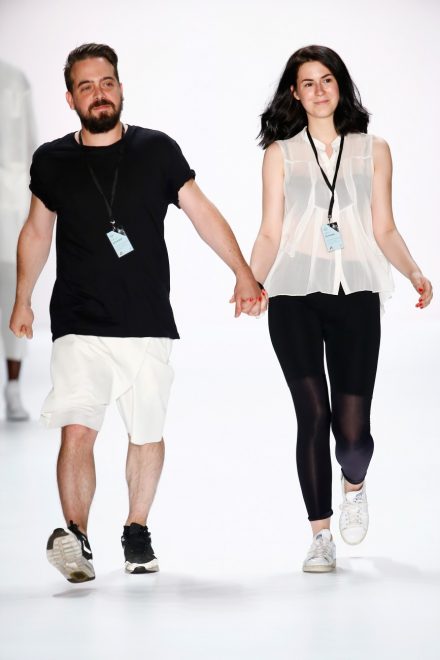
We share six designers who stood out last week at Berlin’s annual graduate show, dedicated to showcasing young fashion talent in Germany
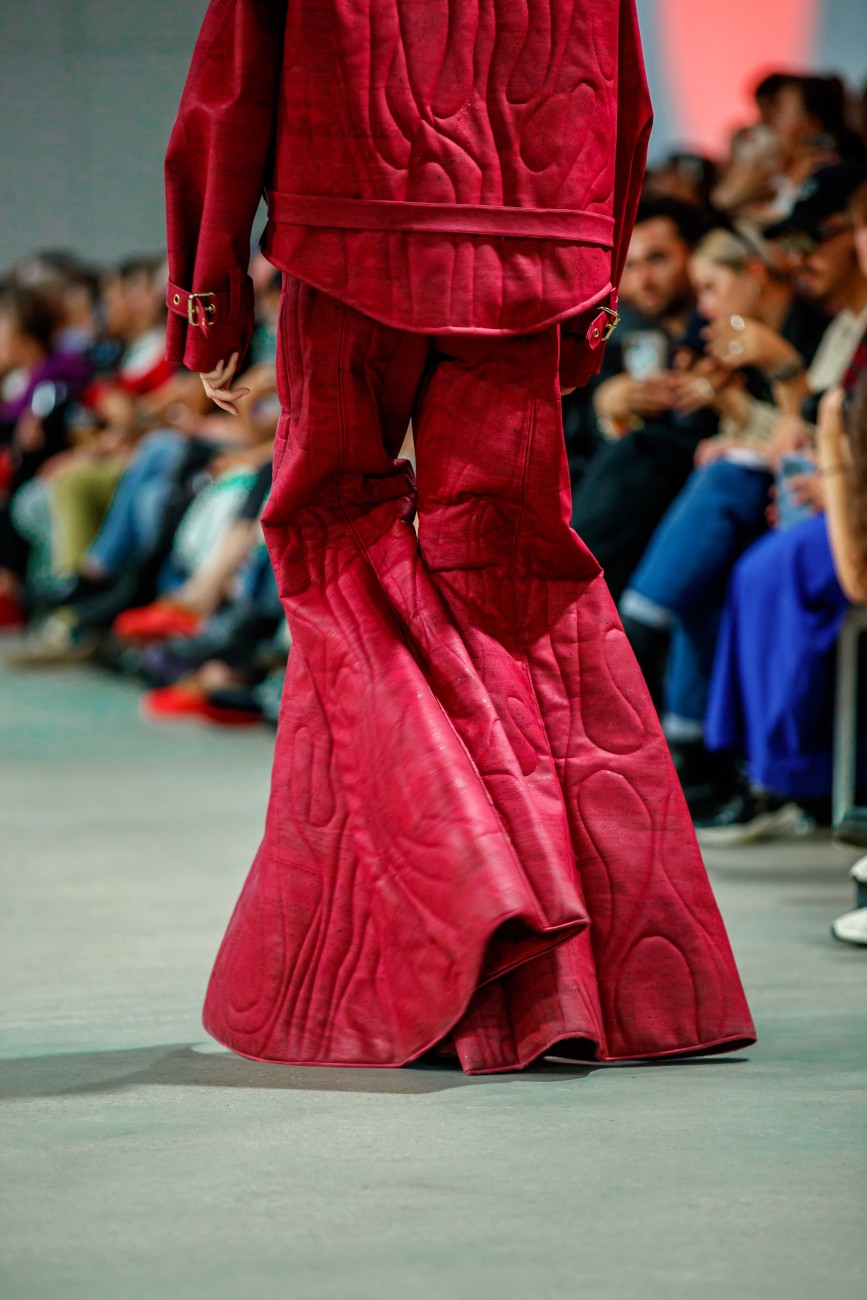
An annual staple event in our Berlin Fashion Week calendar is the Neo.Fashion. show, which has served as Germany’s largest platform for emerging fashion talent since 2017. Between 6 and 8 September, more than 6,000 visitors gathered at the industrial, brick-clad Reinbeckhallen in Oberschöneweide to witness fifteen captivating shows.
The sixth edition embraced an international focus, opening with the works of five Ethiopian designers in collaboration with Addis Ababa’s Next Fashion School and Fashion Africa 254. On 8 September, six Ukrainian designers from Ukrainian Fashion Week were welcomed to present their collections as part of the project entitled ‘Look into the Future’ — a decision warmly applauded by guests for expanding the show’s reach beyond Germany’s borders.
In addition to the graduate showcases, three award categories were presented by a seven-member jury. The Best Design award went to Max Tautorus from the Hamburg University of Applied Sciences for their collection Kinship. The Best Sustainability Concept was awarded to Nanyi Li from the Burg Giebichenstein University of Art and Design Halle for Blumen im Nebel, and the Best Innovation accolade was given to Antonia Dannenberg from the Niederrhein University of Applied Sciences for her collection Melt Down.
Neo.Fashion. 2022 reaffirmed its mission to champion the next generation of designers shaping a more sustainable, inclusive, and innovative fashion future. Among the impressive pool of talent, these are the six names that stood out for their originality, vision, and craftsmanship.

Max Tautorus
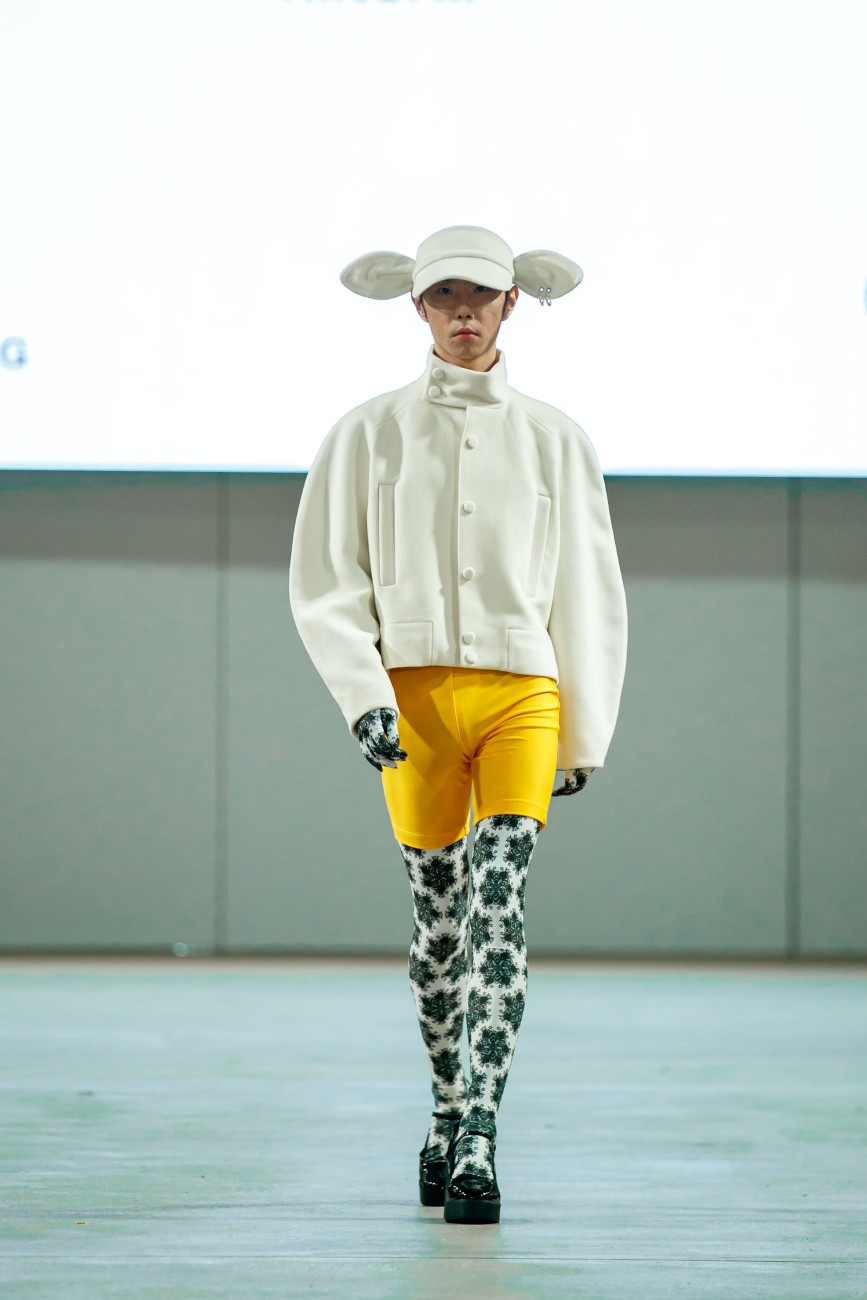
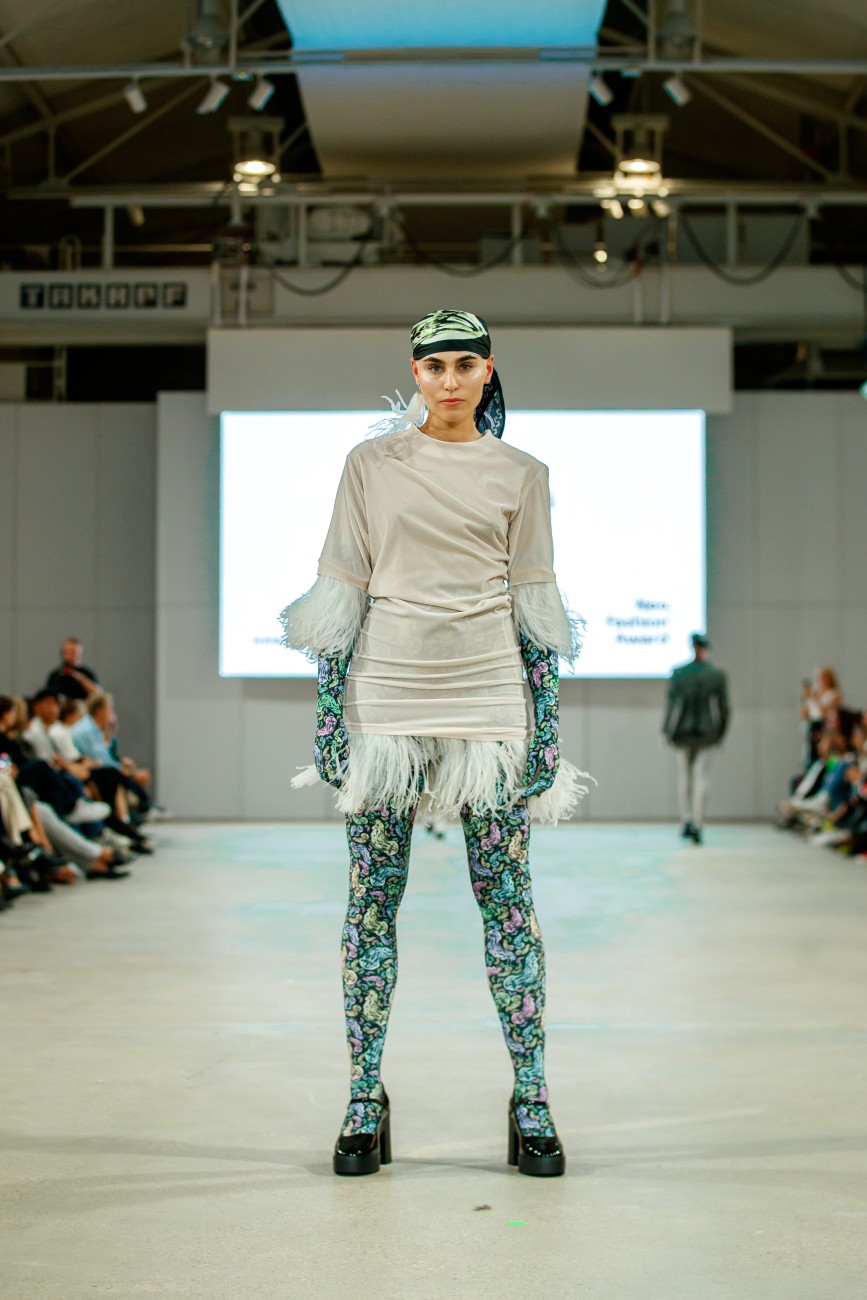
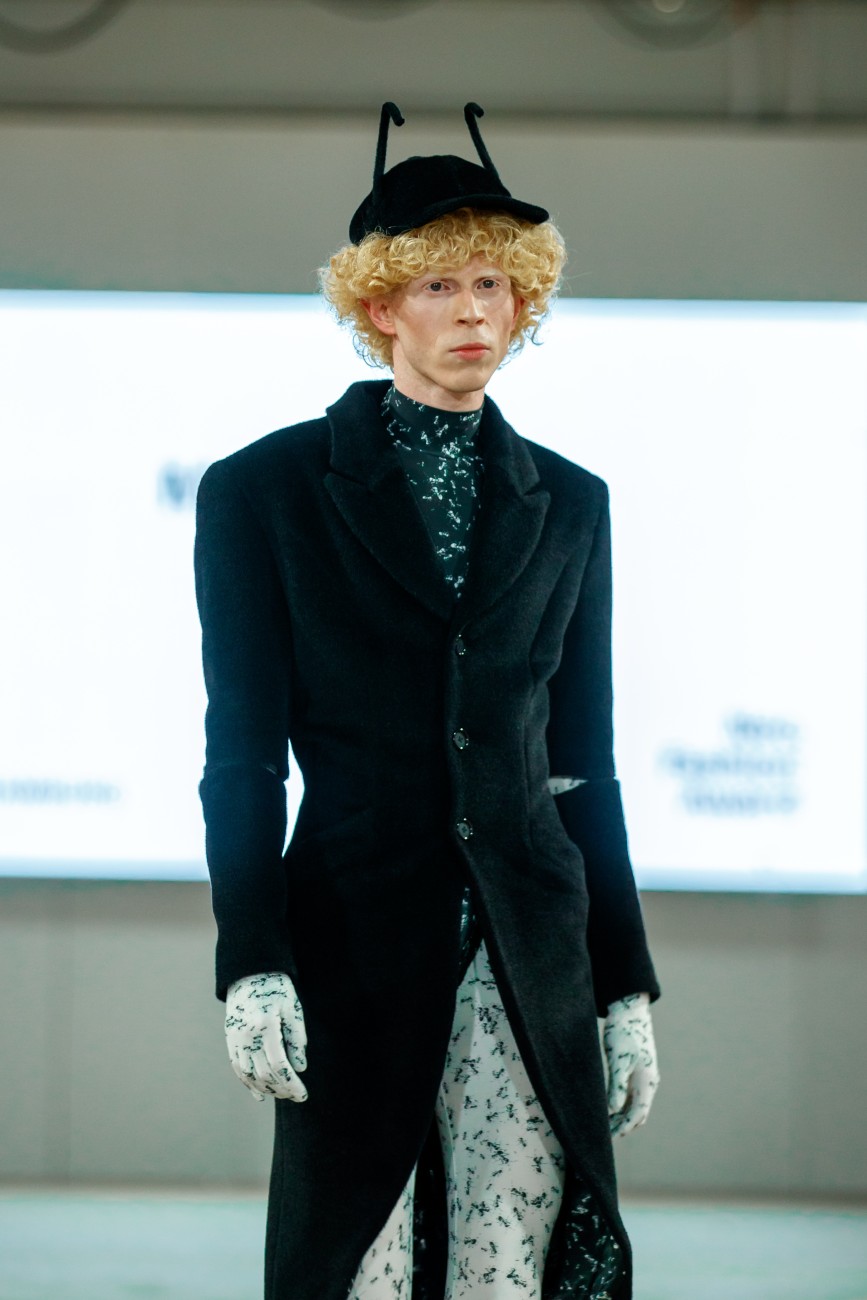
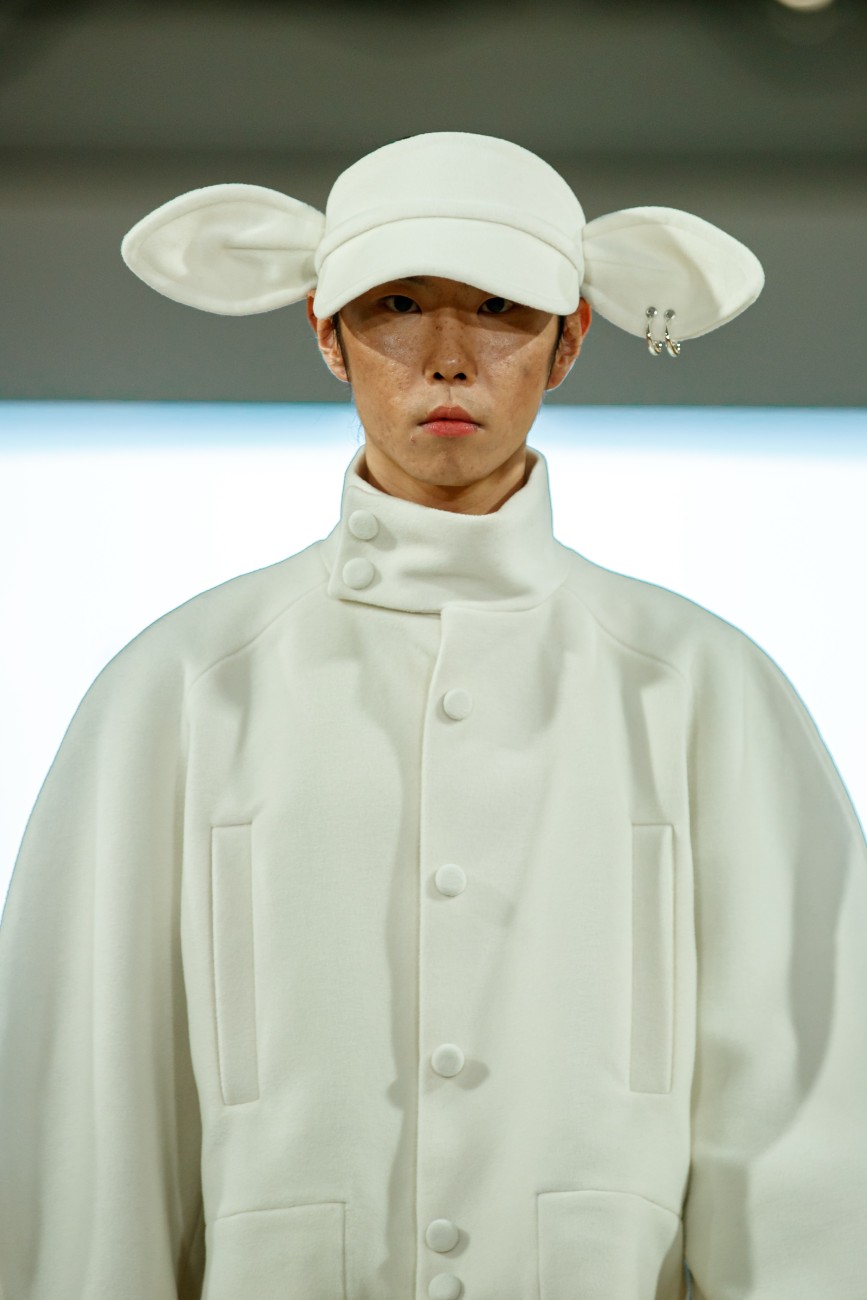
Winner of the Best Design award, Max Tautorus captivated audiences with Kinship — a collection exploring the relationship between animals and humans in the Anthropocene. Created as the final project for their master’s degree at the Hamburg University of Applied Sciences, and following a bachelor’s degree from the Academy of Fashion and Design Düsseldorf in 2019, Tautorus examines how fashion can challenge the boundaries between species and identity.
Kinship balances playfulness and sincerity. Each piece invites the wearer to dress up as an animal in a childlike way, while simultaneously encouraging deeper reflection on our connection to nature. The results are both whimsical and thought-provoking, bringing humour and humanity into dialogue.
Tautorus’s approach to animal embodiment is particularly powerful in how it dissolves traditional distinctions — not only between human and non-human life but also between masculine and feminine forms. Their work ultimately proposes fashion as a language that transcends binary categorisation.
Nanyi Li
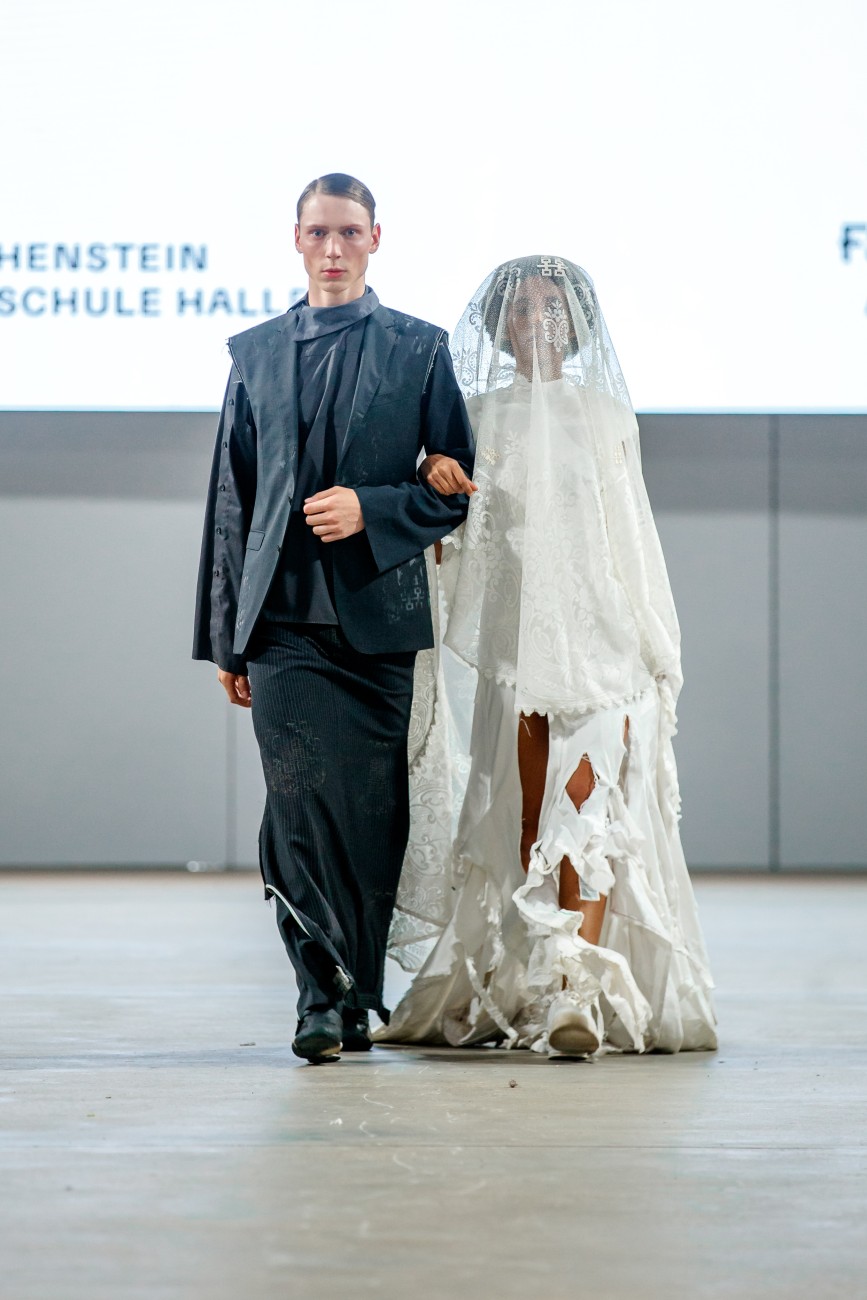
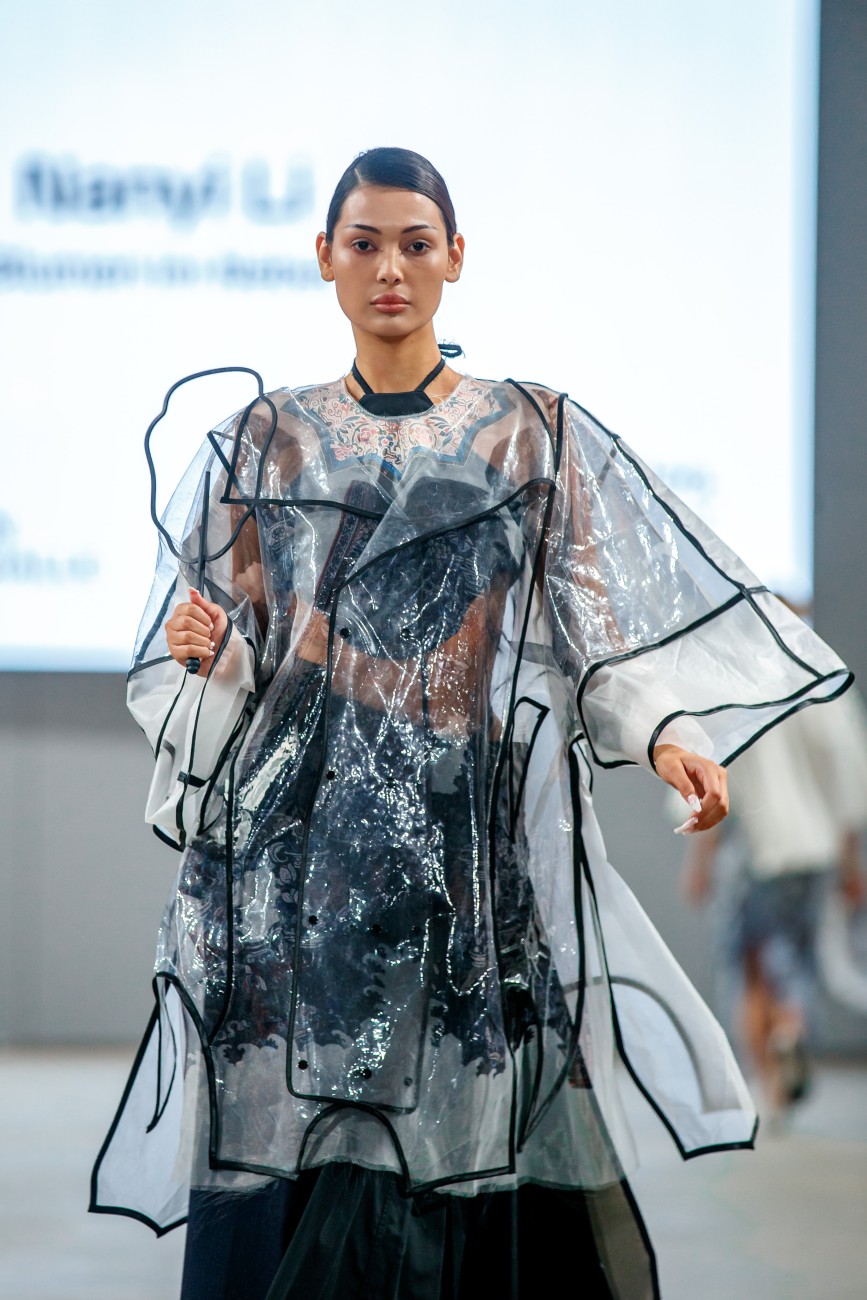
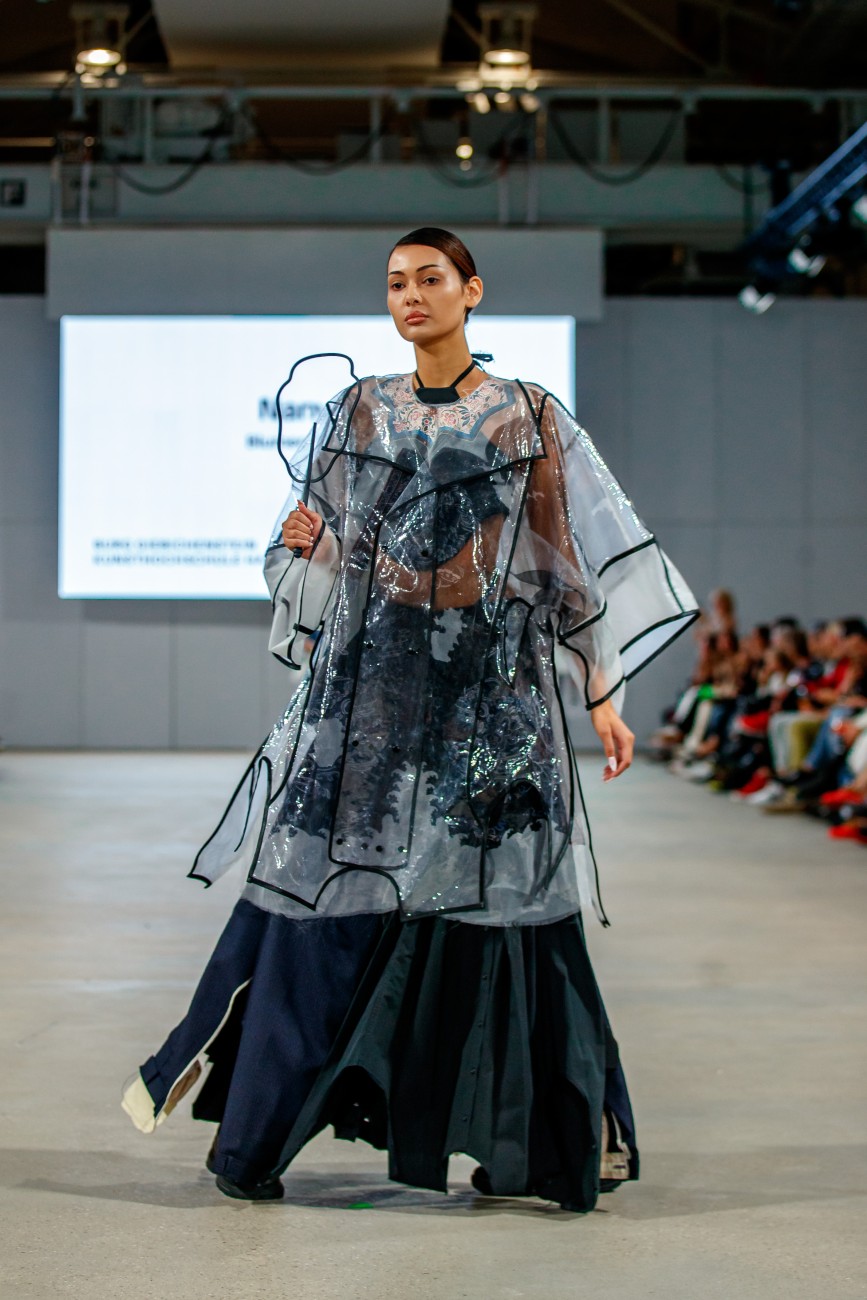
In 2022, Nanyi Li completed her MA course in Conceptual Fashion Design at the Burg Giebichenstein University of Art and Design in Halle, Germany. The China-born, Berlin-based conceptual fashion designer works across fashion, contemporary jewellery, and traditional craftsmanship, united by a deep interest in material storytelling, sustainability, and the human condition.
Her principal focus is upcycling design — a philosophy she views not only as an environmental necessity but also as a catalyst for creative innovation. By reusing found, natural, recyclable, and environmentally friendly materials, Li constructs garments that embody renewal, artistic exploration, and resourcefulness.
Winner of the Best Sustainability Concept, her collection Blumen im Nebel (Flowers in the Mist) pays homage to her Chinese heritage and explores ambiguity through poetic layering and hidden details. “I like giving people little surprises by hiding details in places that aren’t easy to find,” she said, referencing the veiled bride and magnifying glass motifs that encourage closer inspection.
Guided by observations of people, value, culture, and society, Li’s work fosters what she calls a ‘third space’ — a reflective realm where garments and viewers engage in dialogue. This interaction encourages audiences to reconsider cultural identity, habitual thinking, and their relationship to the world around them. Her creations juxtapose the familiar and the foreign, the luxurious and the everyday, and the traditional and the modern, illustrating her belief that sustainability extends beyond materials to encompass perspective, thought, and experience.
Livia Honus
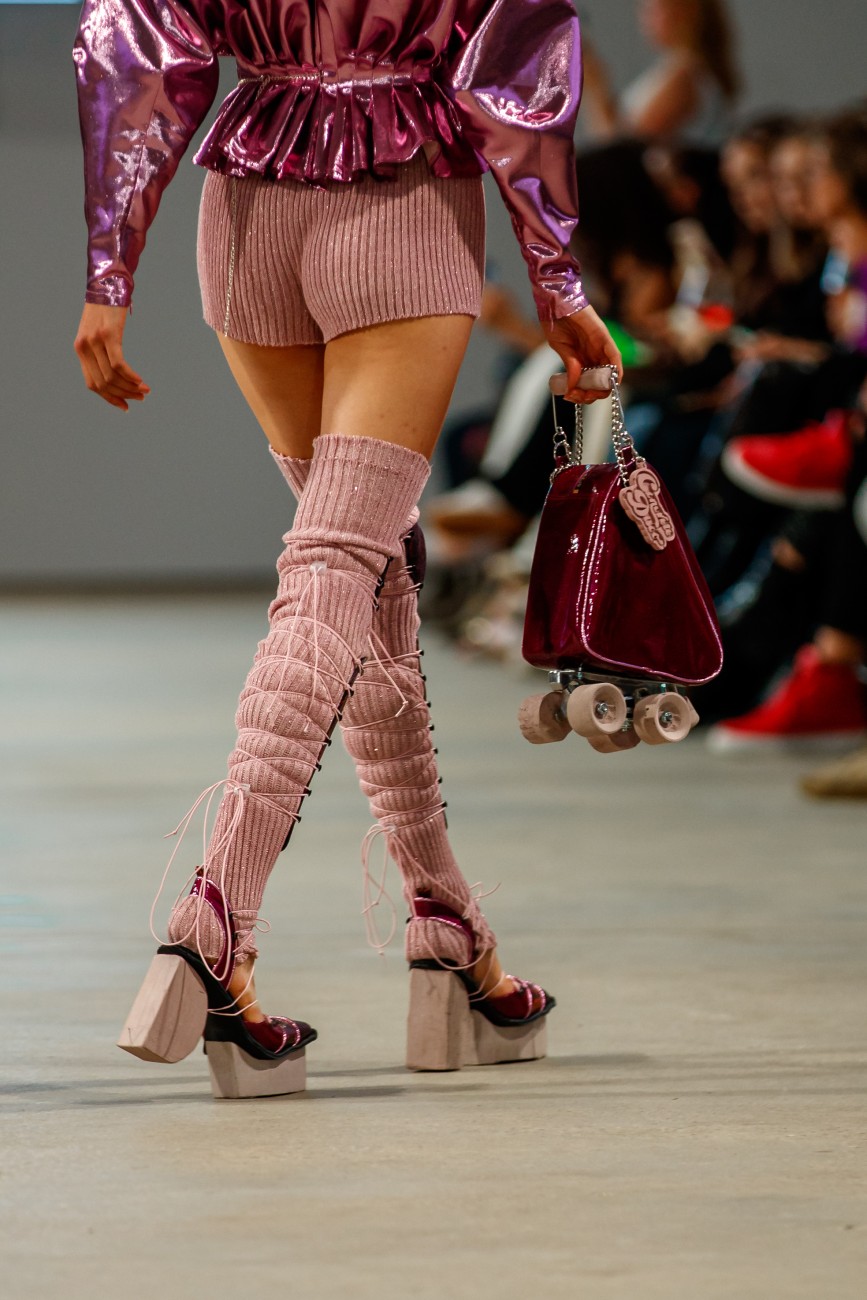
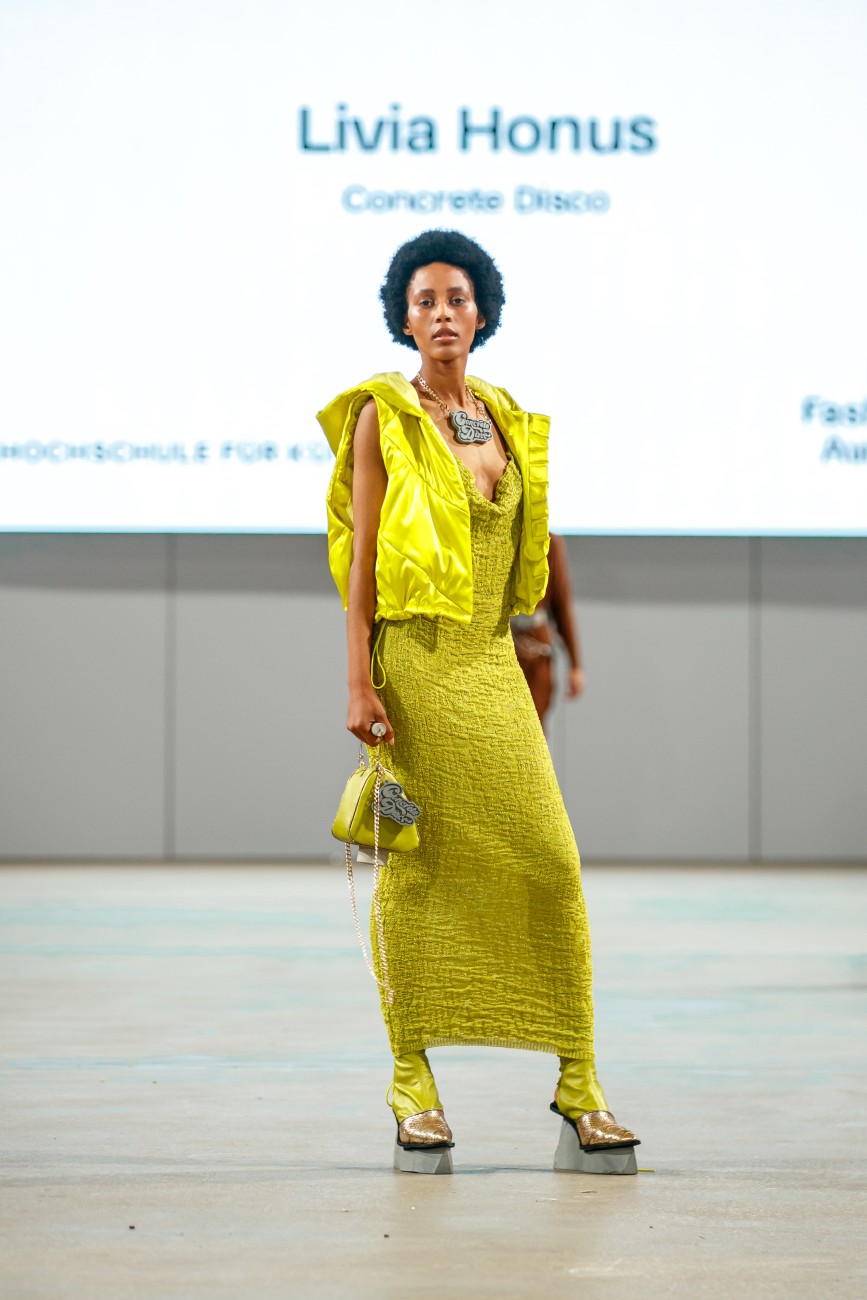
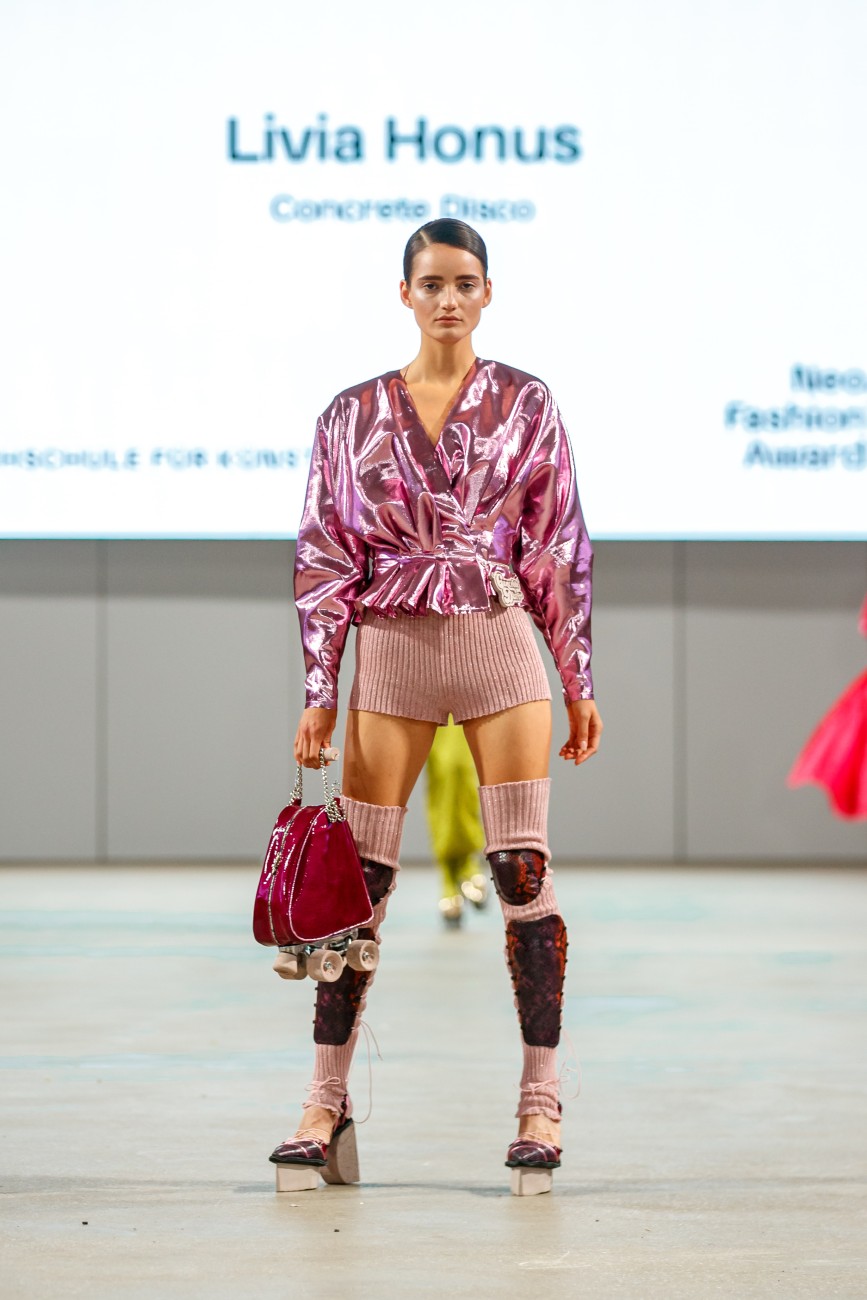
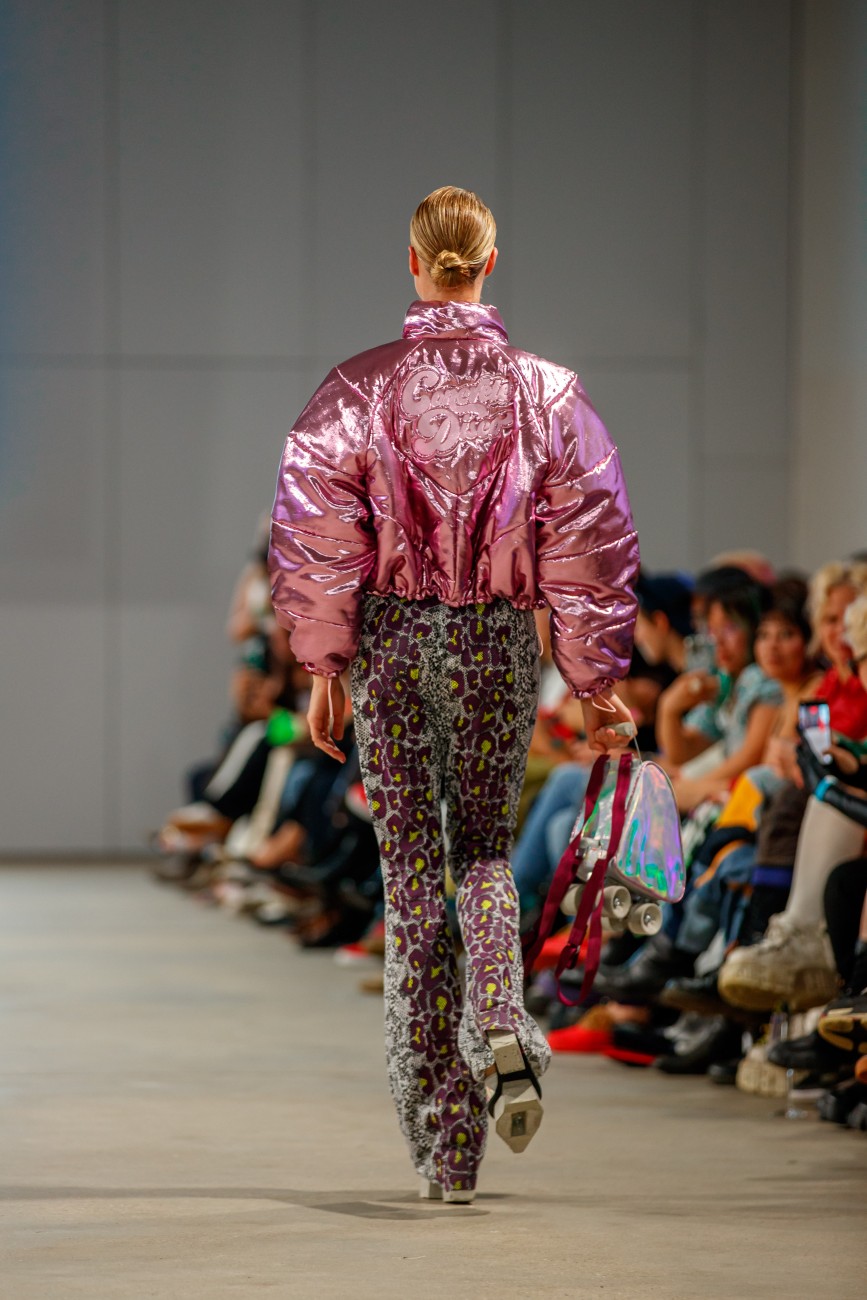
Former FASH 2017 award winner and Hochschule für Künste Bremen graduate, Livia Honus, brought infectious energy to the runway with Concrete Disco, a roller-themed collection inspired by the 1970s. Merging disco’s dazzling extravagance with the raw, sculptural forms of Brutalist architecture, she crafted garments that are equal parts glamour and grit.
Her work deftly combines materials — from knitwear and metallics to glitter and faux leather — creating a joyful visual rhythm that celebrates individuality and movement. Concrete Disco examines the sociological parallels between disco culture and architecture: both seek beauty in contradiction, excess, and imperfection.
“For me, fashion is a complete artwork composed of pattern, material, and structure, which only comes to life through the wearer’s movement,” Honus said. Trained as a tailor and pattern maker, she fuses craftsmanship with digital design techniques, producing pieces that feel both nostalgic and defiantly contemporary.
Jana Heinemann
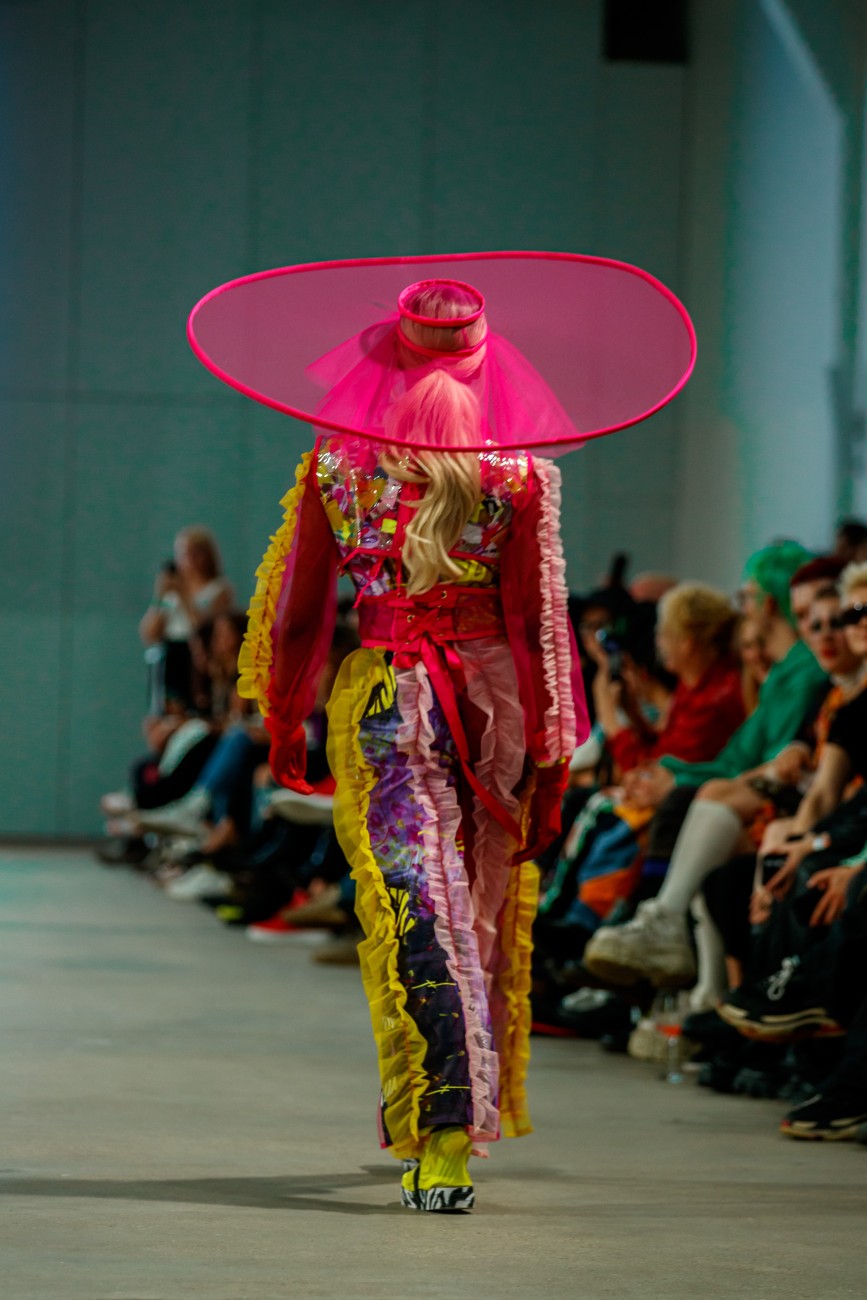
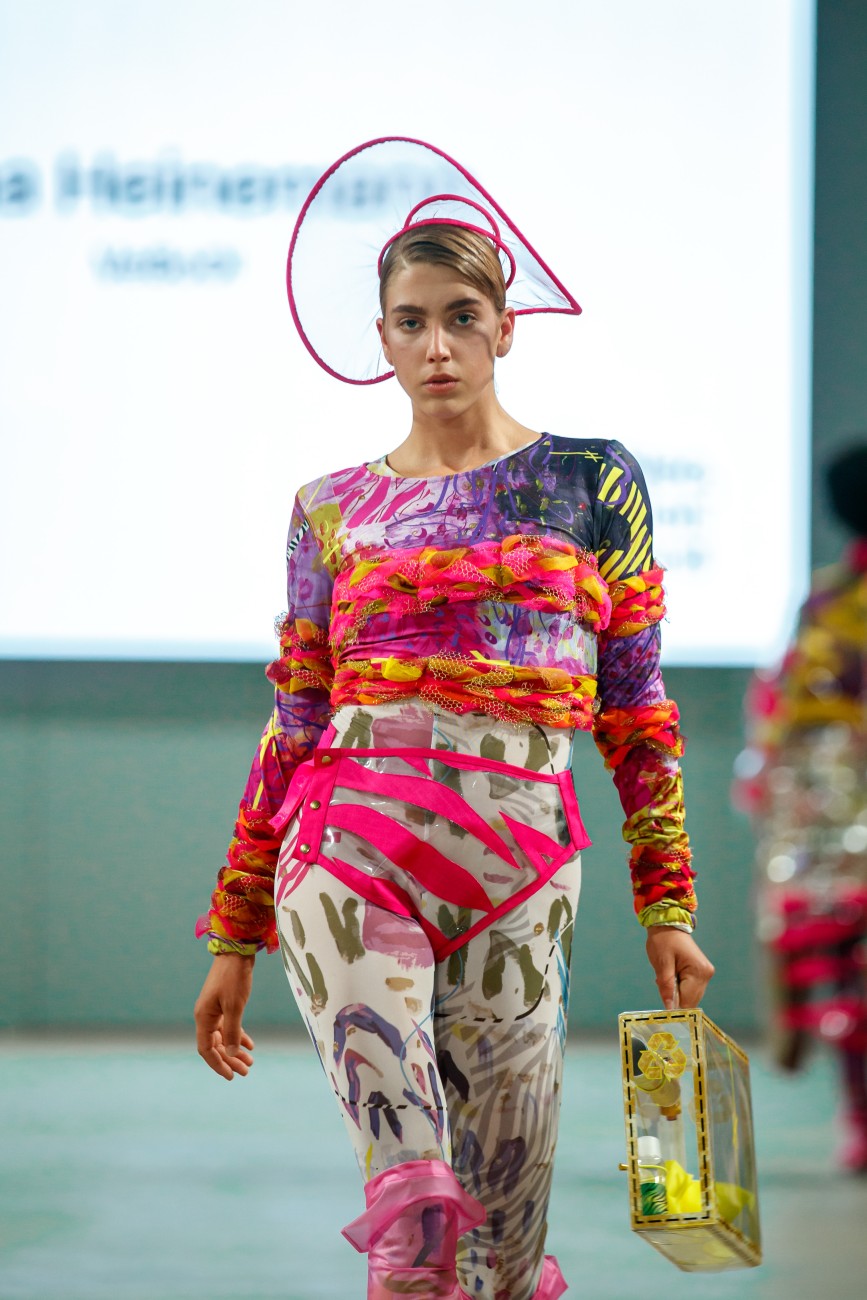
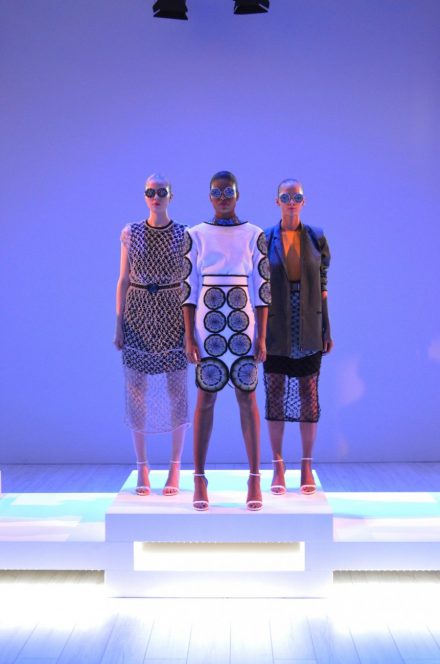
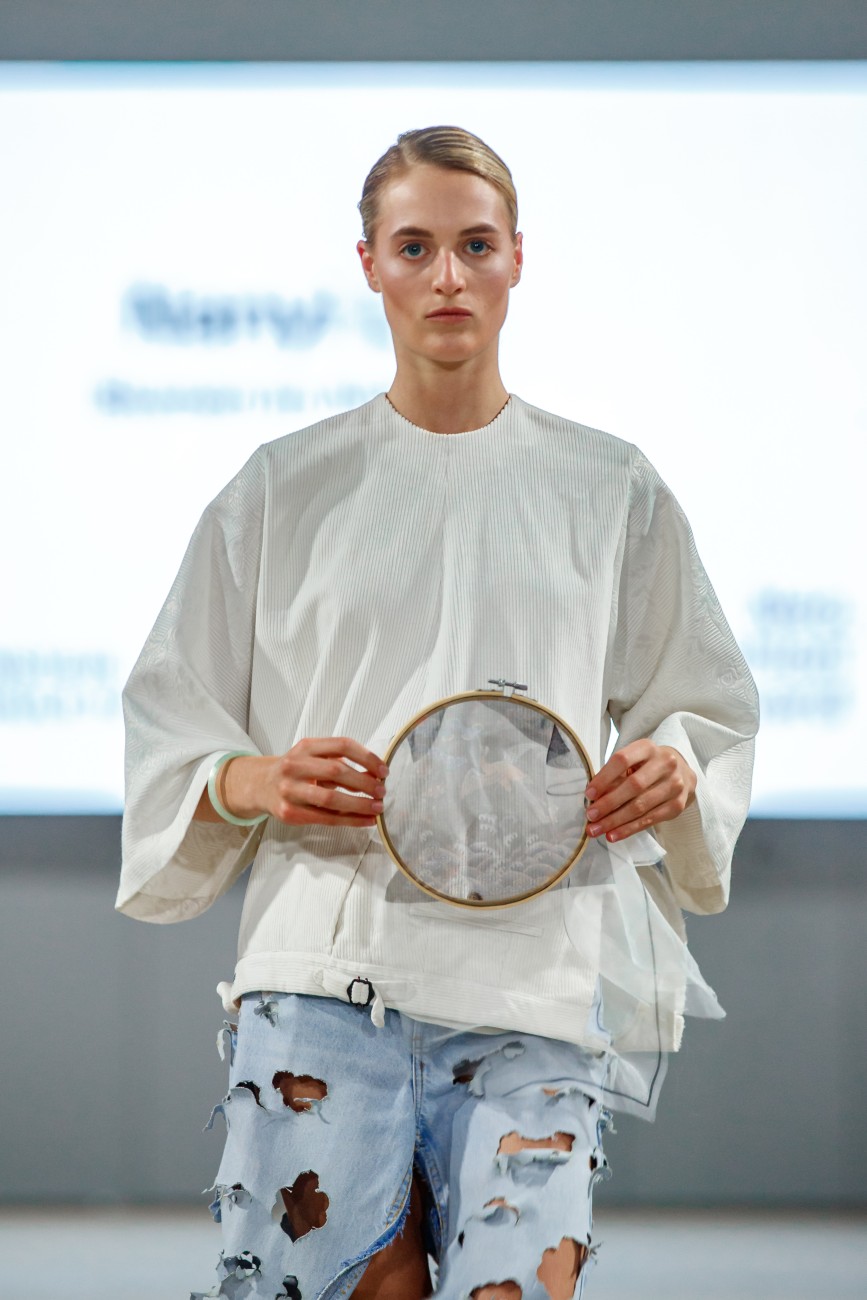
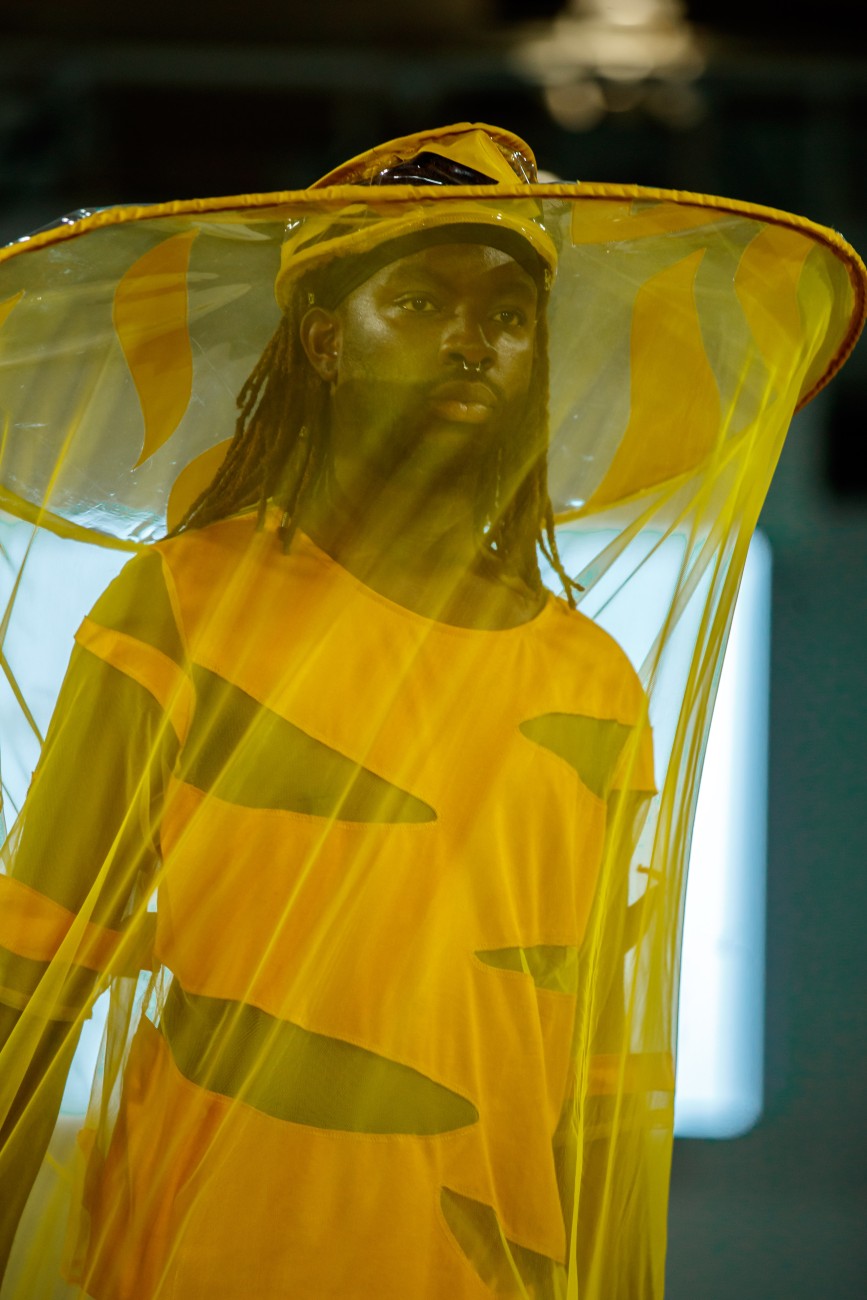
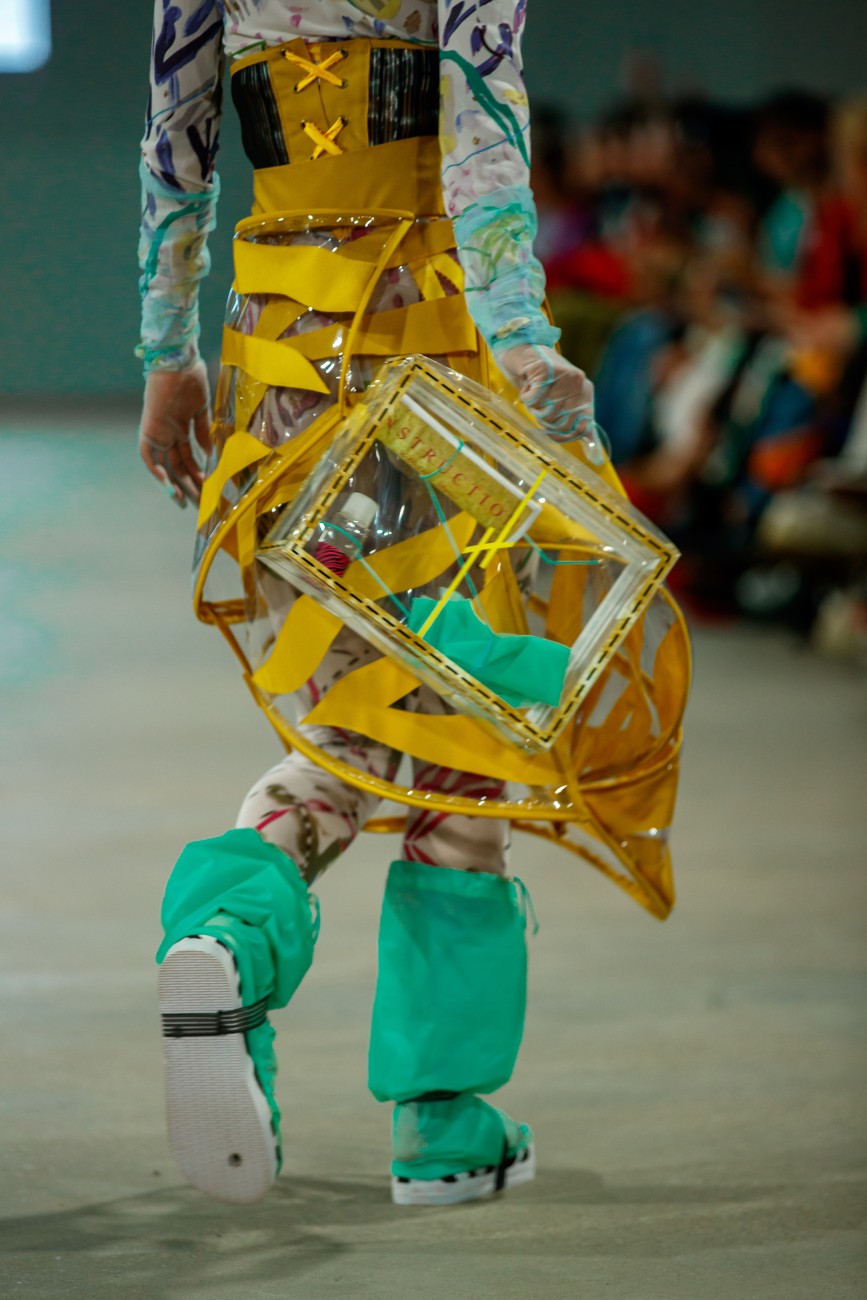
Hochschule für Technik und Wirtschaft Berlin graduate Jana Heinemann presented her collection VeBoDi, demonstrating how fashion can spark conversations about environmental and social responsibility. The project addresses the destructive cycle of fast fashion — one of the world’s most polluting industries — and its links to the spread of vector-borne diseases and environmental degradation.
Through cyclical motifs, asymmetrical patterns, and netted veils, Heinemann translates the notion of contamination into poetic visual form. Her garments critique systems of overproduction while also offering hope through technological innovation and circular design principles.
“I want everyone who wears my clothes to feel special, to express themselves while feeling connected to others and to the environment,” she said. Her work reminds us that sustainability must be holistic — encompassing not only materials and processes but also empathy, awareness, and social responsibility.
Melina Weinrich
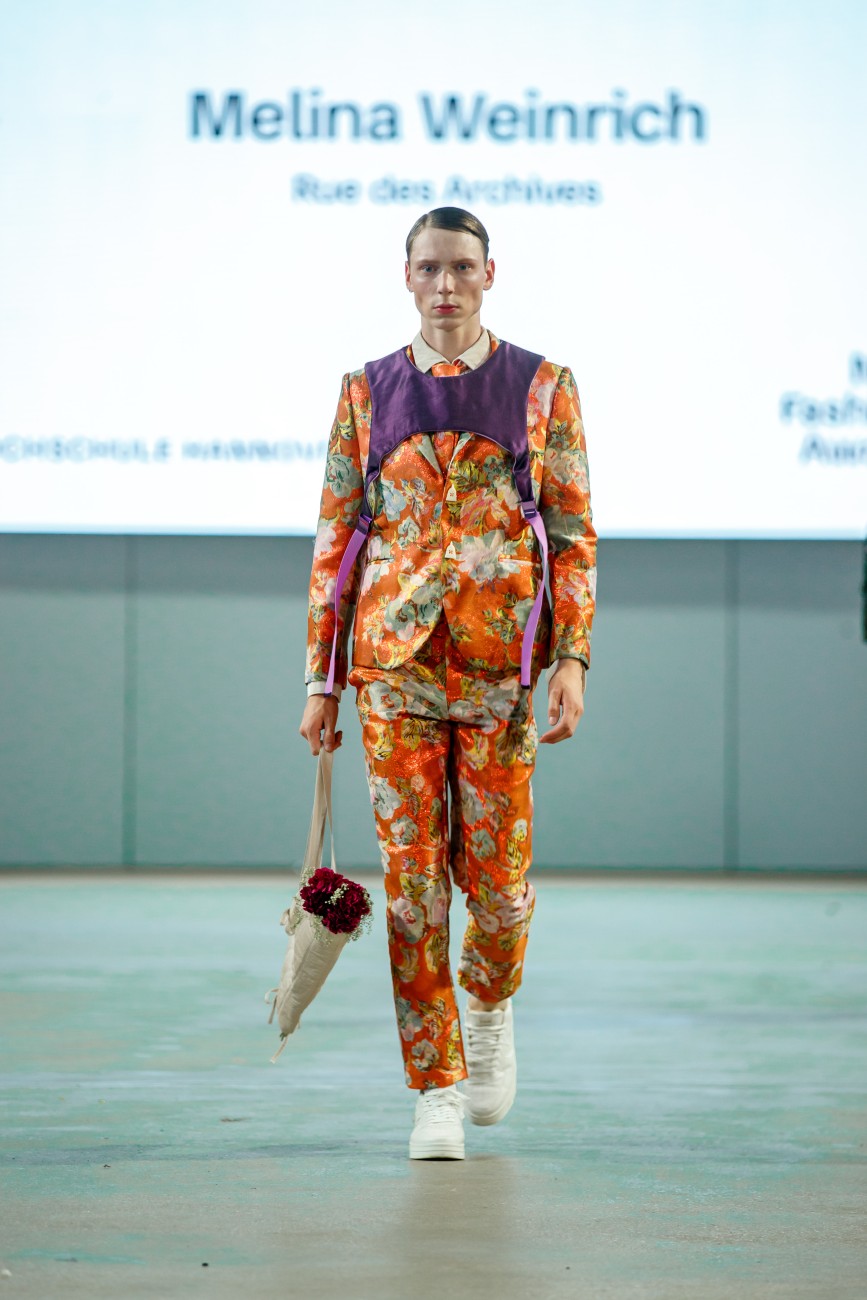
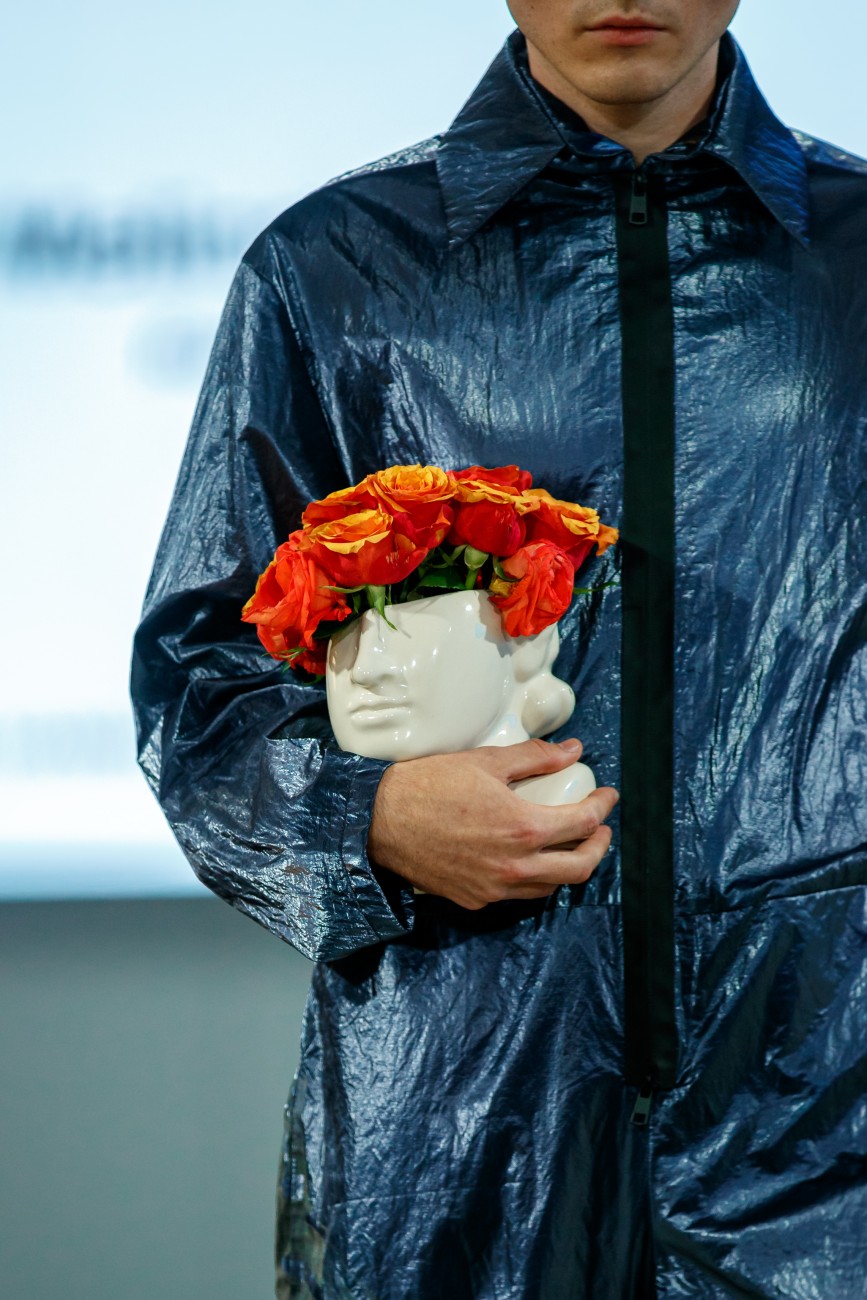
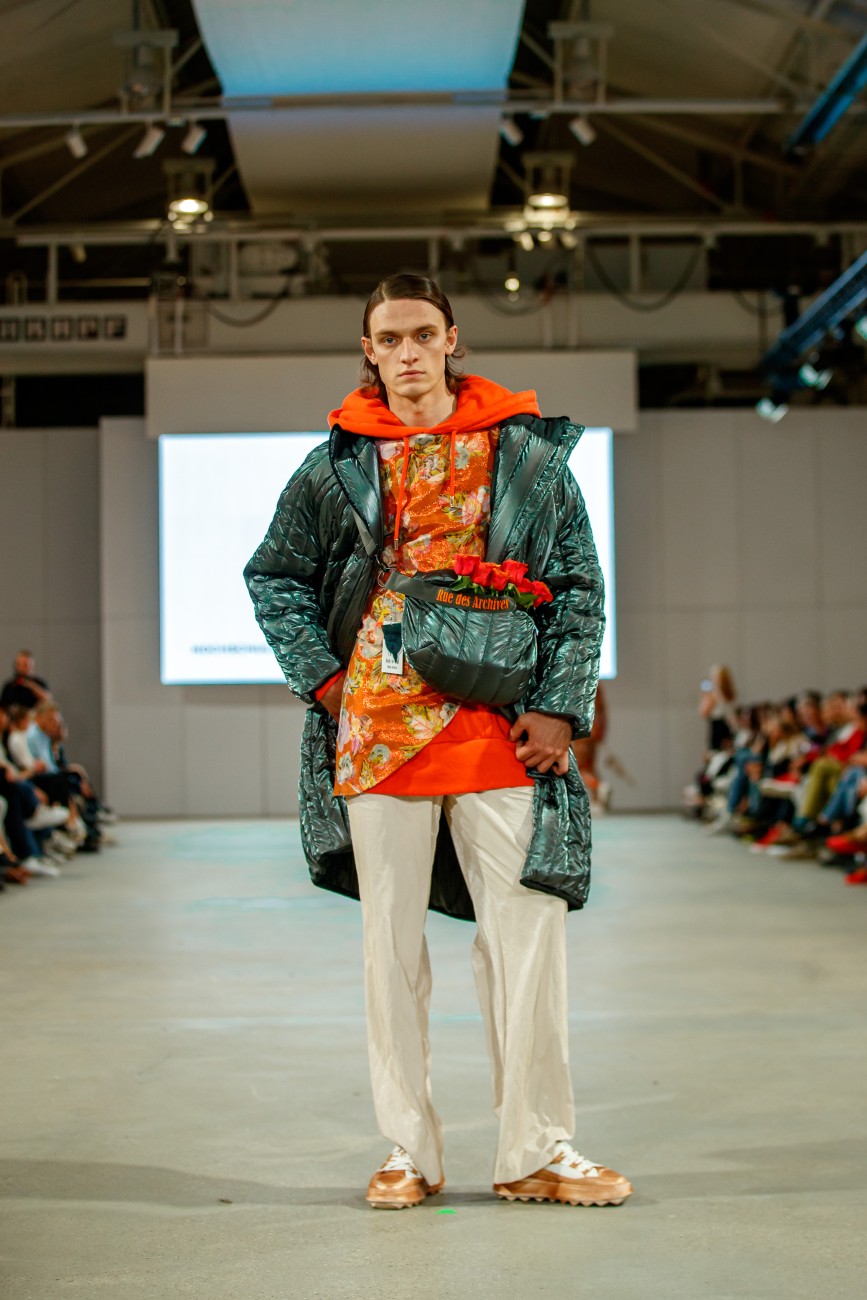
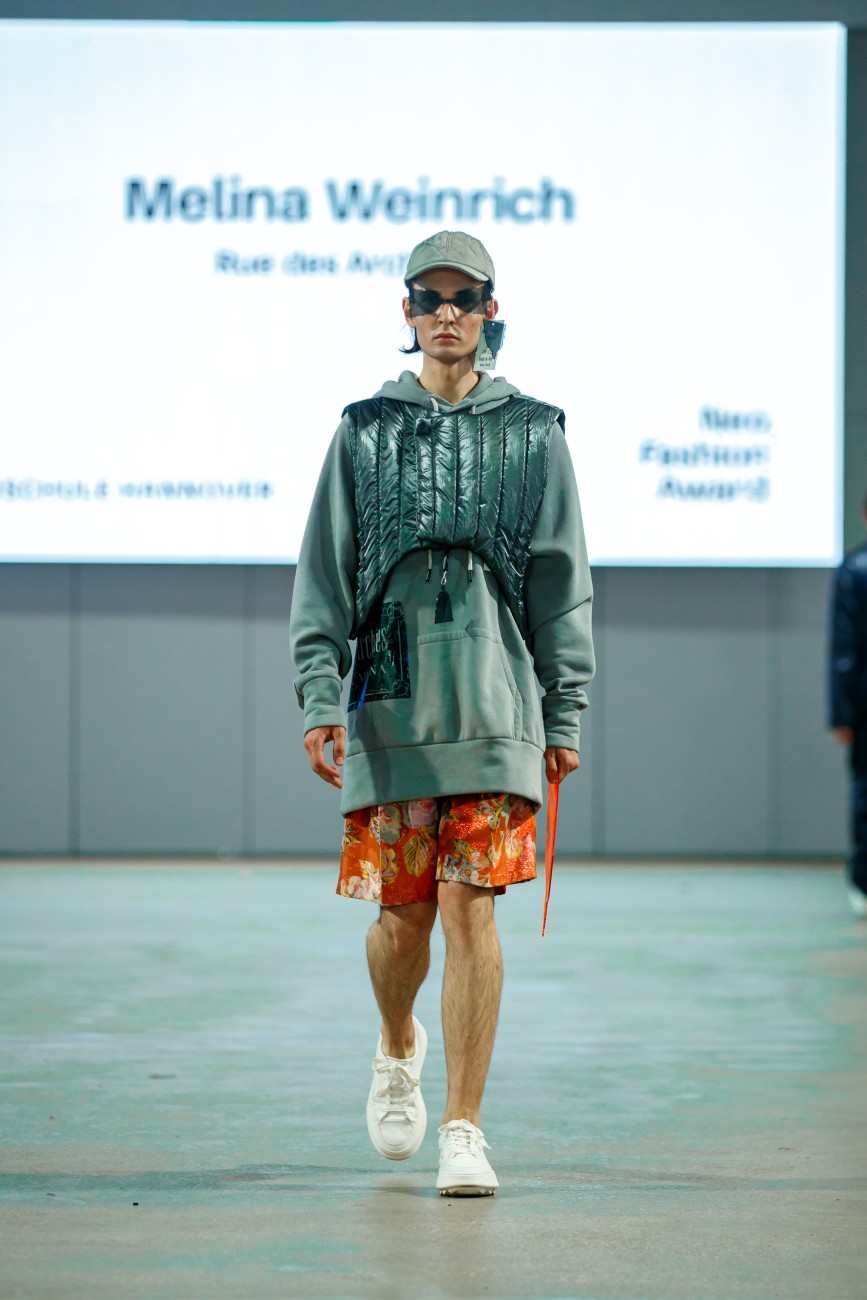
Melina Weinreich’s Rue des Archives redefines unisex streetwear through a dialogue between masculine structure and feminine delicacy. The result is a collection that embraces duality, proving that fashion can be fluid, free, and future-focused.
By fusing sporty silhouettes with romantic floral prints, Weinrich creates wearable yet refined garments that bridge past and present. Her work celebrates individuality and independence while demonstrating mastery of surface manipulation, print design, and finishing.
“My enthusiasm for fashion began as a child,” she recalled. “I was always fascinated by colours, patterns, and shapes. My studies allowed me to transform that curiosity into a creative practice rooted in craft.” Red roses punctuate her designs — a symbol of timeless beauty and the passion that continues to drive her artistry.
Liv-Pauliana Sailer
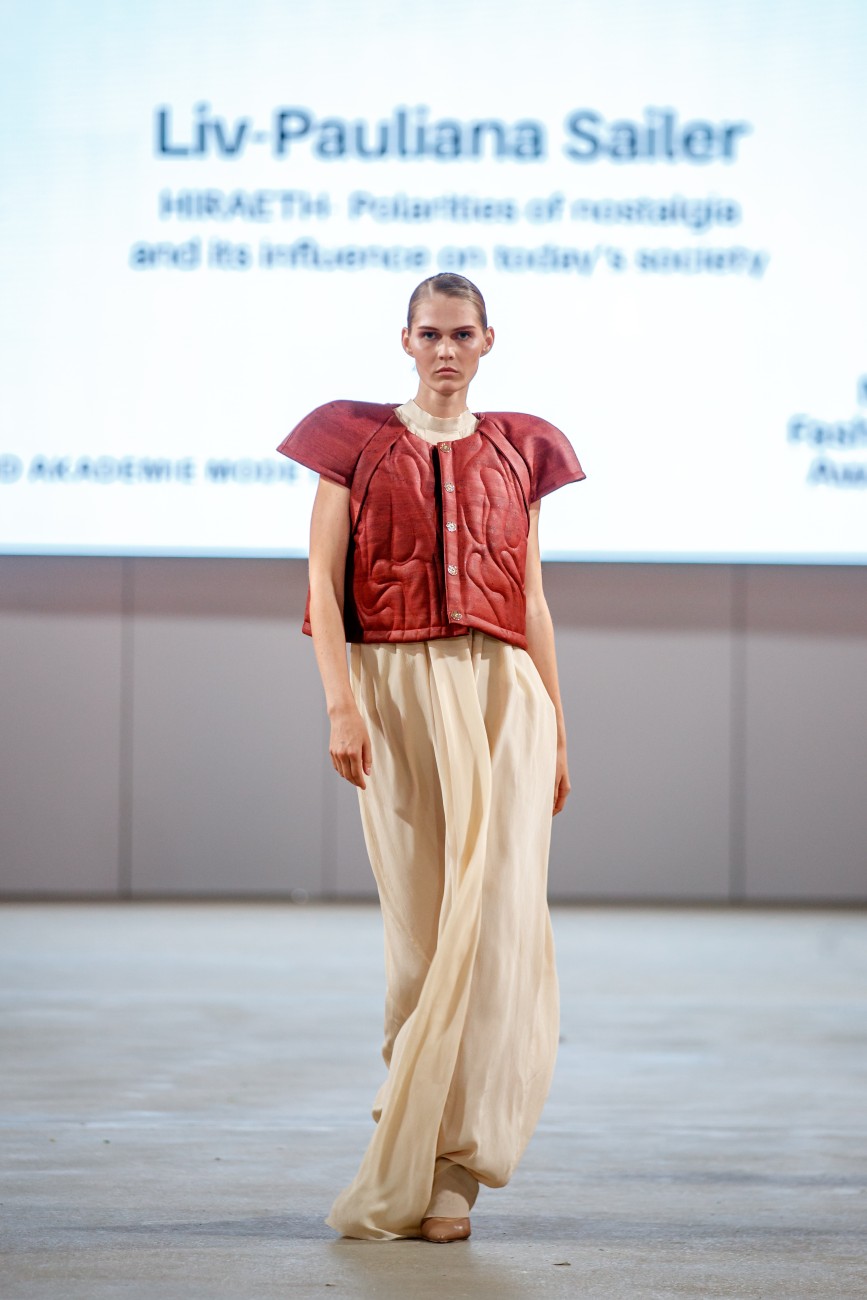
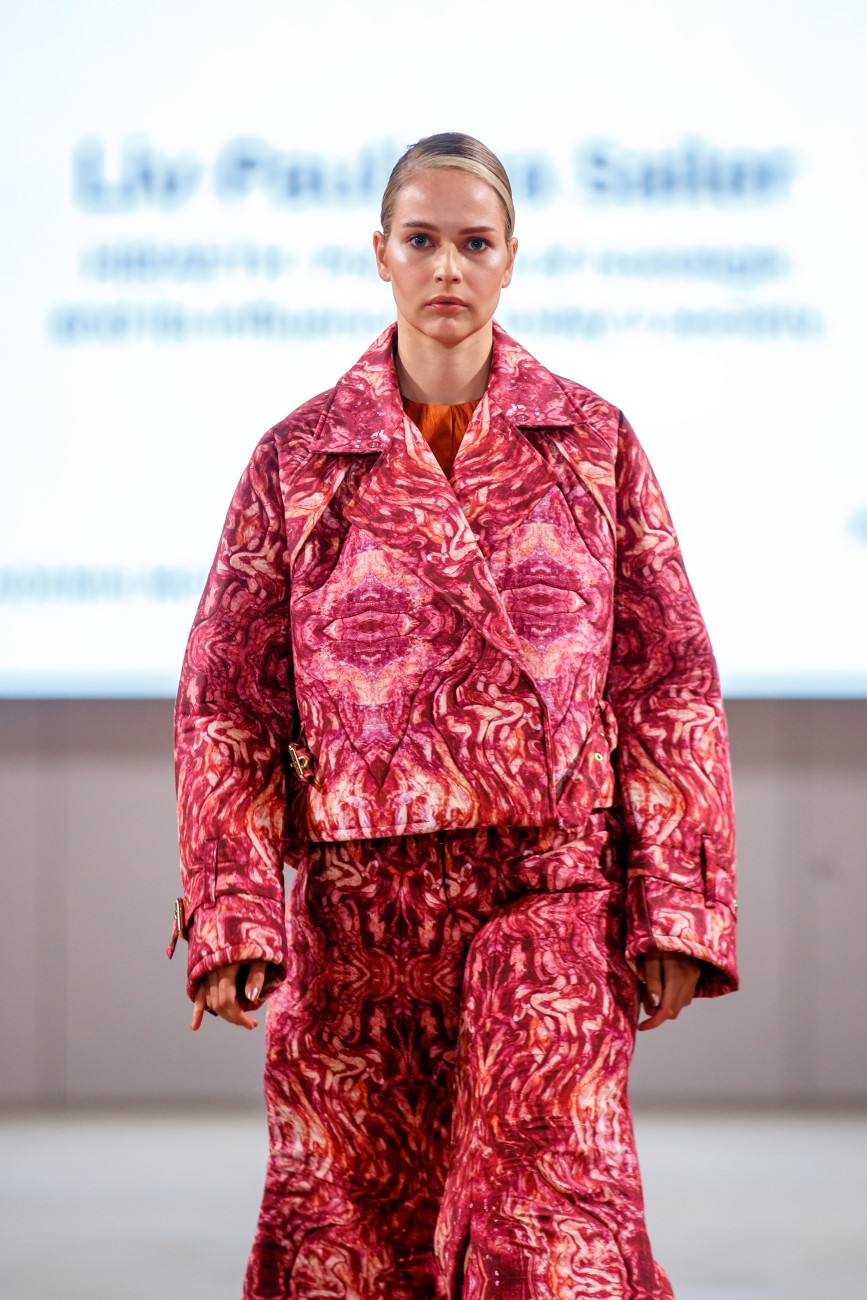
Liv-Pauliana Sailer explores the polarities of nostalgia and modernity in her collection Hiraeth — a visual meditation on the tension between holding on and letting go. The designs capture the bittersweet emotions that arise when one stands between memory and transformation, between who we were and who we might become.
Her bold use of prints, patterns, and colour mirrors this oscillation between past and present. The irregular cuts and clashing textures evoke inner turbulence, reminding us that growth often requires discomfort. “We must remember to reinvent ourselves daily,” she said, reflecting on her belief that openness is essential for progress.
During her studies at the Academy of Fashion and Design Düsseldorf, Sailer developed a fascination for unconventional fabrics and silhouettes. Collaborations with Ludwig Beck and Liberty of London, as well as an internship at a couture label in Amsterdam, honed her craftsmanship — skills clearly reflected in the refinement and conviction of Hiraeth.
Credits
WORDS
Lucy Rowan
Photography
Gerome Defrance
FASHION
Nanyi Li, Max Tautorus,
Jana Heinemann, Livia Honus, Liv-Pauliana Sailer, and Melina Weinrich
SPECIAL THANKS TO
Neo.Fashion.