We spoke to London-based designer Rafaela Pestritu about her materiality, glitch-inspired graduate collection, and the socio-political narratives that shape her work
Raised in the southern Romanian city of Slatina, 26-year-old Rafaela Pestritu traded scripts for sewing machines five years ago when she relocated to London to study Fashion Design. Having formerly trained as an actress in Bucharest, she channels her flair for drama and storytelling into every garment she creates.
When Pestritu graduated from the University of East London (UEL) in 2019, she finished top of her class and was subsequently awarded the Prize for Creative Endeavour. Beyond the classroom, she refined her practice through internships with designers such as Mary Katrantzou, Iris van Herpen, Dilara Findikoglu, and Tencel. She maintains that this hands-on experience prepared her well for her MA in Fashion Womenswear at Central Saint Martins (CSM), which she is almost halfway through.
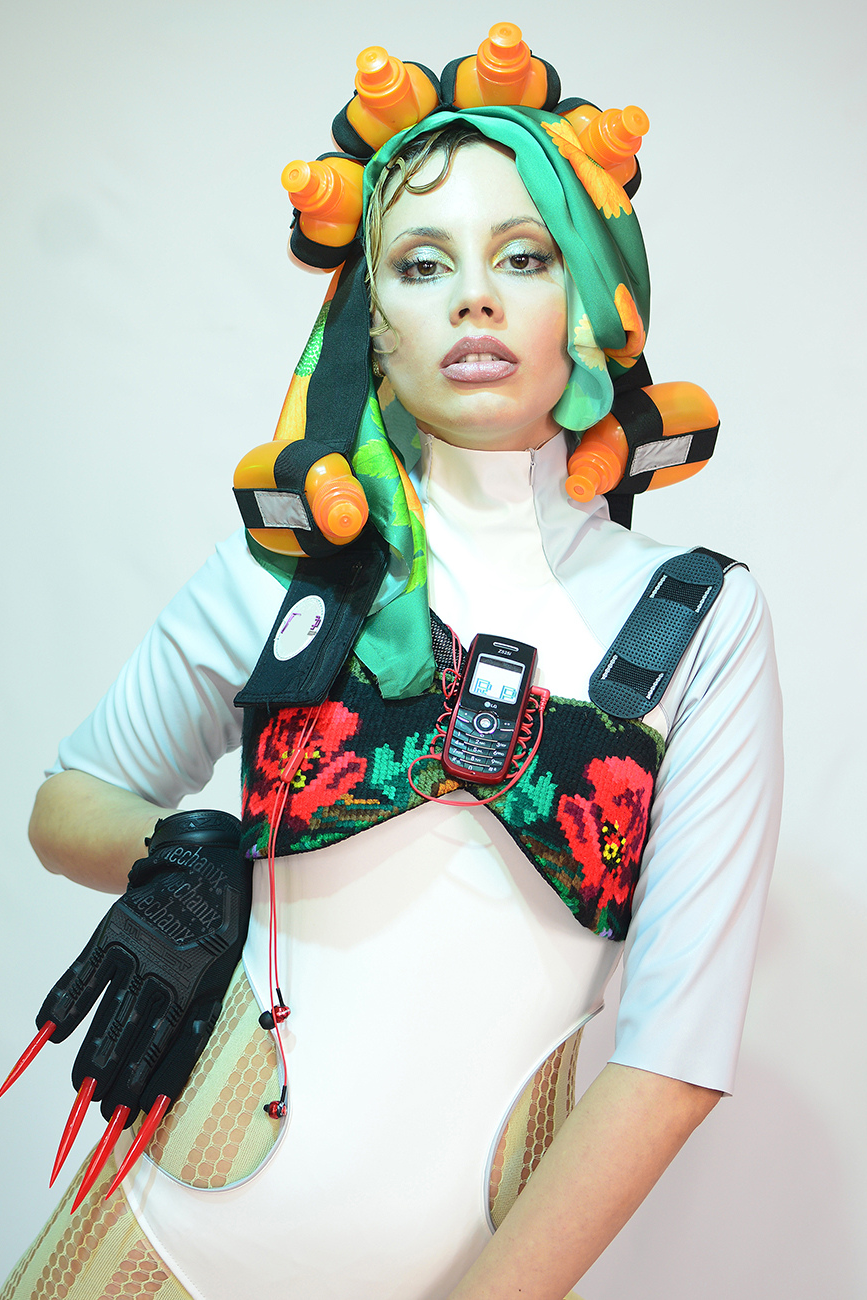
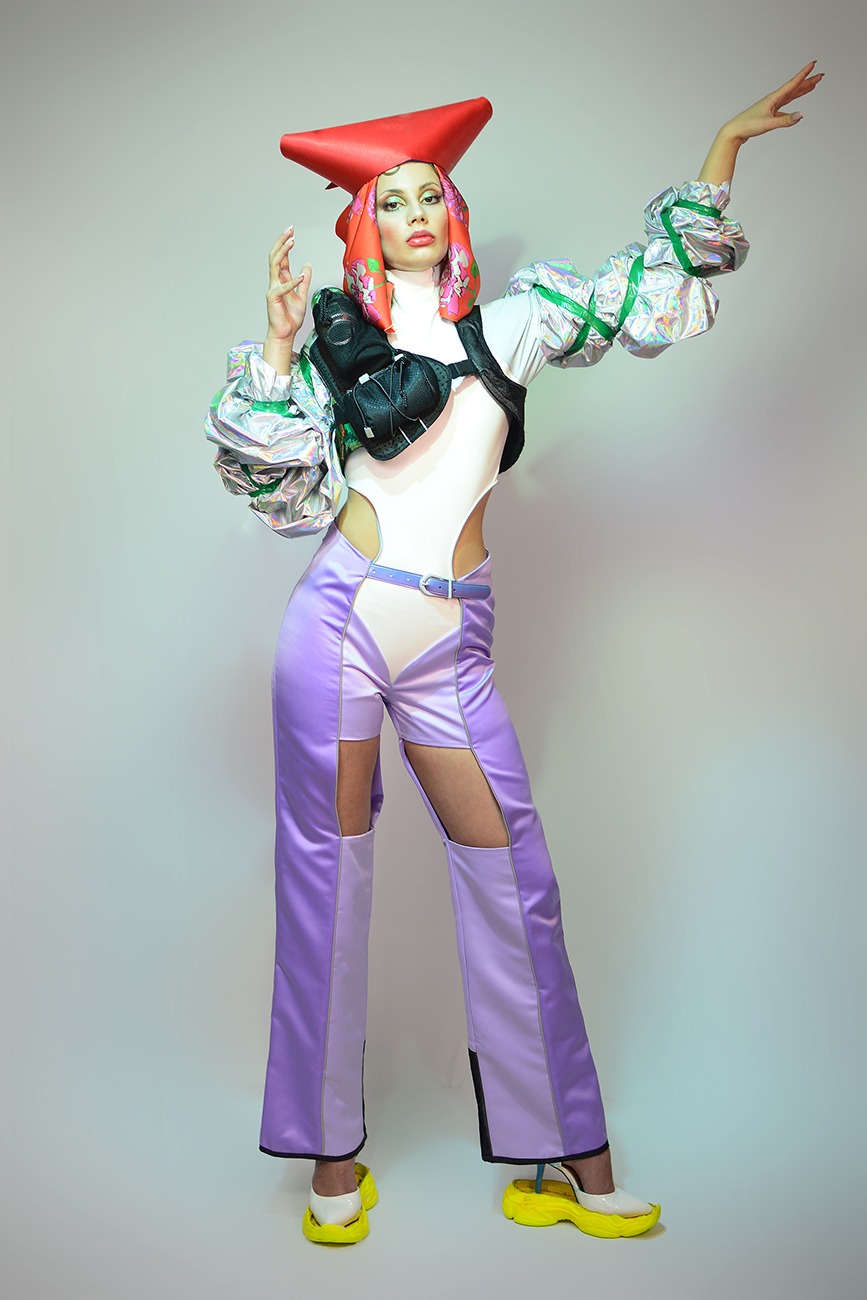
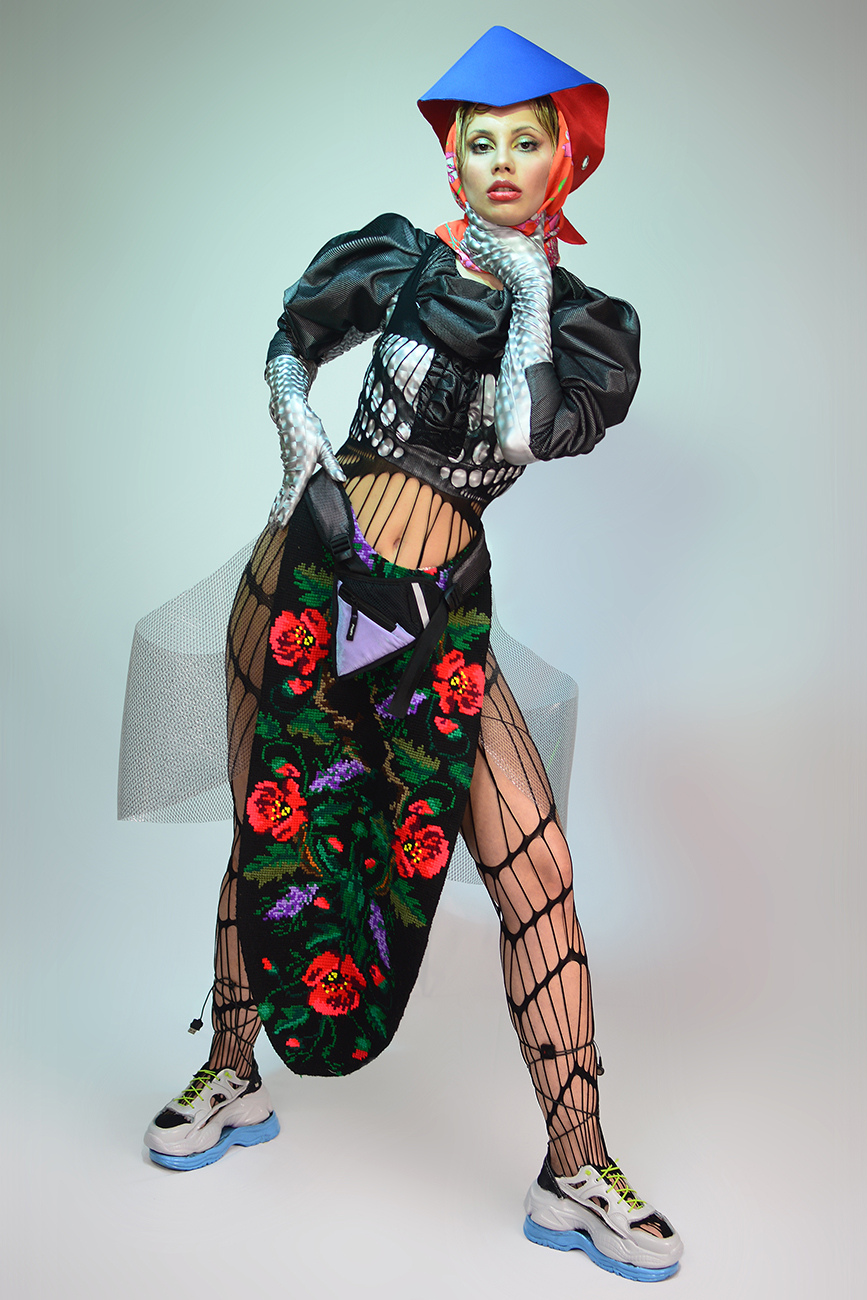
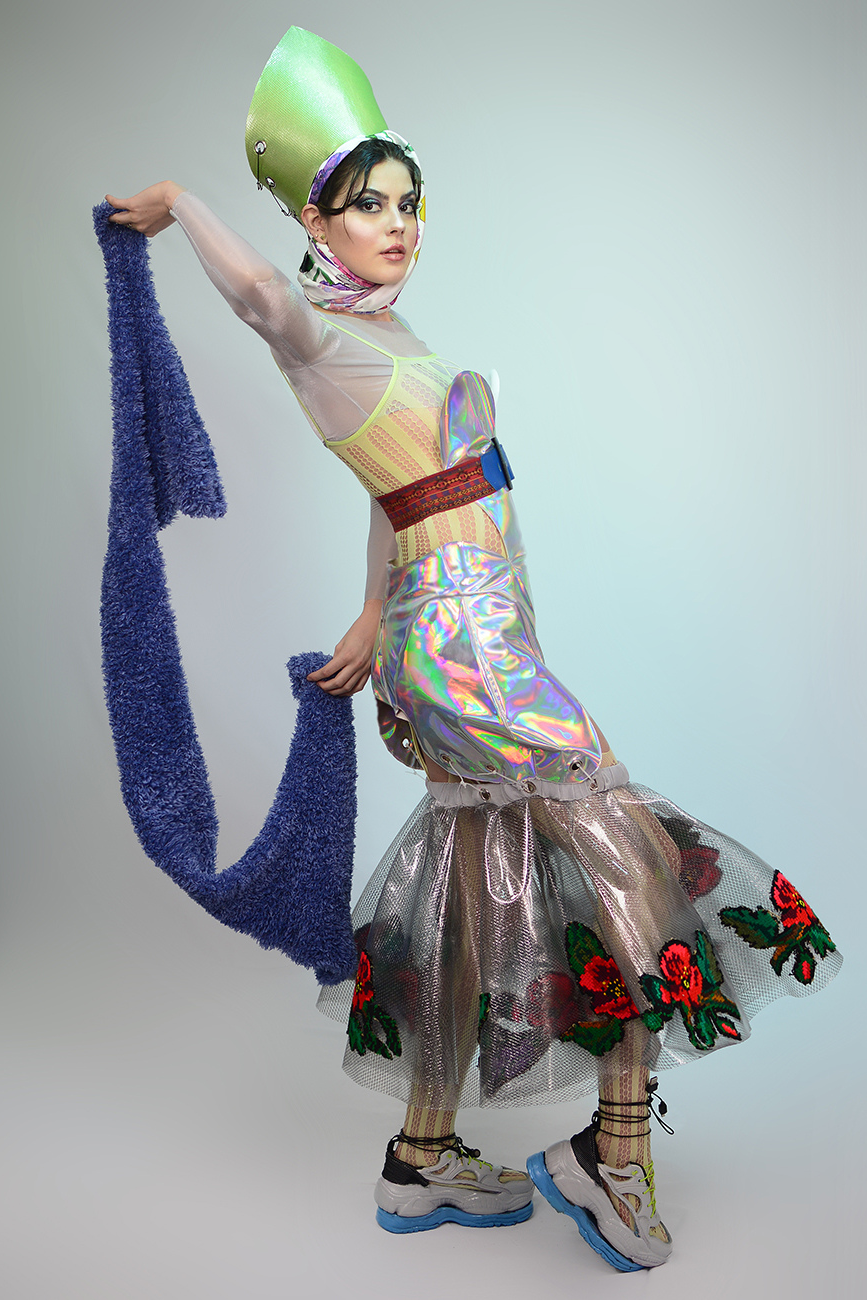
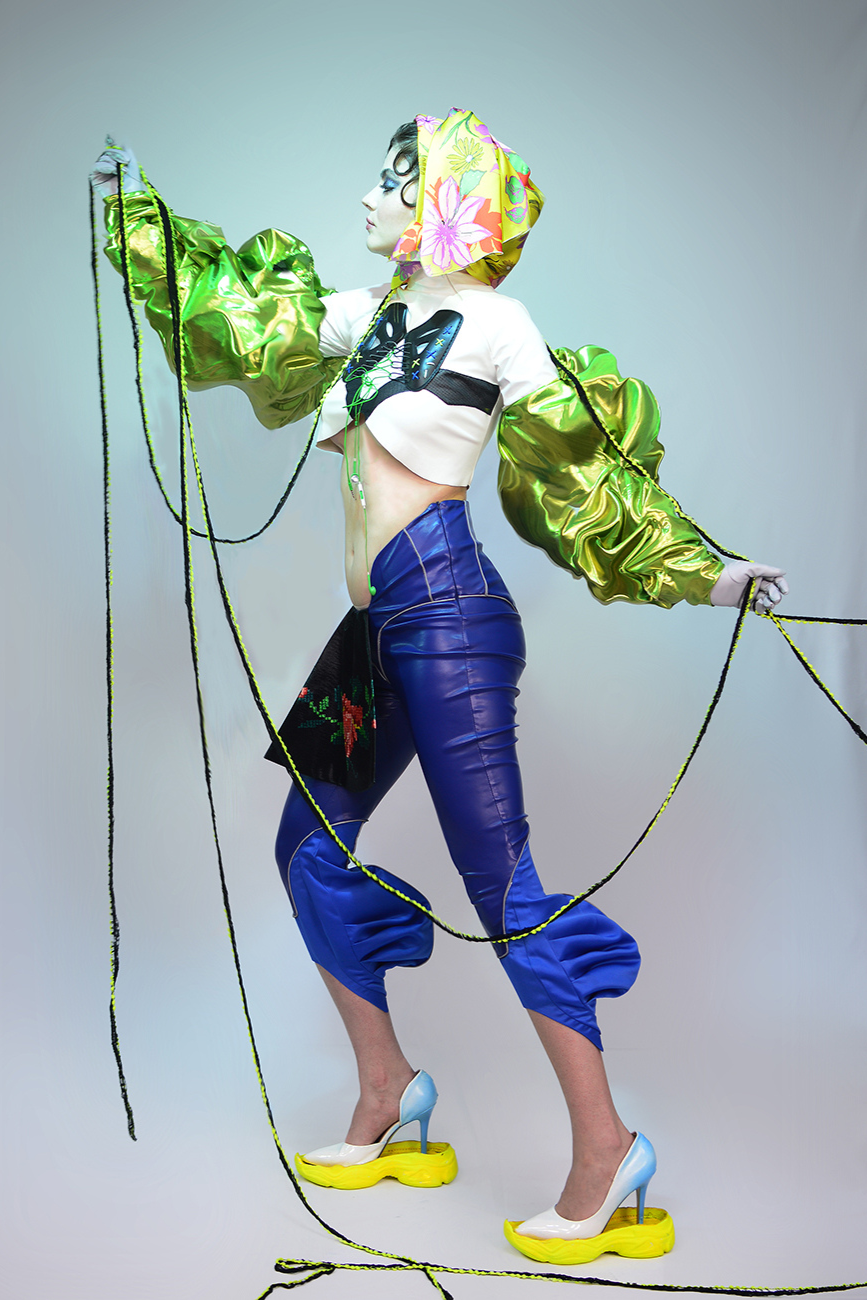
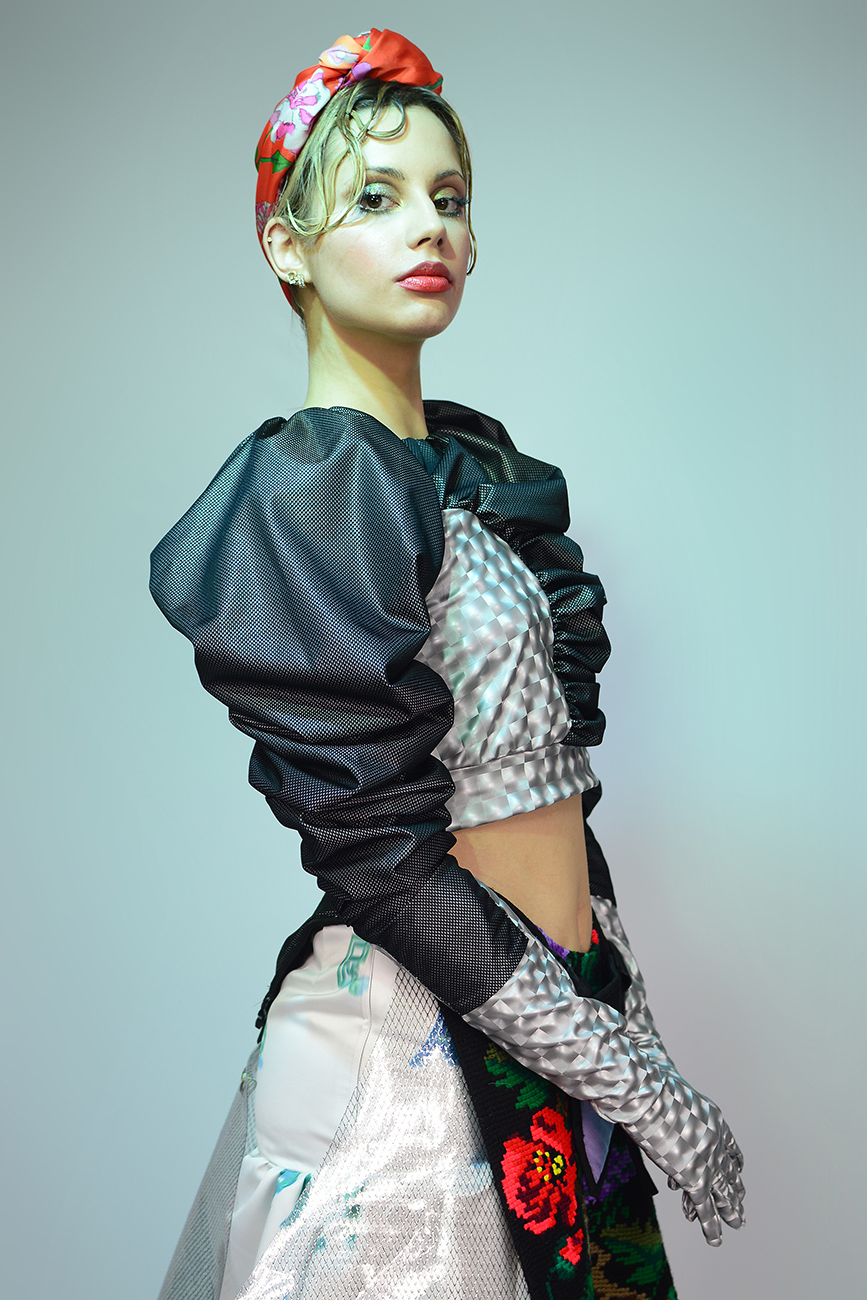
From just one look at her UEL graduate collection, My Granny is a Hacker, it is clear that Pestritu took notes from her characterisation classes at stage school. Drawing on 90s streetwear style, Balkan folklore, and avant-garde couture, she has paired unexpected materials to encapsulate her self-described ‘existing in a glitch’ aesthetic. In addition to paying homage to her cultural heritage and childhood memories, this collection endeavoured to challenge social narratives surrounding age and gender, as well as the prejudice Eastern Europeans face in the UK.
We caught up with Pestritu to explore the inspirations, materiality, and socio-political narratives behind her striking collections.
Can you recall what sparked your desire to move from the stage to the studio?
I’ve always known I wanted to create, but starting studying acting instead. The sense of ‘extra drama’ in my designs definitely comes from observing backstage — the emotions, the energy, the storytelling. Eventually, I realised there was nothing I related to more than fashion. It became an outlet for my turbulent emotions, a soothing calm for my restless self, and, in a way, an empowering force. Fashion allows me to escape routine while exploring another side of life. I observe just as much as I create.
Five years ago, I moved to London with just a backpack and a dream. While I was studying at the UEL, I expressed my desire to study at CSM, but my tutors doubted I would be accepted, given the competitiveness of the course. But here I am, pursuing my MA in Fashion Womenswear, walking the same halls as some of my favourite designers.
Having been placed top of your class at UEL, what do you think differentiates your work from other student designers?
I aim to tell stories that endure rather than follow trends or fleeting moments. I don’t want clients to simply buy clothing; I want them to enter a narrative. Much of my work revolves around the female body and its duality. Society often prescribes how women should behave or present themselves, portraying them either as sexualised objects or as empowered figures obliged to adopt masculine codes of dress.
My designs celebrate women’s complexity. The women I envision are unapologetic, self-determining, and multifaceted — childish yet mature, modest yet sexy, loud, maximalist, and nonconformist. They create their own rules and embrace their duality, which I hope inspires a utopian vision of female energy and freedom.
Can you tell us about your hilariously titled graduate collection, My Granny is a Hacker?
I created this collection during the 2020 pandemic. Shooting it in my room with friends was challenging, but it forced me to rethink craftsmanship and explore sustainable solutions. The collection examines nostalgia, combining past and future through fabrics that are not typically used together. It was also a tribute to my grandmother, who raised me and was my first real connection to fashion.
Spending a month with her before the pandemic, I began noticing small details — for instance, she sometimes wears a Romanian traditional costume that her mother made when she was my age. I wanted to capture her youth, melancholy, and personality, and translate them into my designs. By combining photographs of her and her parents with robotic elements inspired by video games, I created a tension between traditional forms and futuristic visions, drawing influence from Asimov’s series I, Robot (1950).
Where do you draw inspiration from most?
As a designer, I want to bring together the things that intrigue me — the future, the past, artificial intelligence, robots, nature, video games, anime, and movies. Somehow, all of these interests end up reflected in the clothes I create. Leigh Bowery has been one of my biggest inspirations, particularly his fearless self-expression and theatricality.
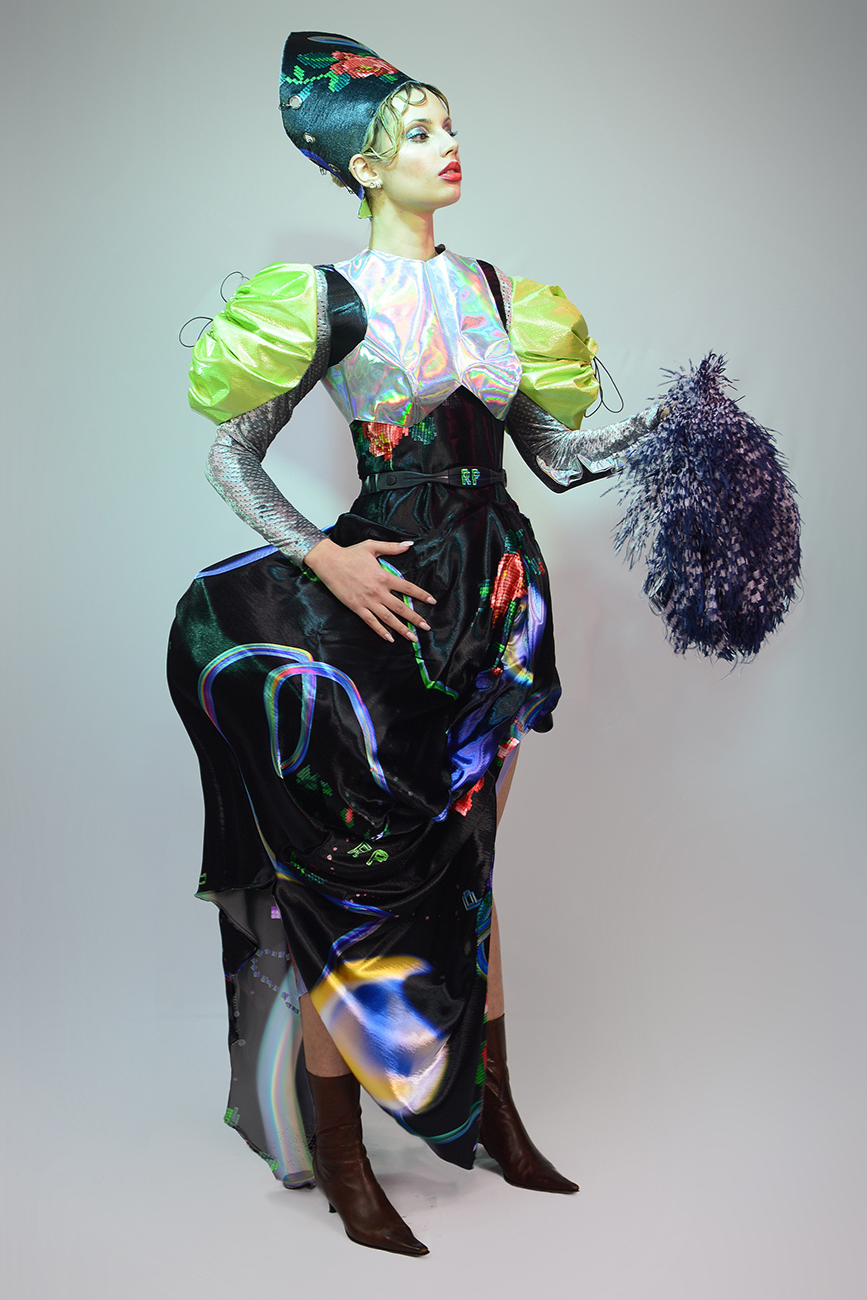
Your material choices are diverse and striking, could you please expand on these?
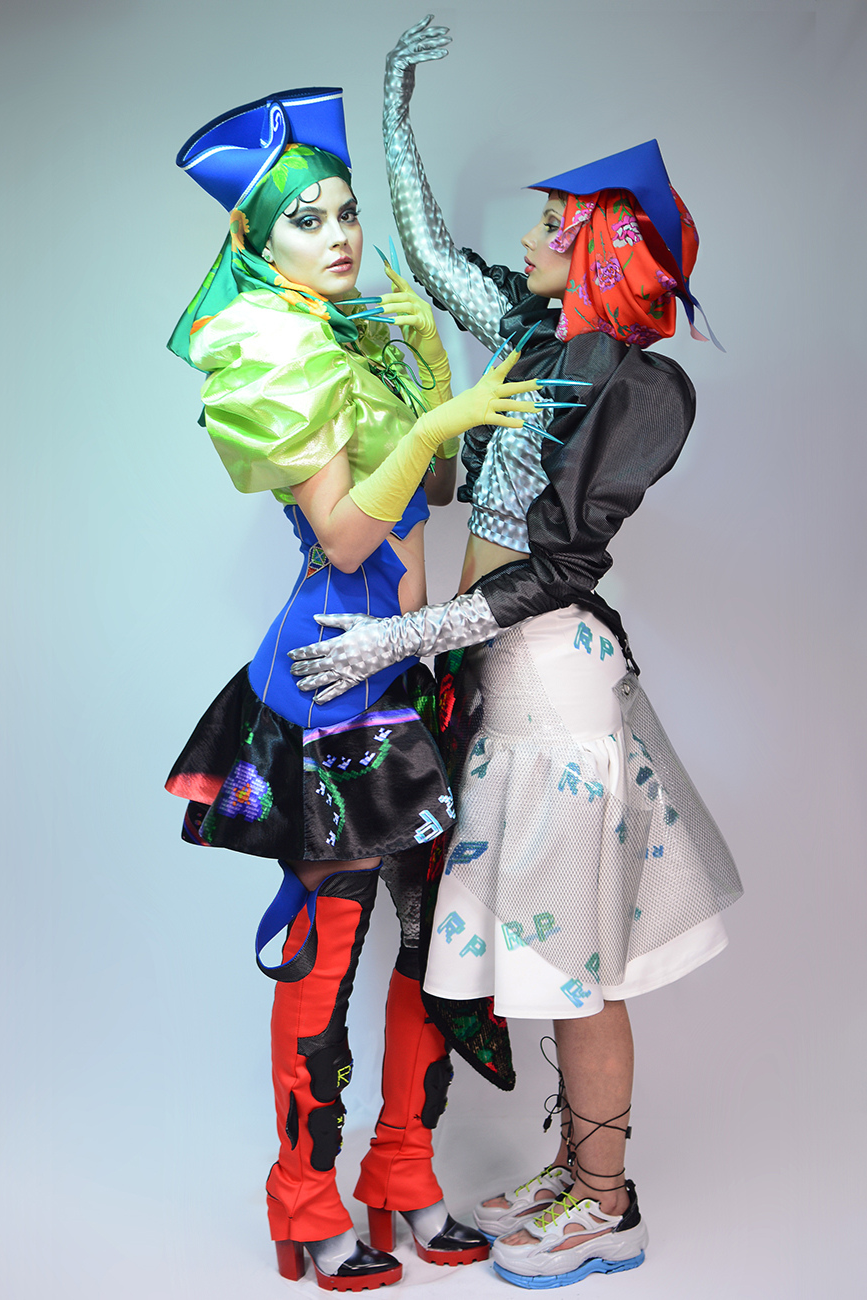
I used reclaimed or end-of-roll fabrics, including lamé, satin, and vinyl. I enjoy juxtaposing technically challenging textures, so I combined natural and synthetic fabrics with glossy and matte surfaces. I also recycled old devices, such as phones and earplugs, and upcycled embroideries and tapestries inherited from my grandmother, giving them a renewed purpose. Some are even over 100 years old! (Pestritu laughs.)
Are there any new collections or projects in the pipeline?
I’m currently developing a new collection inspired by my memories — perhaps distorted or imagined — of growing up in post-communist Romania. I’m fascinated by the lingering physical and psychological remnants of bygone times, which create a kitschy, almost surreal reality. I’m excited to bring that vision to life.
In the long term, I aspire to establish my own brand that combines sustainable practices with storytelling. I want to continue exploring personal themes, emotions, and memories, translating them into garments that communicate with the world.
Credits
WORDS
Lucy Rowan
Fashion
Rafaela Pestritu
Photography
Codrin Pestritu
Hair and
Makeup
Rafaela Pestritu
Models
Geanina Toroipan and Vanessa Neacsu