We share the two designers who caught our attention on the catwalk at the tenth edition of the annual festival dedicated to music video artistry
Following two pandemic-proof iterations, the Berlin Music Video Awards (BMVAs) finally returned in person from 8–11 June, taking over Club Gretchen for a vibrant schedule packed with screenings, runway shows, workshops, and live performances. Founded in 2013, the annual festival celebrates the art of the music video, enlisting a jury of industry experts to select winners based on originality, quality, and diversity, rather than the artist’s fame.
Categories range from prestigious honours, such as Best Music Video, Best Director, and Best Cinematography, to more playful, tongue-in-cheek titles, like Most Bizarre and Most Trashy. This year’s nominees included FKA Twigs, Lil Nas X, and Grimes, alongside a new generation of international artists determined to reshape the scene.
Over the past decade, the festival has evolved into an essential platform for emerging talent across all art forms to come together, share their creations, network, and party into the early hours of the morning. Blending Berlin’s subcultural pulse with a cross-disciplinary spirit, the BMVAs has become a space where underground creativity thrives.
The fashion segment of the festival, renowned for honouring experimental design, was once again a roaring success. Six designers took to the runway to spotlight their eclectic collections that blurred the boundaries between fashion, sculpture, and performance, embodying the event’s fearless energy and appetite for innovation.
Among them, Leonidas Kanavetsados and Marco Ward stood out to us for the conceptual depth and craftsmanship behind their featured collections. As the lights dimmed on the catwalk, we followed the two designers backstage to find out more about their artistic mission and how sound shaped their process.
Leonidas Kanavetsados
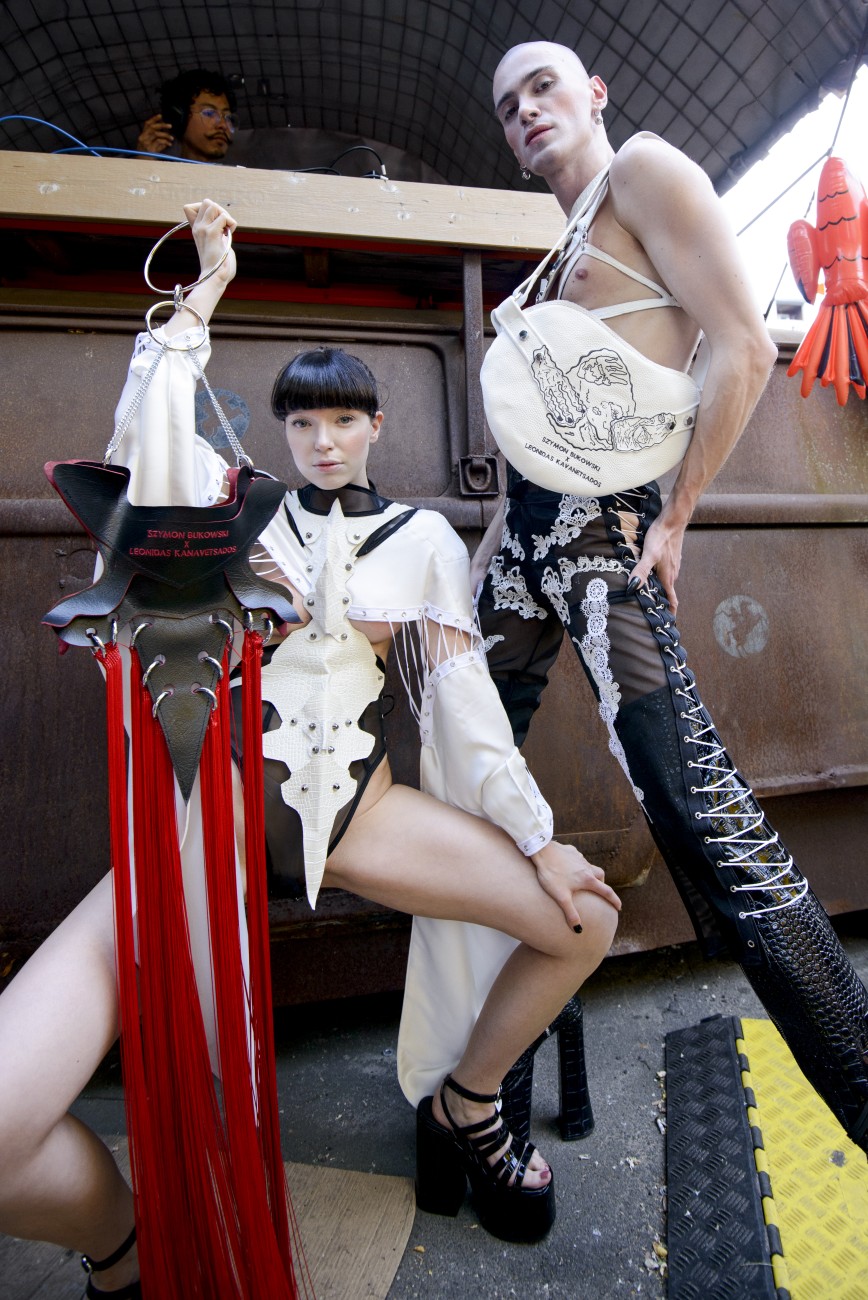
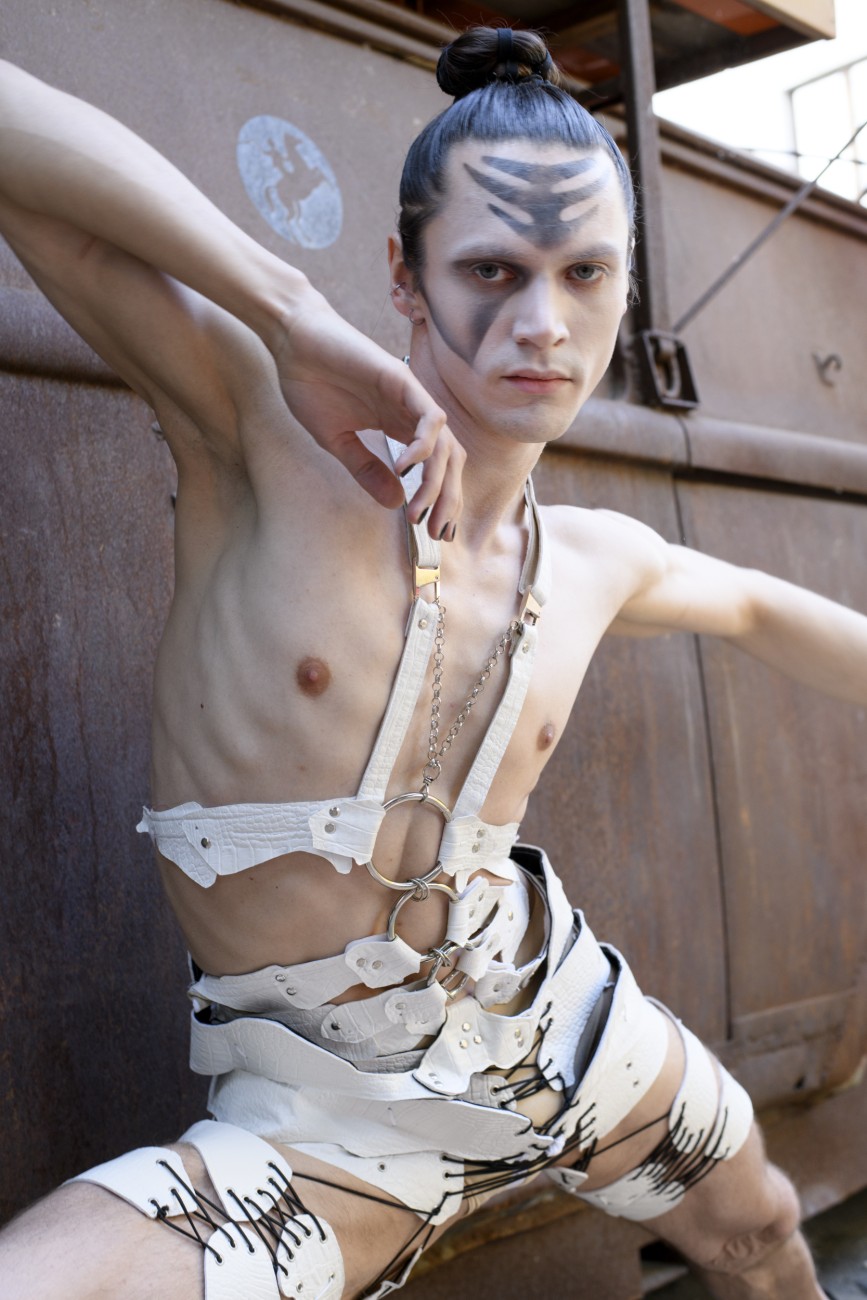
Hailing from Greece, artisanal fashion and costume designer Leonidas Kanavetsados has cultivated a practice defined by movement, identity, and emotion. After studying Fashion Development in London and Theatrical Costume Design in Rome, he pursued Experimental Fashion and Installation Art in the Netherlands, developing a multidisciplinary approach that bridged fashion, performance, and fine art.
Although currently based in Madrid, Kanavetsados often travels to Berlin and other cities for work, which he described as central to his creative process, emphasising that exposure to different cultures, techniques, and environments enriches his work. This international outlook is evident in his collections, which draw on influences as diverse as Japanese tailoring and human anatomy, fused with theatricality and sculptural design.
“To be a good designer, you need to be curious about other places, techniques, and cultures,” he told us. “To understand how other people live, think, and create. For one project I’m in France, then Germany — wherever the creative people are, I’m there.”
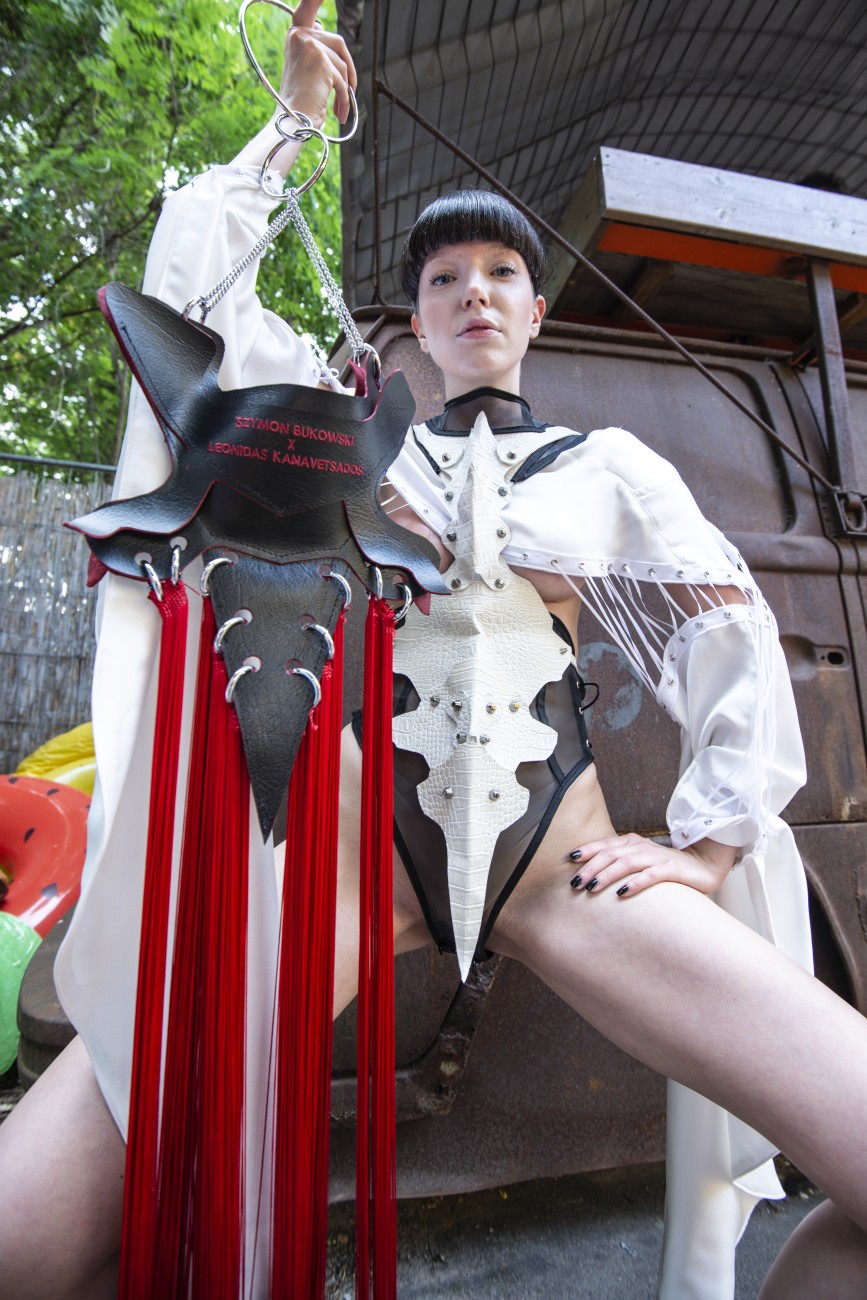
Debuting his latest collection Fearless Soul at the BMVAs, Kanavetsados channelled the intense creativity accumulated during two years of isolation into a deeply personal exploration of freedom and self-expression. The collection was conceived not only as a visual statement, but also as a reflection on the journey from darkness to light, a concept he described as central to his philosophy.
Kanavetsados explained: “The past two years of COVID and isolation were very intense, so there was a lot of accumulated creativity. With all that energy, I wanted to dedicate this collection to values related to anti-conformity — to express yourself and find freedom without fear. It’s about the story of the soul, and how we move from darkness to light.”
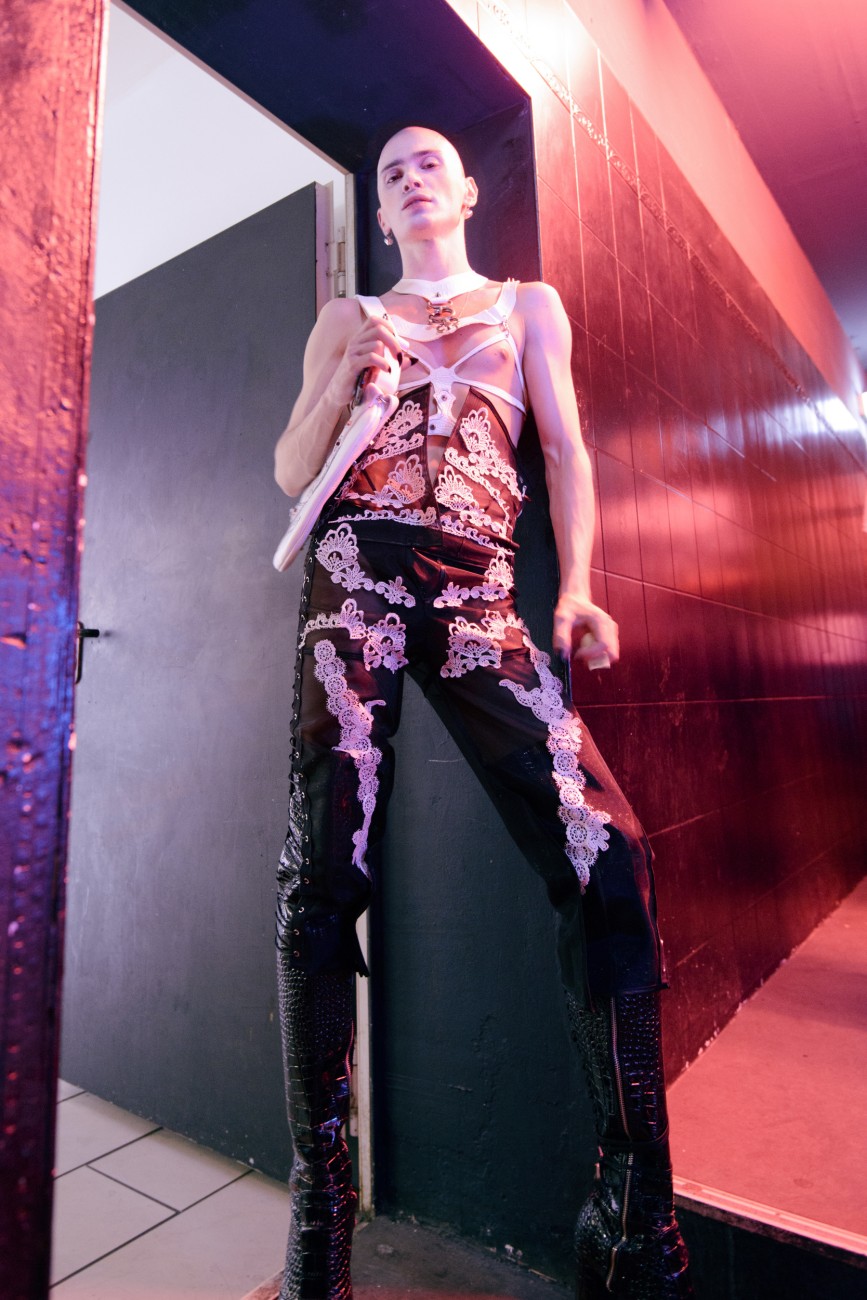
His notion of embracing a ‘fearless soul’ serves as the skeleton beneath all his work, not just this collection. It informs the themes, structures, and movements he investigates in every piece. He observed that attaining a “soul without fear” is challenging in contemporary society, where difference is frequently scrutinised, yet the ultimate aim is to embrace and celebrate individuality.
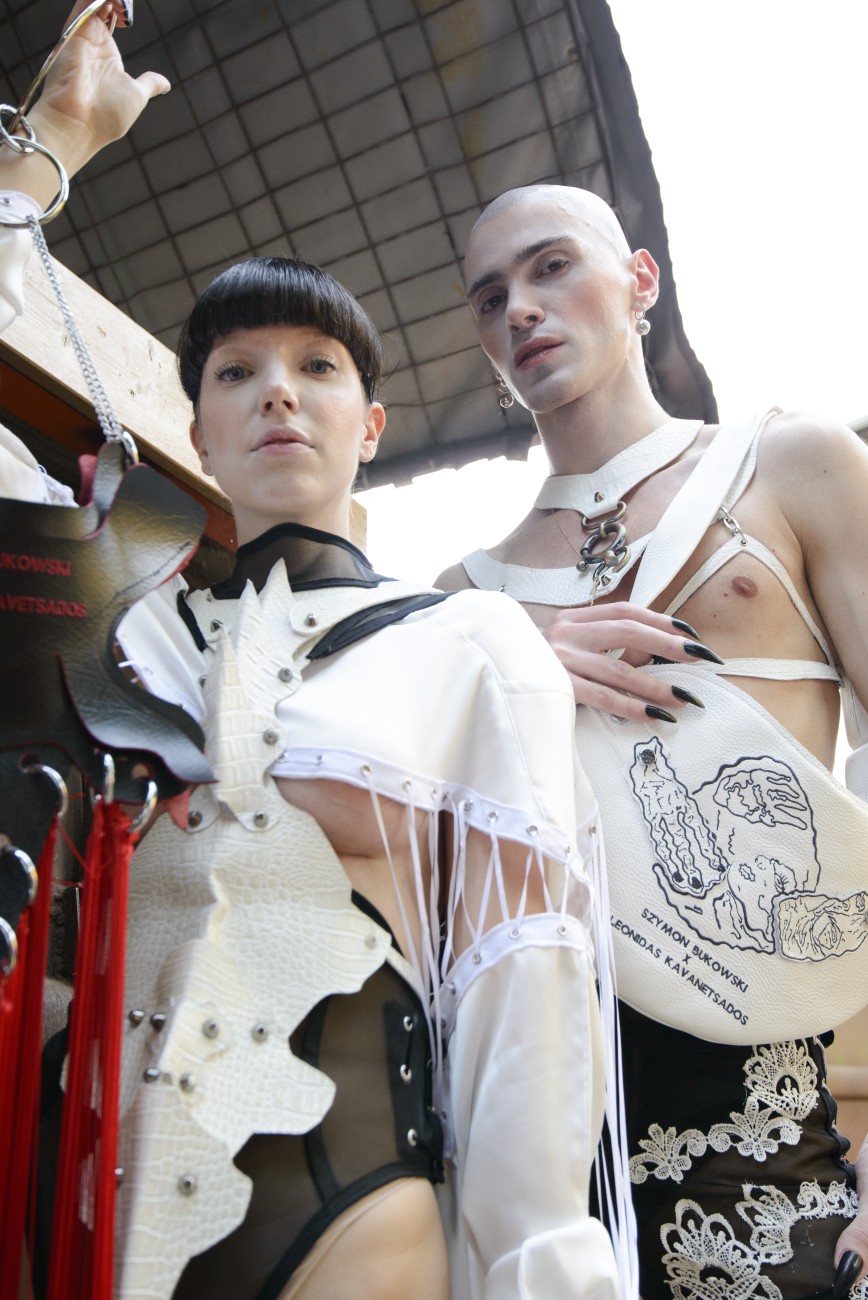
Kanavetsados’ creations reflect this philosophy through experimentation with silhouettes, textures, and dramatic movement, inviting wearers to inhabit their garments fully and express their own identities confidently. Fearless Soul fused sculptural forms with flowing motion — pieces inspired by the contours of bones and muscles, designed to come alive on the body.
Movement, he emphasised, is central to all his designs: a costume without a human presence is inert, and the interaction between wearer and garment is what brings the work to life. One standout costume, ‘Serratus Anterior’, was created specifically for a dancer, marking Kanavetsados’ first exploration of performance costume. “It was a challenge,” he said. “The outfit had to remain flawless while the dancer performed an intense choreography.”
Looking ahead, Kanavetsados expressed a desire to continue collaborating with performers and artists, drawing inspiration from their personalities to craft bespoke pieces. Each creation is meticulously handmade, with careful attention to identity, detail, and narrative.
With plans to develop a series of headpieces and a theatrical collection, Kanavetsados’ exploration of fearless design is far from over — a philosophy that remains as much about craft and artistry as it does about the courage to embrace one’s own identity.
Marco Ward
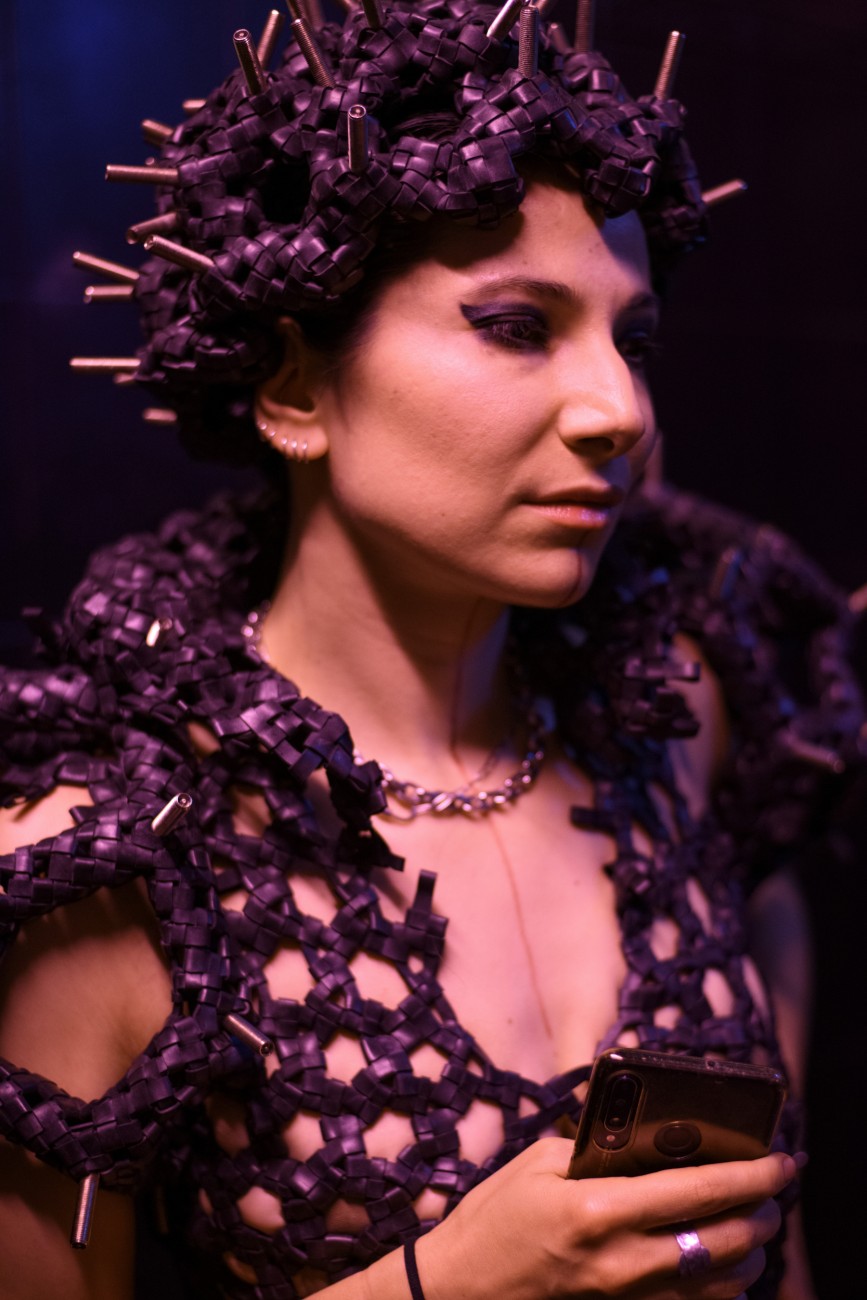
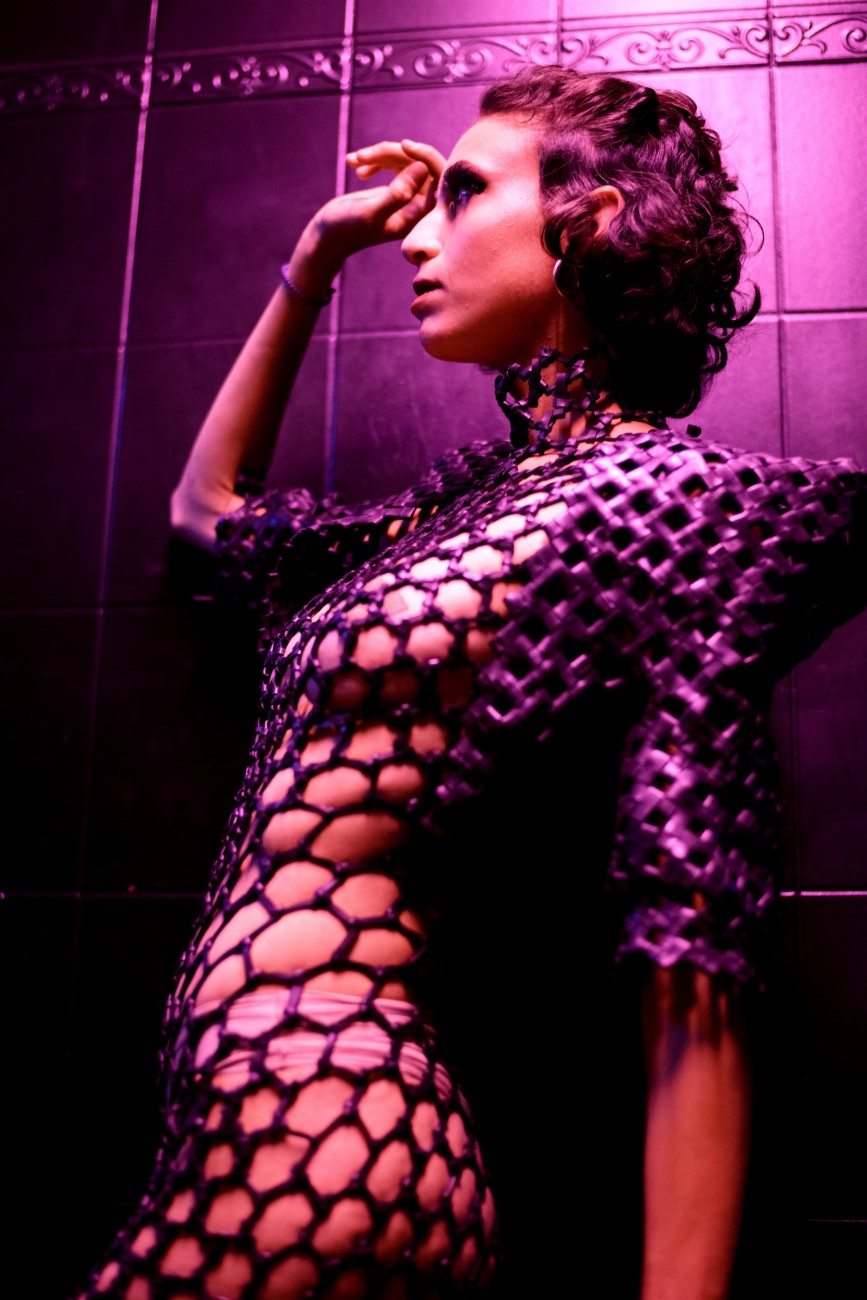
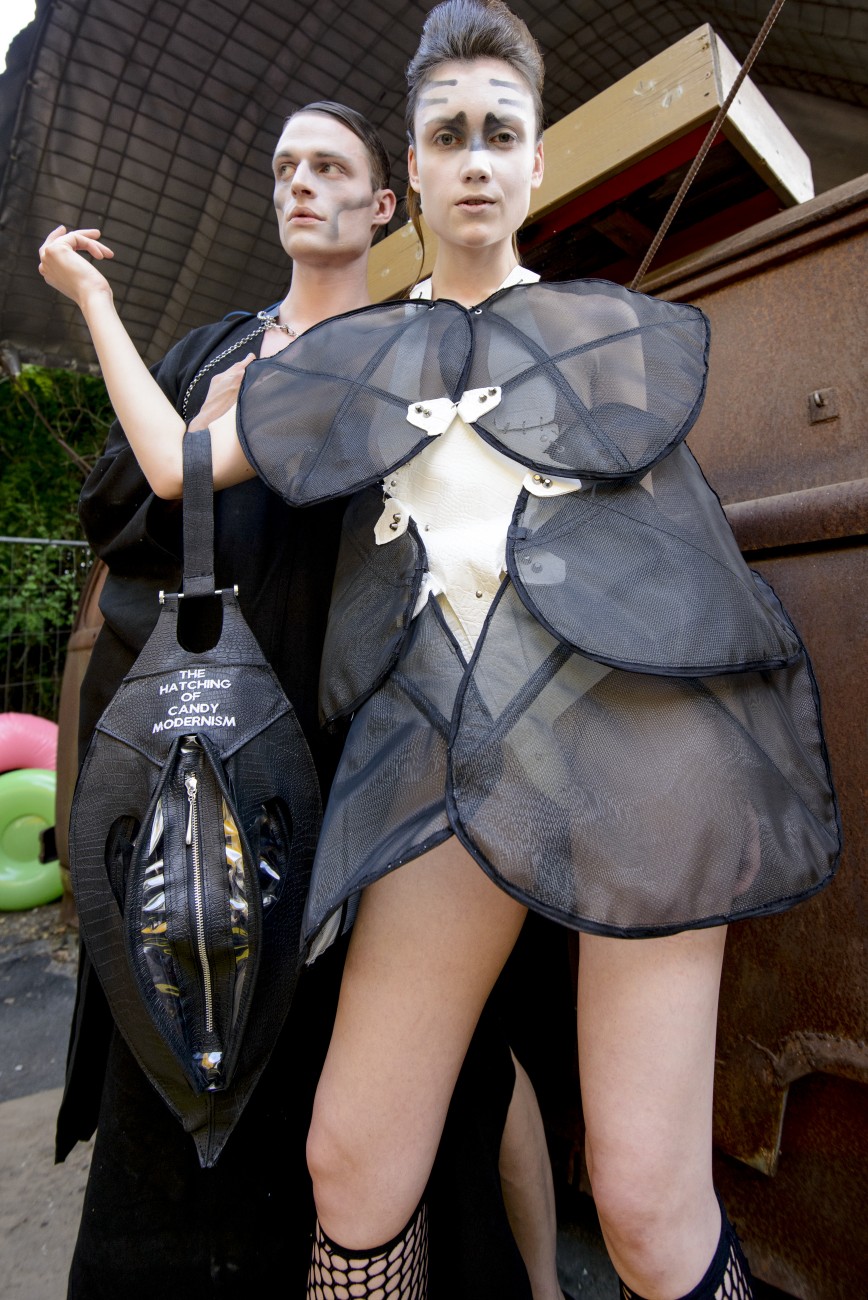
Paris-based Lebanese-Italian designer Marco Ward brought his avant-garde label Minimal Waste to the BMVAs with a collection that turned discarded materials into something defiantly beautiful. His practice, somewhere between sculpture and sustainability, reimagines what fashion can be when waste becomes the starting point rather than the by-product.
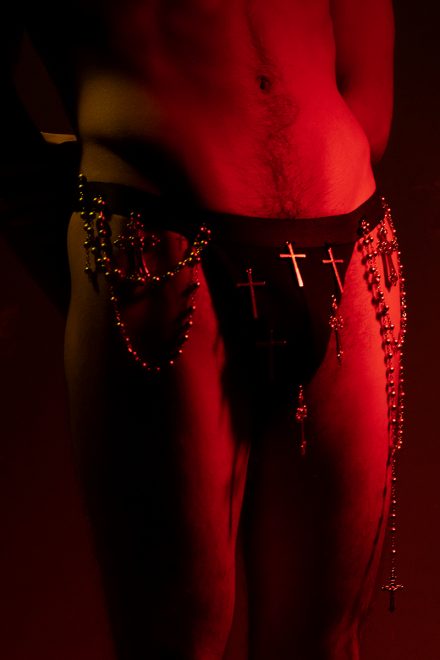
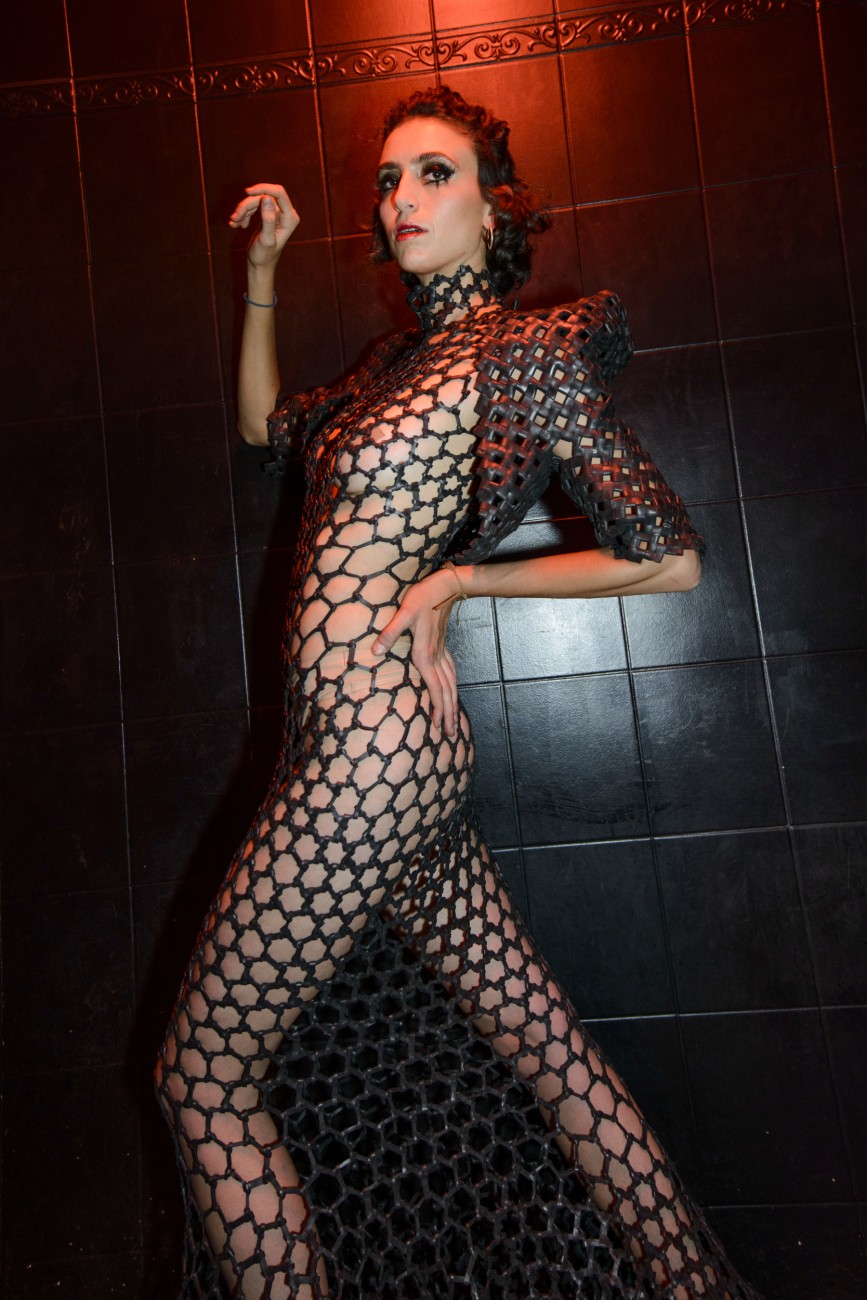
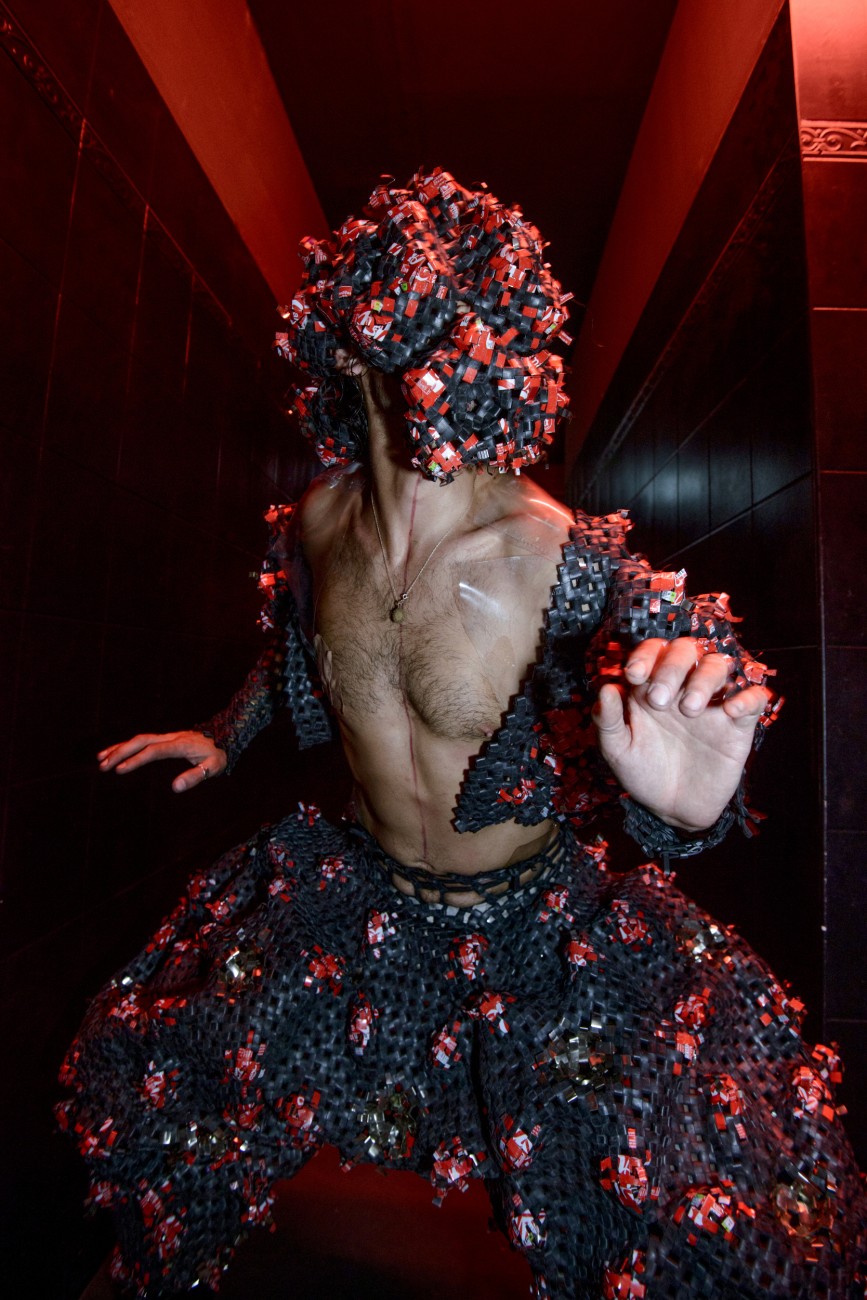
On the runway, Ward’s hand-woven, armour-like pieces took shape from reclaimed junk — the kind of materials that might otherwise be burned or buried. Patient experimentation met precise geometry, fusing art and engineering. The result was a striking post-apocalyptic vision of black threaded with flashes of red, structured yet sensual, alien yet eerily human.
Ward founded Minimal Waste with a simple but radical intention: to change the way people see trash. “Everything I make is to inspire people, to look at trash differently,” he said. “When people first see my clothes, they like them, and then once they get close, they realise what they’re actually made from. That’s the point, to change perception.”
His design language sits at the intersection of ecology, creativity, and mathematics — three words that define his approach as much as his philosophy. The mathematics comes into play through structure. Each garment is constructed from interlocking polyhedrons, formed without fabric, patterns, or sewing machines. Instead, geometric pieces are engineered together to create three-dimensional forms that fit the body perfectly and generate zero waste.
This meticulous technique met poetic inspiration in his latest collection, which drew from the molecular structures of carbon — graphene, graphite, diamonds, and gaseous carbon. Each look reinterpreted one of these elemental states through shape and texture, transforming molecular geometry into wearable architecture
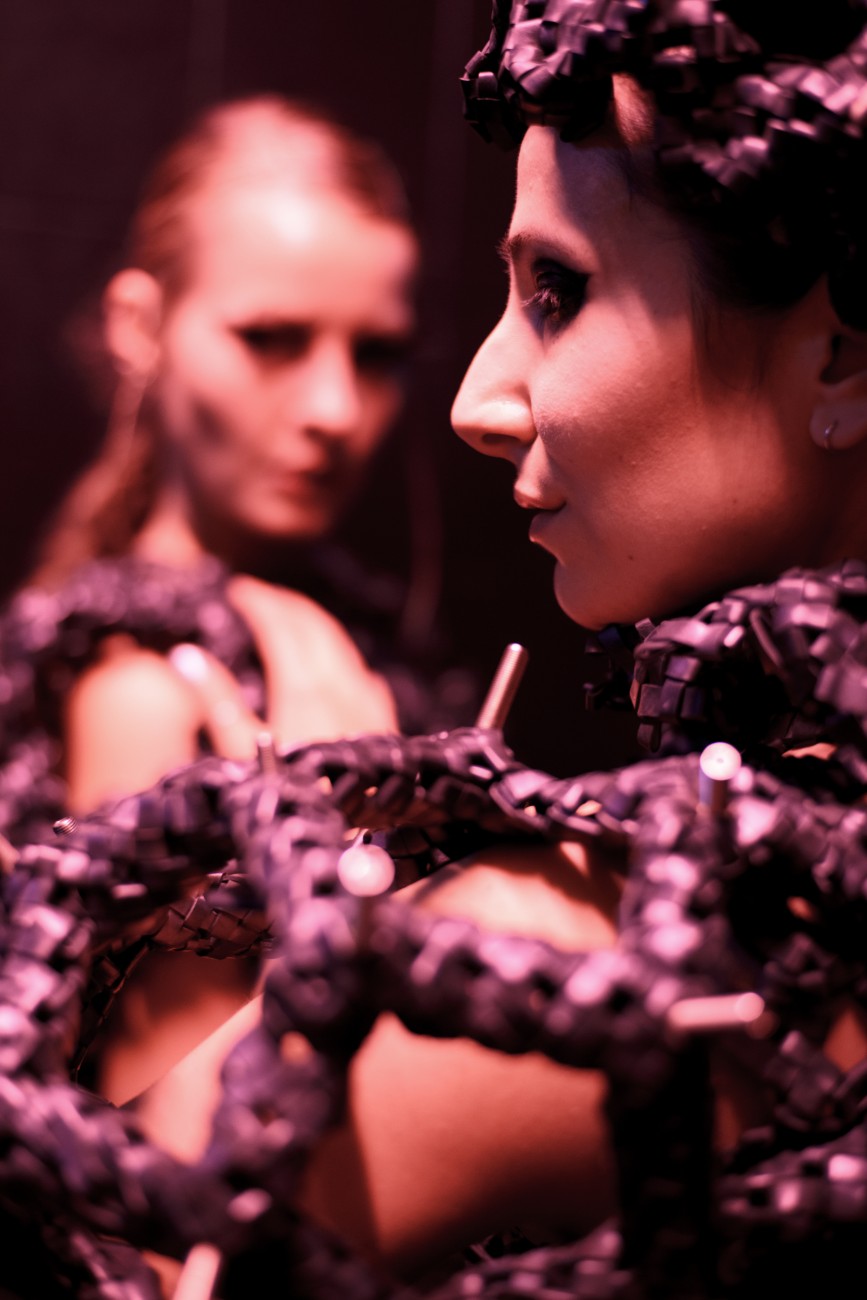
Movement, Ward explained, is where the work comes alive. The garments were designed not just to be worn but to exist in motion, on a body, in sound, and under light. Music played a central role in the presentation, which became something of a family collaboration. His brother composed an original score inspired by the collection, one sister directed the visuals, and another walked the runway. The show unfolded like a living installation, raw and mathematical yet deeply personal.
Among the standout looks was a Samurai-inspired ensemble made from reclaimed Coca-Cola cans, a sharp jacket-and-trouser set where metallic reds and blacks collided. “It’s not the most obvious or commercial piece,” Ward admitted, “but it’s my favourite. It’s about the details, the way the materials interact and the energy it gives when it moves.”
Looking ahead, Ward plans to expand his geometric experiments beyond clothing, exploring sculpture, upholstery, and 3D painting. His future designs will continue to resist the conventional cycle of production and waste, existing instead as singular, purpose-built works for performance, film, or music.
“There’s no point in making more clothes, there are already too many on this planet,” he said. “If I do make clothes, it’s to sell dreams, not clothing.” With Minimal Waste, Ward continues to redefine the boundaries of sustainable design, proving that environmental consciousness and spectacle can coexist without compromise.
Credits
WORDS
Lucy Rowan
PHOTOGRAPHY
Peter E. Reiche
FASHION
Leonidas Kanavetsados
and Marco Ward
SPECIAL THANKS TO
Berlin Music Video Awards