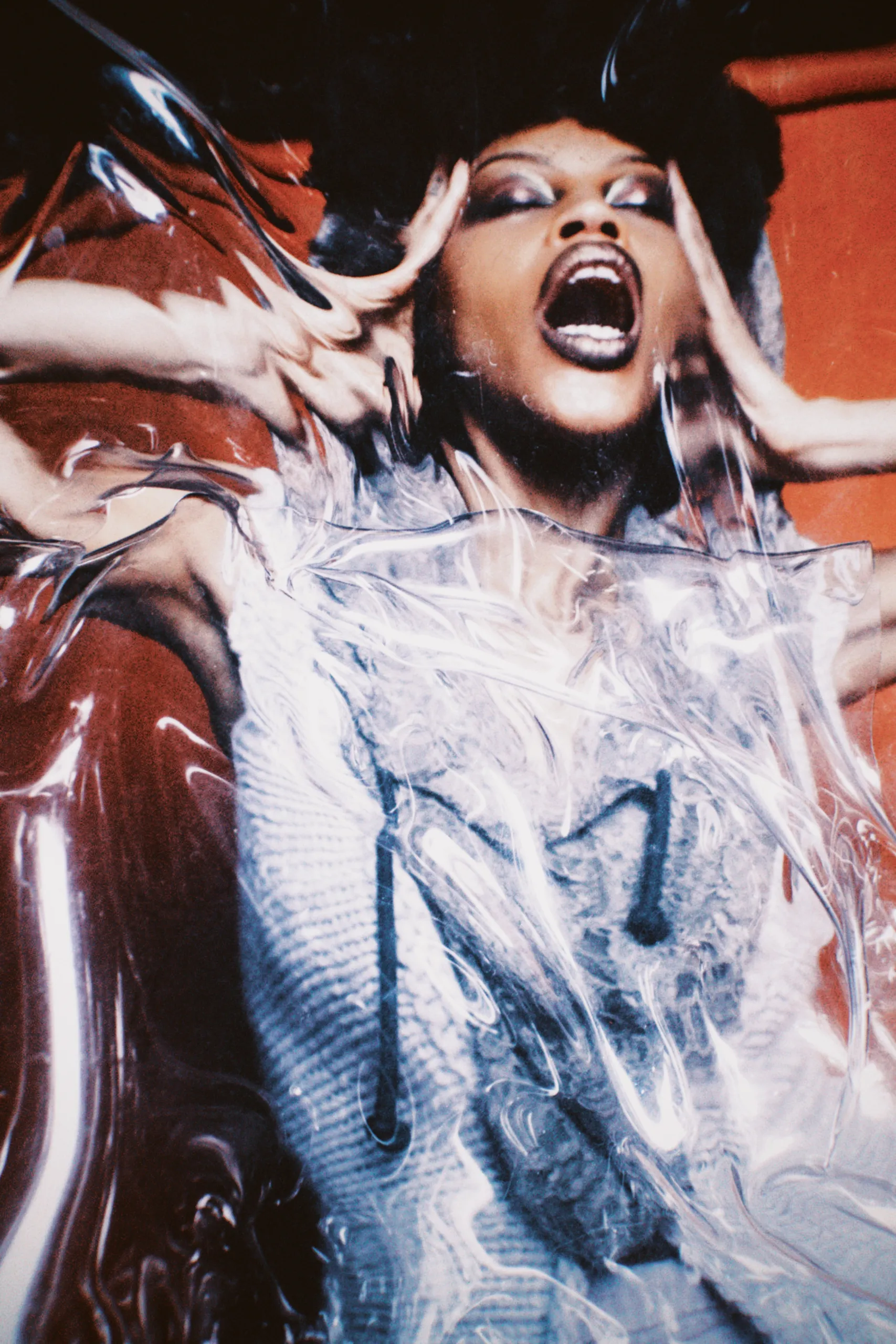
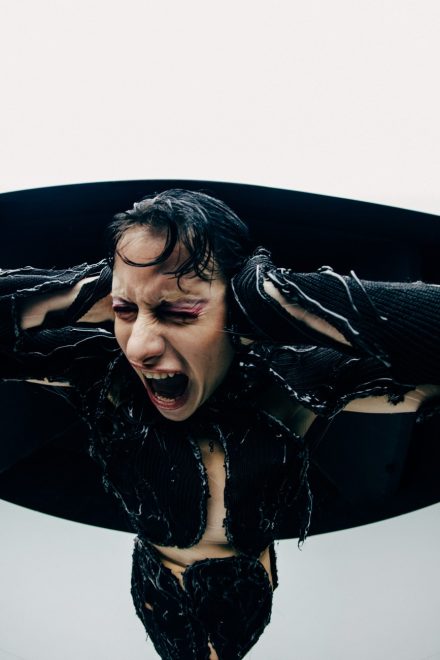
SLVA operates somewhere between fashion, sculpture and a carwreck — literally. Cristian Huygens, who originally studied industrial design and architecture, takes old car parts and upcycles them into wearable pieces that have graced the likes of Lady Gaga and FKA Twigs. With his partner Natalia Golubenko he stages his pieces in experimental show formats like installations and performances. Meet the duo that is quickly becoming a prominent new voice in fashion.
LYNN YIN DITTEL / Œ: Tell me about SLVA — what does it mean?
CRISTIAN HUYGENS: Since I was a teenager, people have called me Selva. It means jungle, or wild. Because of how I act, sometimes, they started calling me that in Argentina, my home country. So we decided to make it the brand name — it made sense.
NATALIA GOLUBENKO: We added the Huygens because Selva is a pretty common Spanish name, so there were a lot of companies, across all fields, with that name. Adding Huygens set us apart a little.

ALL IMAGES
Photography – Jay Zoo


Œ: This was a co-founding. How did you guys find each other?
NATALIA: Before founding the brand, Christian was doing furniture, and he used to do illegal art installations. We briefly knew each other since 2022, but in 2024, he reached out to me because he was doing fittings at the studio. When I came here, he put these incredible wings made from an upcycled car bumper on me, and that’s how I got involved.
CRISTIAN: That’s how she first got involved in the project, but I thought she could do more than modeling here. So she started managing communication, which really complemented the brand in what was missing before. Slowly, Natalia got more and more involved across everything.


Œ: Cristian, would you say that you do more of the creative stuff? And then Natalia, you do more of the all the other stuff on the brand?
NATALIA: Well, Cristian is the fashion creative director, for sure, because he started this whole thing. At this point, though, I am responsible for other creative tasks, like planning fashion shows, writing the concepts for the collections. I would say I’m more responsible for external communications and art direction and he has this crazy artistic mind that melts cars, so he does the creative direction.
Œ: Cristian comes from an architectural and industrial design background. How did you go from that to fashion design?
CRISTIAN: I studied architecture and industrial design, so my roots are in design, for sure. In those careers, you study design in its totality. So, I was doing furniture design just a few years ago, but I was including performers to interact between the pieces in exhibitions. Everything focused on the furniture, always. I just had the idea to make outfits for the performers. I started creating outfits for the performers to show my furniture, but my clothes started to be more attractive to people. I also started enjoying doing that more. Now, this is the discipline I found and I’ve been able to merge everything I like into one.


Œ: It’s kind of your signature that you use very special materials. Can you tell me more about that?
CRISTIAN: You mean the car parts. I’ve always been interested in materials that have already been discarded, that are old and have these details and mistakes and are broken. That’s where the surprise comes because you don’t know what you’re going to create until you find what you’ll create with. It’s not like going to a store and buying two meters of fabric and knowing exactly how it’s going to look. This way, you have a bit more space to play.
NATALIA: but there are also so many new things, like ropes. In our new collection called ‘Crush’, the core idea is radical upcycling, brutal upcycling. We have a few new models: shoe corsets, rope dresses, dresses made from linings. We’re going further than car parts, so there are many new unconventional materials to see.
Œ: That’s very cool.
CRISTIAN: I also work with normal fabric, but I start with zero patterns. We melt the car parts and shape it to create volume in the dresses. We sell some like that at PLATTE.


Œ: Your work is very sculptural. Would you say it’s more art or more clothing?
CRISTIAN: Both. We kind of avoid defining it so strictly, but it goes in more of an artistic direction, for sure.
NATALIA: At the same time… We get that question a lot, and I don’t think there is a definite answer. Even when we are doing shoots or shows, we always incorporate performance, furniture or we make it into an installation. We always have a multidisciplinary approach. So even when doing something as classic as a fashion show, it’s still not a regular fashion show because it is still very artistic. We haven’t answered that question, whether we are art or fashion. I think we’re both. And if this niche doesn’t exist, maybe it’s our task to bring it to life and make it exist, right?
CRISTIAN: Exactly.I do what I want to do with fashion. People will have to judge for themselves if it’s art or not.
Œ: Is there a message or philosophy you want SLVA customers and wearers to take away from your clothes?
NATALIA: It depends on the customer. We had a Brutalist furniture collector here and he loved all of our bolder designs. Obviously, he’s really into Brutalist architecture and art, so he was looking for something particular and our pieces, I think, really were that for him. Other people wearing ready-to-wear stuff, we’d want them to feel empowered. I like this image of a strong warrior woman, with visible muscles and inner strength and power. She’s not playing games and not flirting with anybody, maybe she’s even kind of dangerous.
CRISTIAN: Clothes can create different sensations when you wear them, especially my clothes are not something that you just put on. Usually people say they feel happy when they put my things on, but mainly I just want people to feel something toward my work.


Œ: There’s a lot of high-profile celebrities who have worn you — Lady Gaga, FKA Twigs —what do those kind of endorsements do for a new brand like yours?
NATALIA: People who didn’t really pay that much attention to the brand suddenly start paying more attention. After Gaga a lot of doors opened, right?
CRISTIAN: When a celebrity trusts your work, of course people pay attention and say: “OK, this is actually maybe not stupid.” Before I was putting car parts on some model and a lot of people kept going: “What are you doing?”
Œ: But I do understand that sentiment of “who’s going to wear it?” because your brand really is not that commercial. How are you focusing on having success saleswise?
NATALIA: Wearability. We have super wearable pieces like vests, jackets, something we can imagine people wearing daily. So we didn’t go too crazy. We also have a couple one-of-a-kind pieces in our most recent ready-to-wear, but those weren’t the main focus.
CRISTIAN: I got good feedback from one of my models who came for a fitting the other day. We tried a lot of different things and by the end she said everything was so comfortable, even though it doesn’t look like it. I want to show that you can be wild and comfortable at the same time. But you need to see the clothes in person and wear them, otherwise you might not get it.

Credits
WORDS
Lynn Yin Dittel
Photography
Jay Zoo