From worldbuilding and AI-modeling to fabric experimentation, Taskin is taking fashion to new horizons and fostering the symbiosis between digital and physical craft.
Growing up in Berlin, Taskin Goec was swept up in the digital landscape early on. Even as a teenager, he was already playing in simulations, where he could dress up avatars and even sell fictional digital clothes. Driven by his desire to enrich his surroundings, he spent a great deal of time embellishing both his digital and physical environments, even decorating trash cans, to ensure every detail fit his creative vision. Around the same time, he began helping out in various ateliers, getting his first taste of the creative design process and learning new skills along the way. Applying those skills to his own first creations ignited his passion and he enrolled at the Kunsthochschule Weißensee, to get his formal education.


CREDITS
Taskin Goec
It was there that he first began using the name “Maison Taskin”, sharing his creations ironically through that lens, as if it were a fully established brand. What started as a joke, soon took form as his work began resonating with people, and he officially launched his brand, dropping the Maison and becoming “Taskin”.
His fascination with the digital world merged with his affinity for fashion, and he began broadening his knowledge of digital fashion tools – a practice that was not very widespread at the time. Driven by his innate desire for experimentation, he was able to use these tools to his advantage and pioneer a digital-first approach in his design process. Continuing his practice after graduation, he worked as a digital fashion designer for a few years, stepping away from the physical craft. The more time he spent solely in the digital space, the more he began missing the material world of garment creation:
“I focused solely on the digital practice, only to find that I miss the physical aspect, which was kind of my roots, when it comes to making actual clothes. I also found that some of the work started to lose depth and became too screen-focused and 2-dimensional. So after about 1 or 2 years of working as a digital fashion designer, I began my Master’s at London College of Fashion.”

CREDITS
Taskin Goec
‘Unfurl’
Diving into the fashion scene in London, Taskin was enthralled by their embrace of digital fashion, and found frequent opportunities to showcase his work at London Fashion Week, while expanding his network.
Reflecting on his current process, he admits that it does revolve in the digital landscape more so than the physical – something he tries to balance by taking on projects where creating physical garments is at the epicenter. The continuous exploration and experimentation of analog and digital approaches helps him advance towards his ultimate goal:
“So the reason why I’m doing that is, because I’m training and I’m exploring ways to have full control over analog and digital, and be able to use the latest technology (which is also constantly changing and updating), with the most precision and to show that I have this control. Because with prompting an AI model, you can generate whatever you want and it looks good, but especially for commercial clients and jobs, it’s about, for example, replicating a handbag or a coat, where every piece of hardware is perfect, every button placement is correct, the fabric looks right etc. So I’m creating these kinds of digital-physical twins a lot, in order to find ways to use the tools with that precision and to show that it’s not just about creating a random pretty image.”
The fascination with the digital, however, was not solely born from his early online experiences. His interest grew upon reflecting on the vast amounts of waste and pollution produced by the fashion industry, knowing that many aspects of the supply-chain could be digitized and solved in a more sustainable manner. Considering many things are produced for digital consumption only, his determination to circumvent the physical process grew even more.
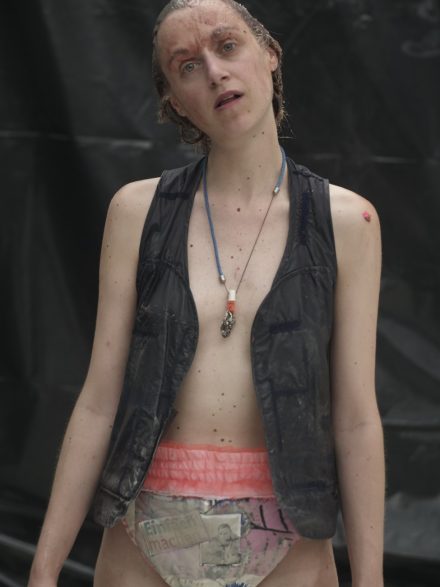
Instead of simply developing new designs, Taskin begins by visualizing a different world – a parallel universe in which his creations can come to life, imagining how its inhabitants would dress. Aesthetically, the reality he has imagined is swamp-inspired, featuring lots of dirt and grime, driven by his will to bring something tactile and raw into the digital landscape – a world that represents the obscure and the unknown, accompanied by elements of queerness at its core:
“Underlying is the idea that I do not really see a border between artificial and organic, as in, that binary doesn’t exist to me. I think humans are organic and natural. I think technology and AI are organic and natural. This digital world, that combines a lot of artificial and organic visual language, I think it reflects this thinking, that there’s no such thing as real and fake or natural and unnatural.”
CREDITS
Taskin Goec


However, his fascination goes beyond just his own universe and extends to those worlds created by other designers as well:
“I’m not just obsessed with the singular idea of my universe, but actually what touches me the most about fashion is thinking about all of these different possible realities that every house is creating. […] That’s also what gives me life, is to imagine that with every collection, I wish we could all live in this reality for one day where everyone’s just wearing balloons, or everyone’s just wearing these amazing lace biker jackets. And I think then by purchasing designer items, for me, the intention is that you bring a bit of this parallel universe into your own immediate reality.”
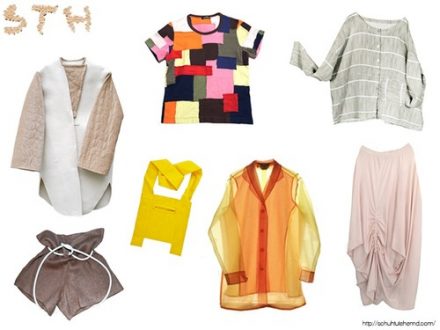
True to his experimental spirit, Taskin devotes much of his time to working with different fabrics and materials, testing how they could be manipulated to bring his visions to life. Combining these with other technologies such as 3D printing, he creates pieces that fit into his world.
CREDITS
‘Zada’
Taskin Goec

Over the past few years, Taskin has also begun sharing his knowledge and teaching others, both at universities in an academic context, as well as for other brands, conducting workshops, building custom workflows and guides for others to learn how to use the tools he has mastered – a practice he cherishes, as it gives him the ability to interact with others, exchange ideas and help shape the industry in his own way:
“One of the most motivating parts about this work is also the idea that you can change the industry, in a way, for the better. And it only works if you teach people how to use the tools and how to use the workflows that I built. I want people to use my workflows – I would hate the idea that I’m the only person who makes use of them.”
Having to stay up to date with all advancements and technological progress, Taskin explains how he builds a custom workflow for each new client, never reusing old ones, but rather conceptualizing how and what he will use, each time he takes on a new project. While this may be time consuming, it helps him to reimagine his process and continuously innovate and elevate it, to adapt to the ever-changing advances.
While nobody can know how technology or fashion may advance in the future, one thing is certain: Taskin will play a role in shaping their evolution.


CREDITS
Taskin Goec